A train room with a view on an epic trip across US

Travelling from New York to Los Angeles by rail is a soulful encounter with the country’s diverse landscape — and dining car companions.
Amtrak

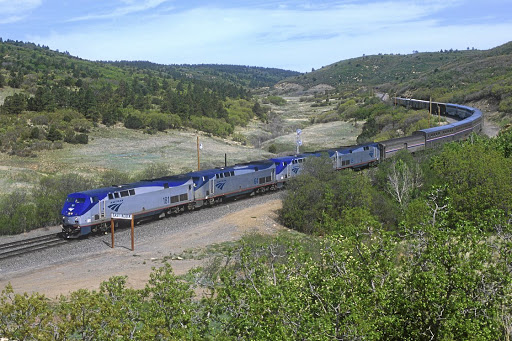
It is a relief to leave New York. My sojourn there has been like an eight-day drug trip — a kaleidoscope of light and sound, touch and taste. After this exhilarating intensity, my departure — from scruffy Penn Station deep below the city — could scarcely be more anticlimactic.

I yank my bag along a grimy platform to the 49 Lake Shore Limited, a gleaming double-storey train. One of two on either side of the aisle, my seat is as spacious as a grandpa’s armchair, with legroom to match — a good thing considering it’ll be home for 34 hours.

The train judders into movement and my heart lifts: the journey to California has begun. There are cheaper and faster ways to get there from the East Coast, I know, but I want to stretch the space between things; I want time to think. And I want to witness the gradations as state yields to state, to get a better sense of the scale and textures of this vast nation that a few hours in an aircraft would be unable to provide.

After several more minutes in darkness, we surge out of the ground. The fat Hudson is alongside the tracks, flashing silver between bare trees, fading to sulky grey as clouds darken the April sky.

At Albany, the capital of New York State, we wait several hours while track repairs are completed further down the line. I eat chowder in the station canteen, stunned by the cashier’s friendliness, a novel thing after the brusque service of New York.

The clouds have peeled away into radiant dusk as we clatter over the river, curling around the city’s stubby towers and into clapboard suburbia and industrial sprawl.

A sleeping pill yanks me jaggedly to sleep. I stir when we reach Boston: a dreamy blaze of office towers.

Dawn’s tentative blues arrive over Ohio: smooth brown unfolding for kilometres, occasionally interrupted by silos, a barn. When I go to find some breakfast I discover the cafeteria is closed until 9am — I am told the server is on break. “Why is she on break when people want breakfast?” I ask grumpily.

“She announced it,” her colleague says defensively.

When service resumes, I wolf down a cream cheese bagel and a chocolate bar. An American man, also travelling alone, has overheard my non-American accent, and takes it as an invitation to monologue endlessly — topics segueing from Linux tablets to rugby injuries.

The country outside is still pancake-flat, but green now; there are copses of trees, homesteads, a brook. In Indiana, this bucolic landscape is interspersed with small towns — a predictable mix of prefabricated homes, warehouses, truck lots.

One town has a bulbous water tower; the American flag flaps in front of porches.

And then Chicago — the gritty periphery of it first: ramshackle sheds, a steelworks, factories belching smoke, then marinas, shielding small boats, edged by low redbrick warehouses. The city centre towers creep up on us, and suddenly we slide into Union Station.

I wander from the long concourse outside into the icy morning. The Willis Tower, the country’s tallest building, looms at a neck-craning height. A security guard at its entrance eyes my big bag suspiciously. I ignore him, and head to the Starbucks inside.

I discover back at the station there is an Amtrak departure lounge with clusters of armchairs and cable news blaring from flat-screens — utilitarian in an almost pleasant, almost mid-century kind of way. Boarding soon begins for my train, the 3 Southwest Chief.

This time, I’ve booked a roomette: a small compartment with facing seats. Chicago’s spiky centre melts into suburbia, which peters into forest. I watch House of Cards. Occasionally, we pass nearly identical strips of banks, takeaway outlets, fuel stations, neat wooden houses.

As the glinting stubble of wheatlands flashes by, I put my laptop away, feeling dizzily overcaffeinated but content, closing my eyes to soak up the train’s soothing movement.

Illinois’s hills tumble into the wide Mississippi as we cross into Iowa. The rail edges along the shimmering water, passing a paddle steamer and a couple in a bright red car having sex.

“Drink it, yum, yum,” announces the smoky-voiced cafeteria server over the intercom as she markets her happy-hour specials. I choose a $4 beer instead of the Tequila Buzzball “cocktail”. She checks my ID, grumbling when she can’t find my date of birth on the South African driver’s licence.

When I learn she has been an Amtrak employee for a decade, I ask if she enjoys it. “Sometimes,” she replies, poker-faced.

I clamber back up to the observation deck. Cow-speckled hills as plump as England’s are framed by the wide windows; the falling sun feathers through new leaves.

Dinner in the dining car is communal-style — whether you like it or not. Conversations strike up with table companions: the North Carolina grandma who refuses to fly but wants to visit her son in Los Angeles; the lecturer from a Kansas university who finds trains easier; the retired attorney going home to Kansas City who finds it more flexible and pleasant. I have a delicious “Amtrak steak” — a hunk of meat cooked perfectly, with roast veg, followed by chocolate bunting cake.

After Kansas City, we hurtle into blackness, pricked here and there by jewels of light. I find the purser who transforms the uprights seats into a fully flat bed, replete with (less than sparkling) bedding and a pillow.

Dawn unfurls like a dirty sheet over hulking ships on the Arkansas River. We peel away, into grassland studded with seesawing oil pumps and rusty farm implements and grain silos taller than apartment blocks.

Breakfast is surprisingly tasty: French toast with crispy bacon and syrup. I sit reading afterwards in the observation car. We have crossed into Colorado, where flat beige gives way to scrubby mounds.

I catch a glimpse of distant snow-capped mountains: the Spanish Peaks. Foothills envelop us; we continue rising.

We are following the path of the old Santa Fe Trail — the first toll road in the country. A uniformed guide points out the desiccated remnants of Morley, an abandoned copper mining town. After rattling through the Raton Tunnel, the highest point of the journey, we begin our descent into New Mexico.

A mother, barely 20, is drinking wine, words slurring as she fends off her iPad-wielding toddler’s requests for Wi-Fi. Outside, the scrubby humps and endless golden plains remind me of our platteland. Later, the earth becomes even arider: tiny bushes dot the earth.

In drizzly Albuquerque, stony-faced Native Americans sell carpets and woven bowls on the platform. The shock of concrete fades into desert majesty once more; copper cliffs brighten as the sun flickers between soaring cumulonimbus. The next morning, I wake up in the Sunshine State. It is unexpectedly desolate: a palm tree-pocked tangle of highways and housing estates under a leaden sky. The track twists, revealing the skyscrapers of the Los Angeles city centre.

The journey, which had felt so peacefully interminable for much of its duration, is suddenly at an end. I feel disappointed to have arrived.

This article first appeared in the 24 November 2016 edition of Business Day.

Fight for food and freedom

It was a feast with friends featuring flavours I’d never tasted before: Swazi herbed goat curry, roasted rabbit, fried sweet potato fritters – and much more. A few days later I’m back at eDladleni (which in siSwati, means “in the kitchen”) – though this time, I’m literally in the kitchen. Dolores Gofferoy, septuagenarian chef, food activist and restaurateur, is observing amusedly as I attempt to separate a sack from the inert pig it contains (she collected it from a farmer this morning).

My job done, we leave the uncomplaining hog on a metal table and go to the terrace, where sunshine spills over us and traffic hums distantly.

“Swazi cooking is very bland. I give it a twist. A little lipstick and makeup. I make nice,” she says, her lilting voice husky from cigarettes.

Gofferoy sources ingredients from all over the kingdom, accenting these with Indian spices to create flavoursome dishes. She has been cooking all her life. When she was growing up, her Zulu mother (who died last year at 100), forced the whole family to work in the kitchen.

“She had a good mind; she never followed the rules in terms of what to cook, so the indigenous crops – the local crops – were always there.”

With two self-published cookbooks and a third one on the way, Godeffroy wants to educate both Swazis and visitors about “what we have right under our noses”. “Food and language make a nation: it’s the one real way of connecting with culture.” Her interest in indigenous food “hinges totally on my dignity”. “I don’t eat anything foreign,” she says, banging the table. “I refuse. Actually, I’ve even developed a psychological problem. Even when I eat out somewhere, I feel bloated, my tummy feels unhappy.” She’s never drunk a Coke or other fizzy drinks. “Europe started it long, long ago and I’m fighting back. I am really angry with them for trying to say there is no food in Africa – portraying us as hungry mongrels.

In Swaziland, the colonial-era perception that indigenous foods are “primitive” remains ingrained, she says. Deep-fried factory-farmed fare is rampantly popular, and she believes this is responsible for the high rates of diseases such as diabetes, hypertension and colon cancer.

“If you’re rich you get sick because you have to have Kentucky,” she says.

Although eDladleni has been operating since 2002 in its spot tucked just off the busy highway between Ezulwini and Mbabane, it is not Gofferoy’s first restaurant.

After travels in Europe and America (in which she recalls hitching rides on fishing trawlers and cargo trucks), she returned to Mbabane in the 1980s and opened Ikwezi. It had a reputation amongst both locals and expatriates as “the ANC headquarters” – a sanctuary for South African struggle activists. She smiles mischievously. “Such a simple honest woman like me. How could I?”

She remembers the day Vlakplaas death squad commander Eugene de Kock visited with two colleagues. When he started asking about the whereabouts of various ANC operatives, she called her American husband who told de Kock: “Have your goddamn hamburger and get out of my wife’s shop.”

It wasn’t just the apartheid security apparatus that regarded her with suspicion. The Royal Swaziland Police, which had a sometimes-cosy relationship with the South African authorities, raided her “maybe 12, 13 times”. Semiliterate cops confiscated “one-third of my library,” she recalls – anything published by Peking Press or Moscow Press, although African Communist was left behind, because it had “African” in the title. “The poor RSP – at that time they couldn’t distinguish a Mandrax from a Panado,” she giggles.

She tried to offer indigenous food but patrons weren’t interested: she had to offer things like hamburgers instead. But she still used the best quality ingredients she could find, making her patties from scratch.

“Now I know I’ll never make money so I’m cheeky – I cook what I want,” she says.

After selling Ikwezi, she went into full-scale farming – including vegetables, pigs, chickens and ducks – until launching eDladleni. Today she works closely with farmers, lending them seed and getting recipes to fine-tune. She’s encouraging a few to grow imbuya (amaranth), a nutritious and antioxidant-rich staple which she dreams of propagating on a commercial scale. “I want to see it in Woolworths,” she says.

This article first appeared in the 25 October 2015 edition of the Sunday Times.

Singita Kruger: immersion therapy in the heaven of the African bush

sing1

As we surge into the hot sky off the Satara airstrip after a short visit to the Singita concession in the Kruger National Park, I feel a wrenching as the dusty earth and trees shrink and the little plane’s nose turns towards Johannesburg.

The concession is home to two Singita lodges, Sweni and Lebombo, a short walk apart and both recently refurbished.

Sweni, the smaller one, is slung out along the N’wanetsi river. Its seven suites are poised lightly on the earth, literally and figuratively. The prefabricated structures could be removed overnight if needs be.

Septic toilets take care of sanitation, a solar farm provides power, and filtered water — sparkling and still — is served in reusable glass bottles.

I skip a game drive or two to make the most of my digs. Soaring windows frame views of bush and river, letting light and birdsong flood inside. The interiors are imbued with an earthy African modernism that hints at Pancho Guedes’s mid-century Mozambican masterpieces.

Minimalist furniture and geometric accents are combined with a lush array of contrasting textures: wood and clay, fabric and metal. Rounding it off are gem-inspired pops of colour, timeworn artefacts and plants. The effect is warm and embracing — exquisitely stylish without being intimidating.

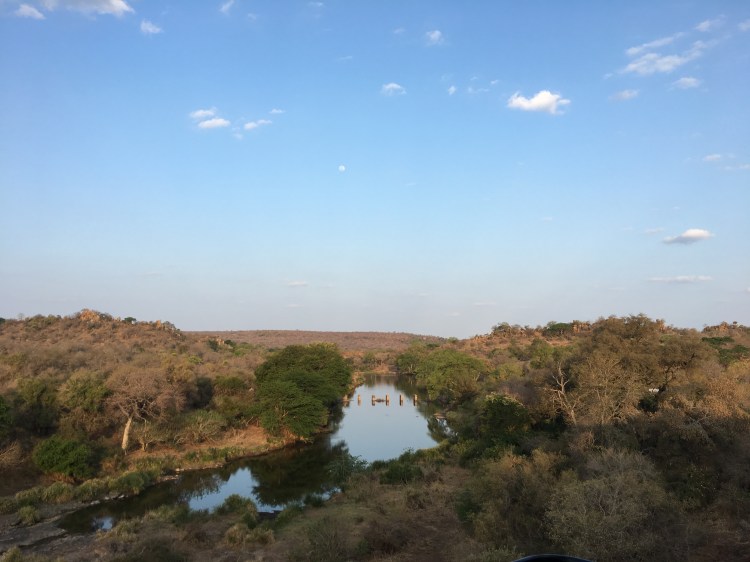
After a leisurely outdoor shower, I meditate, eyes closed, on my deck’s daybed. Two hippos grunt and snort in the river right below. An emerald-spotted wood dove warbles above; a chorus of insects rise into song as the day warms.

In the early afternoon a massive kudu saunters past. On the top of the honey-coloured boulders on the ridge opposite, a fish eagle perches on a fig branch.

Keeping the sliding doors open is discouraged to prevent vervet monkeys from raiding the well-stocked mini bar. But after requesting a sleep-out, my daybed was transformed into a bed, replete with mozzie net, crisp bedding and soft pillows.

The night sounds stitch together in a rich aural tapestry of water splashing, insects buzzing, hippos grunting, hyenas howling. I wake as the birds start their chirruping at dawn.

With acacia-studded plains ruffling up to the gentle curves of the Lebombo mountains, the extraordinary, diverse landscapes of Singita’s roughly 133km² concession demand exploration. Over 72 hours, I traverse it in game-drive vehicles, by mountain bike and on foot.

The earthy African modernism of the suites at Sweni Lodge combines contrasting textures of wood, clay, fabric and metal. Picture: SUPPLIED

Field guide JP le Roux’s encyclopaedic knowledge of the surroundings bring them more vividly to life. Every track, dropping and leaf tells a story. The go-away bird has two different calls: one warns of aerial predators, the other of ground ones.

Muddy smears on a majestic leadwood beside a waterhole, Le Roux explains, are from elephants trying to remove parasites from their skin. The grey colouration we see on a male lion’s hind legs, he tells us, is due to a chemical change that occurs when they obtain territory.

We encounter plenty of big game: lion, elephant, wildebeest, buffalo and a white rhino. But it’s the smaller sights and sounds that I relish most: the plaintive wails of a Bateleur chick, a terrapin plopping into water, the rustle of banded mongooses over rock, a Sharpe’s grysbok scampering to safety.

On the ridges close to Sweni, the smooth, spherical boulders balance precariously on top of each other like avant garde artworks. Interrupting the dry, ashen slopes are shocking splashes of bright green: pod mahoganies, the first trees of the season to flush their leaves.

Singita serves up dishes that are as spectacular as the wildlife and landscapes. They enlisted the services of Cape Town-based gastronomic superstar Liam Tomlin. With executive chef Andrew Nicholson he’s overhauled the kitchens and menus of Sweni and Lebombo; and culinary staff from both also get a chance to work in Tomlin’s Chefs Warehouse restaurants in Cape Town.

At Sweni the tightly edited lunch menu is split into categories based on cooking type, such as “wood-fired”, “pan-fried” and “sautéed”.

At Lebombo Lodge, which I move into after two nights at Sweni, the midday menu is tapas focused — petite, saliva-inducing treats like creamy duck curry and mayo slaw or thickly diced springbok tartare with salty, crunchy capers.

Both lodges have wondrous breakfasts and an exceptional selection of wine. Singita owns a dedicated maturation facility in Stellenbosch where wines are stored until they’ve reach optimal drinking age.

With the knowledgeable and charming Delaille Raubenheimer, sommelier to both lodges, we are in excellent hands. Every mealtime (except breakfast, obviously) is an opportunity to learn about new wines and winemakers. Ask her nicely and she’ll unearth a few of her gems for a pre-dinner tasting down in Lebombo’s moodily lit wine studio.

Just over a decade ago Singita opened its Community Culinary School at Lebombo to nurture a high standard of cooking in their kitchens while imparting skills and experience to nearby impoverished communities.

In 2017 one of their graduates, Tsakane Khoza, travelled to Blue Hill at Stone Barns for an internship at the acclaimed farm-to-table restaurant’s kitchens in upstate New York.

For a R650 donation (which goes towards the school), guests can attend cooking classes, learning about experimental techniques and recreating dishes featured on the menus.

After my tapas at Lebombo I retire to my sleekly modern suite, one of 13 along a rocky outcrop. The coolly subdued palette of greys and other neutrals accentuate the staggering vistas beyond the window.

I nap on the daybed, high over the river. By the time I’ve woken, the brassy clouds have faded; the sky is a bolder blue. I watch as the shadows lengthen, greens darken and the setting sun sets the boulders aglow.

This article first appeared in the 11 September 2018 edition of Business Day. I visited Sweni and Lebombo as a guest of Singita.

Foodie Foragers: in search of the Cape’s authentic flavours​

sealand_coastal_foraging_3k3a0283_c3a2c2a9sacha_specker
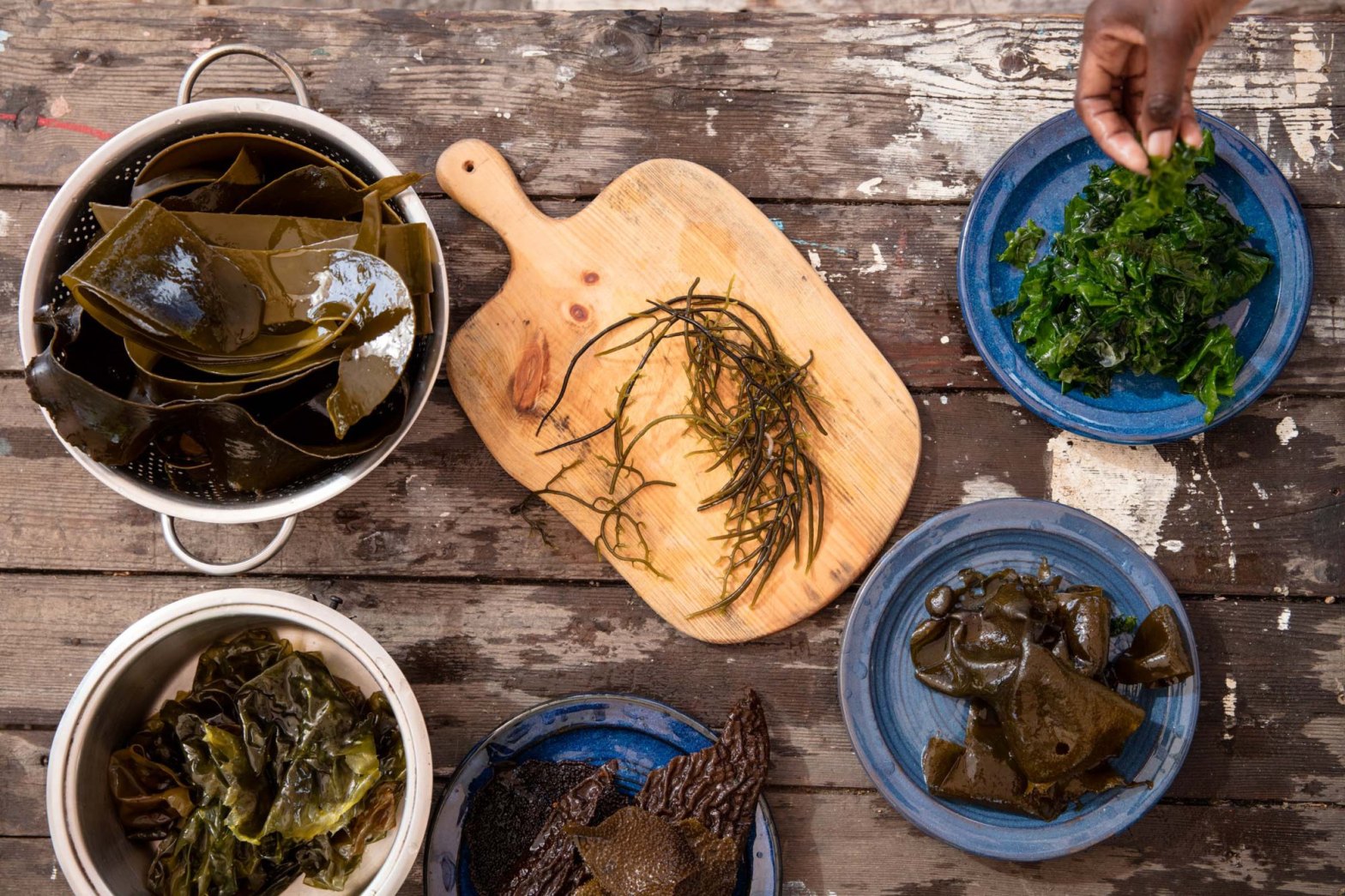
A seaweed bounty harvested during one of Veld and Sea‘s foraging workshops. Image: supplied.

An increasing number of passionate foragers – many of them chefs – are now heading to the hillsides, forests and coasts of the southwestern corner of South Africa. And for good reason.

“In the Western Cape we are in a biodiversity hotspot that is full of edibles — it’s an edible landscape,” says wild foods expert Loubie Rusch, who has been foraging extensively in the region since 2011. “Unlike many other parts of the world, the land is holding so much food and it is growing itself.”

Until recently, this bounty had long been neglected: a result, Rusch says, of urbanisation, migration and colonialism – which eschewed living from the land for industrialised agriculture.

Although the last decade has seen foraging increase in popularity across the globe, driven by high-profile, often Scandinavian chefs such as Sweden’s Magnus Nilsson (head chef at the two Michelin star restaurant Fäviken) and René Redzepi who has served up foraged ingredients in his Copenhagen restaurant, Noma (judged four times as The World’s Best Restaurant by Restaurant magazine), Hannerie Visser, founder of Studio H, a Cape-based culinary-focused design studio, says that, “The rise of foraging in the Cape should come as no surprise as local chefs reconnect with their heritage, exploring the crafted, slower ways things were done in the past. Ethical practices are becoming embedded in the way many of them source their ingredients: there’s an emphasis on local, on minimal-impact and on avoiding waste – three boxes that responsible foraging all tick.”

An hour’s drive north of Cape Town lies the fishing village of Paternoster — a cluster of dazzling white-walled cottages huddled up against the stormy Atlantic. Inside one of these storybook-like buildings works Kobus van der Merwe, the chef-patron of Wolfgat restaurant, who, for the past seven years, has cooked with ingredients he’s found on Paternoster’s coast.

“The past few years, the foraging concept swept through the international restaurant scene like a wildfire, says van de Merwe. “For me it has never been about being on trend. Cooking with endemic wild edible plants is about establishing the genius loci of the restaurant, and sharing that with our guests.”

Each exquisitely plated dish served up in Wolfgat’s rustic-chic surroundings therefore presents an opportunity for diners to authentically taste South Africa’s West Coast. Van der Merwe combines, for example, a sour succulent called soutslaai with raw fish and seasonal citrus. He twins kruipvygie, a mild green succulent, with limpets and venison, while a fish broth gets a sprinkling of wild sage and mussels arrive with sea lettuce and dune spinach. He loves the trachyandra plant family which growing rampantly on sandy dunes – in particular veldkool (Trachyandra cilliata) which has the appearance and texture of an asparagus but with nutty and grassy flavours. Although they’re traditionally cooked in a bredie (stew) with lamb, he says, “They’re quite delicate, so I like to use them raw or treat them more gently by lightly pickling or flash frying.”

Foodies not content with simply tasting coastal flavors, however, can even get their feet wet foraging on their own in the company of Roushana Gray, who leads coastal foraging classes along the Cape peninsular. After several hours of exploring rock pools and picking edible seaweed and shellfish under her guidance, her apprentices then transform the fruits of their labors into a hearty lunch.

“Foraging is an exciting and delicious way of connecting with your food,” says Gray. “Keeping in tune with nature this way, and eating seasonally and locally, is nutritionally perfect for your body. So not only is it a culinary experience but a medicinal one too.”

“It’s amazing how much food there is in the intertidal zone – and how nutritious it is,” says Rusch, who – having previously focused on land-based wild foods – recently participated in one of Gray’s classes. Having made various products (including cordials, chutneys, pickles, jams) over the past five years with foraged terrestrial plants, the class has inspired Rusch to now experiment with making pickled kelp in her own kitchen – she loves how it has “a lovely crunch”.

Gray, who with her family runs the indigenous plants–focused Good Hope Gardens Nursery near Cape Point, also offers foraging classes focused on fynbos. Forming part of the Cape Floristic Kingdom — the world’s smallest, and one of its most diverse — these intensely aromatic native shrubs can be used in gins, infusions and bitters.

The Cape Town–based Charles Standing, who goes by the moniker “The Urban Hunter Gatherer,” also offers coastal-focused foraging and cooking classes for groups on an ad-hoc basis.

“Kelp is about as sustainable as anything we can ever eat,” he says. “I have been making Asian-style salads and kelp lasagne, where I layer sheets of kelp instead of lasagne noodles. Along the Cape coast we have bountiful porphyra (the seaweed the Japanese use to make ‘nori sheets’ to wrap sushi in); it’s delicious dried in the oven and enjoyed as crisps. My new favorite seaweed is Slippery Orbit, which is yummy just steamed and seasoned.”

Moving inland to the heart of the Cape wine country lies the postcard-pretty village of Franschhoek (“French Corner,” so named because of the French Huguenots who settled here in the 1700s). On its bustling main drag sits Foliage restaurant, established by chef Chris Erasmus after stints at Le Quartier Français’s The Tasting Room and Pierneef à la Motte — two acclaimed Franschhoek eateries.

Erasmus says foraging is “a great way to keep the balance between the long kitchen hours and some alone time in the forest. It’s the best place to reflect on menu ideas and to be close to my ingredients.” His dishes are ultra-seasonal, changing “whenever mother nature throws something new at us,” he says, adding that “Squirrel just hit the menu.”

Along with an army of fellow tattooed and bearded chefs armed with gum boots, baskets and foraging knives, the mushroom-mad Erasmus hunts for his favorite: the elusive porcini. “The oaks under which they grow are way out up high in the mountains – it’s a climb,” he grins.

He rattles off a list of others currently on the menu: pine rings, bovine bolete, saffron milk caps and slippery jacks. Foraged herbs also appearing in dishes include goosefoot, amaranth, dandelion, African wormwood and wild peas.

At the elegant Faber restaurant on Avondale, an organic farm in nearby Paarl, chef Eric Bullpitt [who is now head chef at Pierneef a La Motte] also creates dishes inspired by his surroundings. “[Foraging] connects me with nature, our land and soil; it’s our roots and where a lot of our life begins,” he says.

“There are so many edibles everywhere,” adds Bullpitt, “and once you start noticing them, you really start seeing how readily available they are.”

This article first appeared in the January/February issue of Selamta, Ethiopian Airlines’ in-flight magazine.

Richly varied and highly entertaining: “History Matters” reviewed

A new collection of pieces by Bill Nasson showcases the breadth, consistency and versatility of one of South Africa’s leading historians.

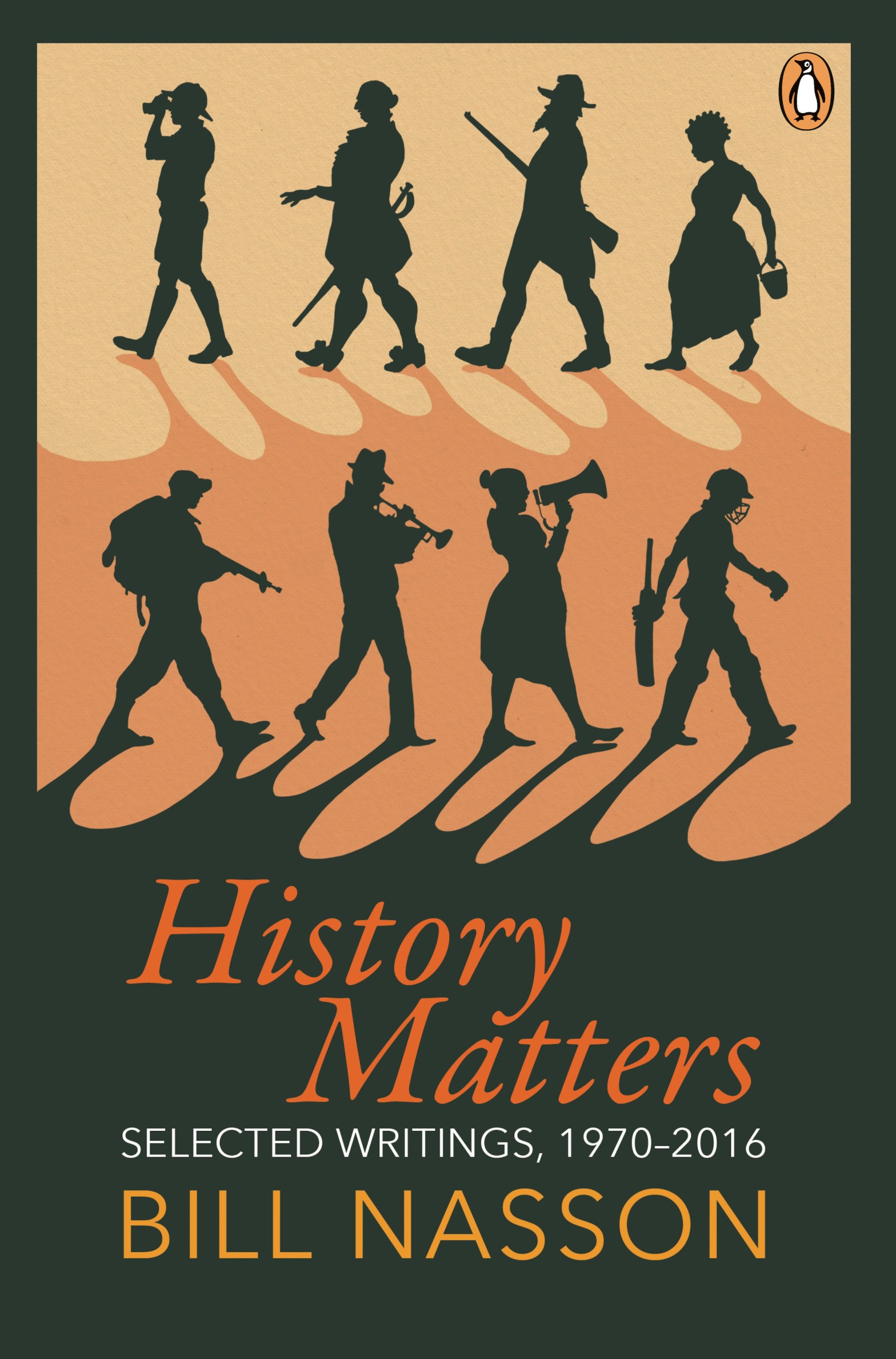
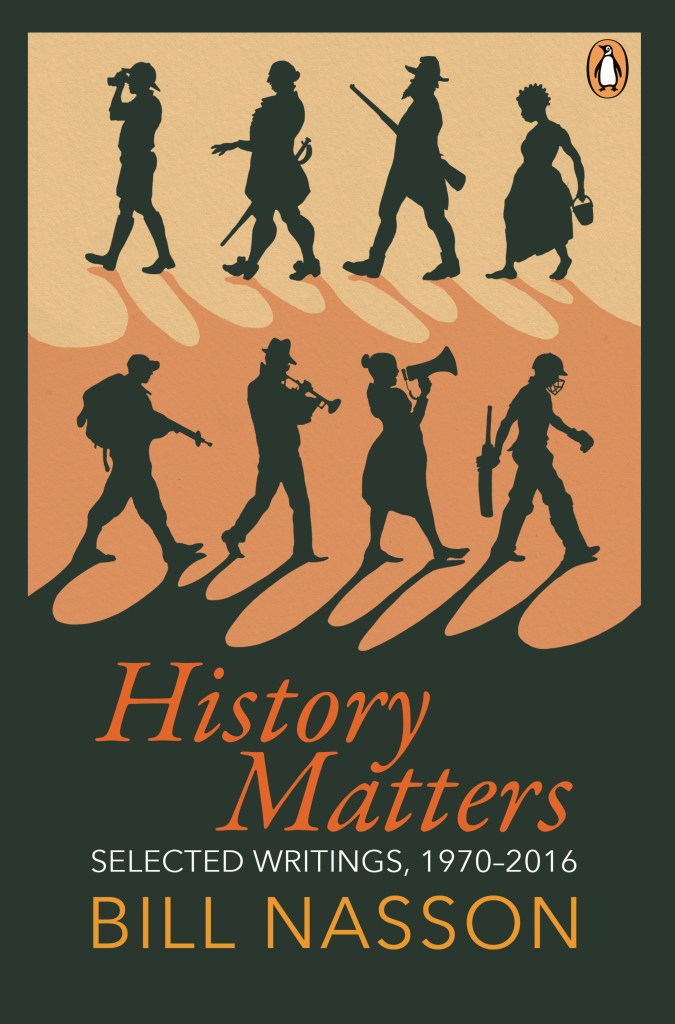
history matters HR

I must confess to approaching this review with more than a little trepidation. It’s not just that (for reasons that should soon become apparent) I think Bill Nasson is one of finest historians working in South Africa today. It’s also because writing about his writing is rather close to home. Literally. Nasson lives a few blocks away from my parents; in my teenage years I’d often see him pass by on his bike or walking his dogs.

More recently, he’s become a dear friend – and, ever since its founding, one of AERODROME’s staunchest supporters. Over the past four years it’s been a great pleasure to publish on this site a number of book reviews he’s written – several of which appear in History Matters, a wondrous compilation of his writings stretching back to 1970. In this tasty smorgasbord, we see the depth, length and breadth of his writing – and both his versatility and consistency. The book is helpfully grouped into different sections such as book reviews, social histories, and the world wars, which means you can snack on whatever takes your fancy, in whichever order you choose.

Nasson’s love of writing, of ideas, of stories shine through all of these pieces. In A Historical Education, the book’s first section, we get a sense of how this love might have been conceived – or at the very least nurtured. Here we encounter the “highly cultured” teachers of Livingstone High in Cape Town’s southern suburbs – most notably, the “super-legendary” deputy principal R.O. Dudley (to whom the book is dedicated). Dudley was an avowed and widely respected opponent of apartheid who was also “wholly contemptuous of any idea of ethnic identity and who never tired of being mockingly disdainful of political populism”. In his 2010 obit after the great man’s passing, Nasson recalls how his “pupils were taught to think critically and widely, and not to see learning as a matter of absorbing this or that school subject”. Dudley went way beyond his remit as a chemistry teacher. He would host secular assemblies as an alternative to the school’s scripture-based ones – where students “could gather for Bertrand Russell rather St Paul”. And, in the classroom, Nasson writes that, “what he provided was a historical education that was at the same time an inculcation of political thinking” – always able “to ease the misery of being unable to fathom the periodic table of elements” by offering titbits of metaphysical English poetry or disquisitions on “the deformities of Stalinist Russia”.

At a time when the vital contributions of many non-ANC activists are being airbrushed out of history by the ruling party’s aggressive mythologising, these pages offer a trenchant reminder of the richly diverse and sometimes fiercely intellectual strains that formed part of the struggle against apartheid. The recollections also go a long way in describing the hothouse in which Nasson’s independent, critical thinking and wide-ranging curiosity began to blossom.

The golden thread weaving together all of History Matters’ pieces are Nasson’s beautiful writing, his eye for detail and for the absurd, and a wry, incisive humour – which is directed at himself as often as it is towards others. He shows a deep respect for his readers and for the subjects he tackles; he is witty without being blasé or flippant, critical without being needlessly cruel.

Whether discussing a Ford factory town deep in the jungle, or a history of mail or maps, his book reviews always manage to make the topics in question entertaining. Whether or not you ever end up reading the books he reviews, his pieces about them are still very much worth your time because of their flair, humour and deft engagement with the text he’s reviewing.

Nasson is no reductionist; he knows there are many shades between the starkness of black and white. He is capable of showing contempt for the “detestable” imperialist Rudyard Kipling – while being an Anglophile who grew up on English comics and studied at the universities of Hull, York and Cambridge. Time and time again you see his appreciation for nuance, complexity and paradox – a sensibility that in the age of “no-platforming” seems very much in short supply.

One such paradox we encounter is how an imperial Britain, which had yoked vast swathes of the world under the Union Jack, was, in the opening phase of the Second World War, almost singlehandedly fighting fascism and Nazism – and thereby alone in defending ideas such as equality before the law, parliamentary democracy and free speech. Even more of a paradox, perhaps, was the idea that an Afrikaans man – with the infamous surname of Malan no less – might be one of that country’s saviours. In Nasson’s utterly engrossing history of A.G. ‘Sailor’ Malan, we witness his dizzying trajectory as an accomplished fighter ace, one of ‘the few’ that fought in the skies over England in 1940. We see how this Afrikaner, upon return to South Africa after the war, would take up the fight for non-racialism in South Africa – a battle in which he was much less successful.

Although he’s spent his entire career in academia, Nasson is that rare thing: an academic who looks beyond theories to appreciate the humanity, the emotional and social core of history. His writing crackles with intelligence but never descends into the dry, jargon-laded prose so often associated with his peers – he’s never highfalutin, never speaking over his audience; he’s conversational, eloquently weaving anecdote and argument into a rich tapestry. With clarity and crispness both hallmarks of his own writing, it’s no wonder that he includes among his favourite quotes at the end of the book, Ludwig Wittgenstein’s “What can be said at all, can be said clearly”. His lampooning of the epidemic of academic jargon in a satirical column, in the now-defunct Southern African Review of Books, is particularly delicious – and as relevant today as it was when it was first published in 1993. “Leading cultural spokespersons,” he wrote, “are to be applauded for keeping minds alive and fixed on ‘interstices’,‘textualities’, ‘signifiers’ and ‘mediations’ during a period when so many institutions are burdened by the practical challenges of development and change on the African continent.”

Nasson recognises that history is not merely about great men — the generals, the kings, the prime ministers — but about the ordinary folk enduring extraordinary times. As he takes us from District Six to the battlefields of the Boer War, it’s clear that he sees it his duty as an historian to shine a light on some of these. Among the most fascinating is his account of Abraham Esau – a Calvinia-based blacksmith. Like many other coloureds in the area, Esau was an English-speaking Anglican with “a passionate attachment to the lukewarm liberalism of the Cape Colony’s 1853 non-racial franchise”. During the Anglo Boer War at the turn of the Twentieth Century, he assembled “a motley band” to challenge incursions by Boer forces in Namaqualand, though his pleas to the local magistrate for arms was rejected (due to the belief that giving “guns to coloured civilians would lead to ‘mischief’”). After the Boers took control of the area, Esau was brutally interrogated and shot, becoming “a martyr of Cape liberal political culture” that would be remembered as a hero through the stories and folklore of local coloured communities for decades to come.

My absolute favourite piece is Nasson’s minutely and hilariously observed account of being a historical consultant for a movie, The Deal – when Hollywood came to “Cape Town, its beloved cheaper version of California, where the extras are not led astray by pesky unions or minimum wage rules”. It is these poor extras who get as much (in fact, probably more) page time as the movie’s stars, William H. Macy and Meg Ryan. Hired to appear in a Victorian-era House of Commons scene, “these shuffling MPs were shepherded about in bullying fashion by a young, abrasive crew member dubbed ‘Sony’ who took relish in informing anyone within earshot, ‘Fuck man, I’m so sweet’.”  In addition to being tasked with writing the script of this particular scene, Nasson is also roped in to star as a speaker of the house. Before the cameras start rolling, he advises on the removal of historically inaccurate items from the makeshift set, including ballpoint pens, digital watches and too-modern spectacles – so that “extras faced a fuzzy House of Commons”.

Given how difficult I find the craft of writing, I’ve always rather envied Nasson’s seemingly effortless style – he makes putting words on a page seem so easy and assured. But even he is, at times, at a loss for words. The book’s most poignant piece, After the book-burning, begins with a few paragraphs describing a call in December 2010 from his department head who told him that the history building at Stellenbosch University (where Nasson is a distinguished professor) was on fire.

These paragraphs form an essay Nasson has never completed. As much as he has wanted “to express the meaning of loss”, he has never been able to. If only it were possible to get sentences to run as freely as fire does,” he reflects in the explanatory text below. The blaze consumed 3000 of his books (including a Shelley biography he received in 1969 as an English school prize), films, journals, papers, research material and more – all which “remains unforgettable as much as irreplaceable”. On the facing page are two images showing “what happens to paper (and much else besides) when the temperature reaches Fahrenheit 451”. He leaves it at that, inviting us to draw our own, devastating conclusions.

In one piece, Nasson worries that “the country’s professional history writers have largely withdrawn from any common conversation with an everyday audience. In an exchange of numbingly dry products or fields, historians write for each other, no longer trading a literary craft or good writing.” For history books to regain relevance and readership amongst ordinary people, he argues that “historical scholarship needs to dip into the ancestral richness of literary narrative so that it, too, cultivates the classic idioms of human experience like irony, malice and calamity. South Africa’s divided past surely has more than its fair share of those. And, in illuminating its complexities, the power of history can challenge the more unreasoning forces which stalk the posturing present”.

And so, history, he compellingly argues, should be something that enthrals and entertains as much as it should inform.  Collectively these writings show why history really does matter and why it matters that it is written well. They remind us that there are many histories; not a single narrative – as Chimamanda Adichie has warned us in another context, we should be deeply distrustful of the single story. History Matters shows us that often the footnotes are just as fascinating and important as the biggest stories and characters of the age. It reminds us that the better we know our history, the better we know ourselves – and that a thorough understanding of our past gives us a solid foundation on which to build our future.

It’s no exaggeration to think of Nasson as a something of a George Orwell for our time and place: clear-sighted, iconoclastic (and occasionally caustic), not easily seduced by dogma; and both a lover and purveyor of good, clear and important writing that stays with you long after you’ve turned the final page. I’m not saying I’m not biased – but if you read History Matters I’m confident you’ll agree.

History Matters is published by Penguin.

This review first appeared on AERODROME on 11 July 2017.

A whisky without peat is like soup without salt, but Islay visit is bland

An express tour of a famous Scottish isle shows it’s better to sample the best at home.
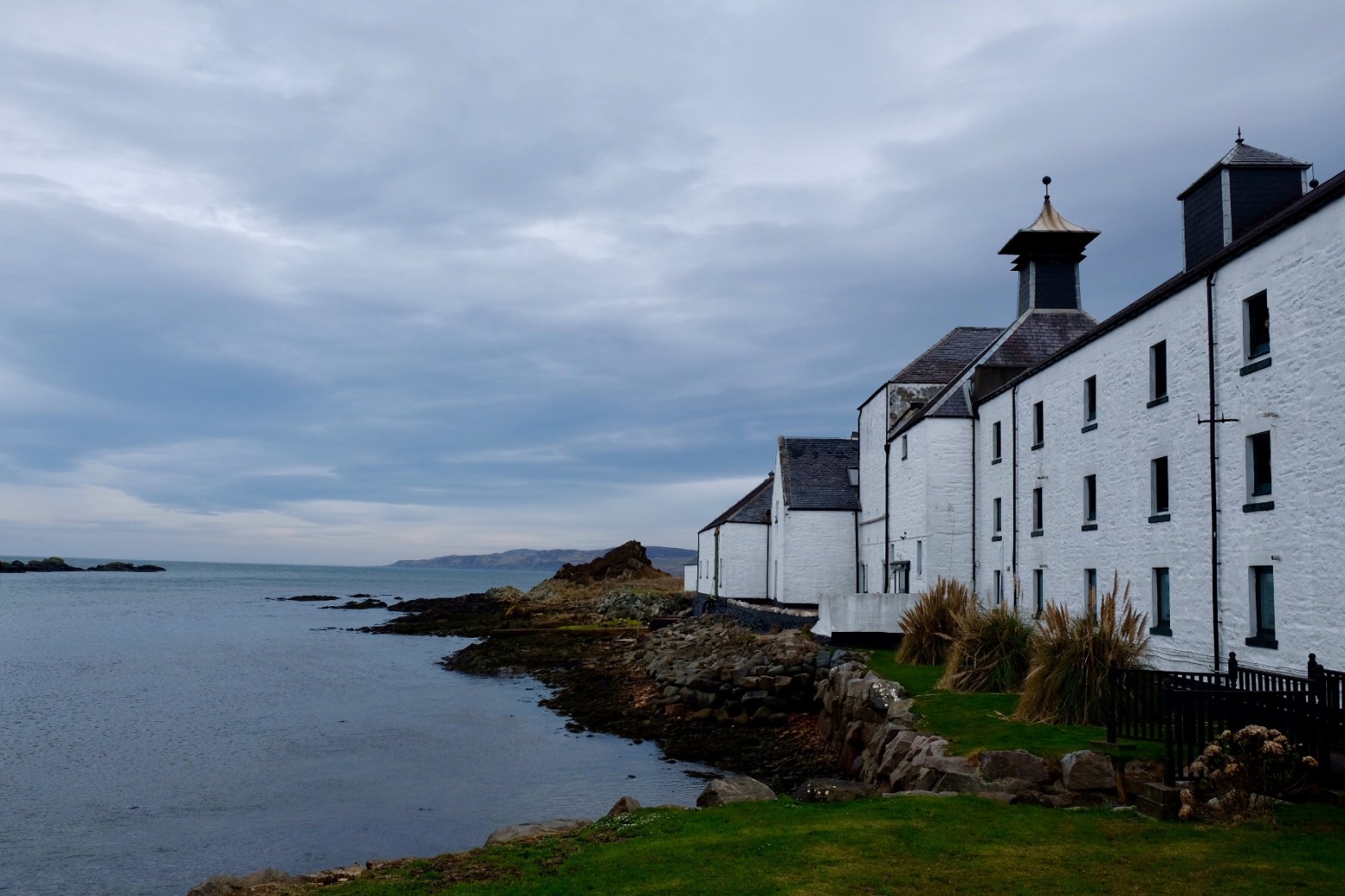
laphroaig
The Laphroaig whisky distillery.

There are few fence-sitters when it comes to Islay’s single malt whiskies. People either absolutely hate them or they say that their typically peaty, salty and smoky qualities are sublime.

This April I spent a fortnight on Jura — an island neighbouring Islay off the coast of Scotland — and just had to visit at least a few of Islay’s eight distilleries before returning home.

And so, after the 15-minute ferry crossing, I wait at Port Askaig, which sounds big and grand but is scarcely more than a couple of jetties and a parking lot. The minutes pass and there is no sign of the taxi driver I had arranged to take me around for a few hours. My phone’s single bar of signal disappears.

I venture inside the newsagent-cum-post office and ask the lady behind the till if she could call the taxi driver. On an island home to roughly 3,500 people, they might be related. When she gets through to him, he says he mixed up his diary and promises to collect me shortly. Sure enough, 15 minutes later he arrives full of apologies.

It takes only 10 or so minutes through nondescript countryside to get to Islay’s tiny capital, Bowmore, home to the eponymous distillery — the oldest one on the island.

The tasting bar is deserted save for a bar lady who offers me a complimentary dram of the 12-year-old, an easygoing old favourite of mine — not overly peated but still oozing citrusy character. While perfectly polite, bar-lady is more interested in setting the table for a formal tasting for people soon to finish a distillery tour than in telling me about Bowmore’s range or its venerable history. And why should she, when there’s a 15-minute film to do it?

As the video explains the whisky production process — a miraculous alchemy involving just barley, yeast and water — I find myself drawn to the greys and blues beyond the window. Hills ripple above the mirror-still Loch Indaal, a scattering of cottages on their treeless slopes.

After my dram is done we leave the village, passing Kilarrow Church on its outskirts. Completed in 1769, a decade before Bowmore Distillery opened, the building is entirely round — apparently so that congregants could never get caught out by the devil lurking in a corner. We drive past the island’s Lego-sized airport and its recently refurbished golf course, which will be opening a brand-new hotel later this year.

As rain spatters against the windscreen, I gaze out at the bogs stretched out on either side of the road. Not far from here, slabs of peat (decomposed vegetation) are carved out by hand. It is used by the distilleries as fuel in fires to dry out the malt.

Malt is barley placed in water to encourage germination, which releases the sugars that, combined with yeast, become alcohol. Smoke from the peat fire permeates the malt as it dries and gives Islay whiskies their characteristic taste.

Some whiskies are peatier than others — typically it depends how long a peat fire was used. One of the peatiest of them all can be found at our next stop, Laphroaig. I have a soft spot for the 10-year-old, which was my first taste of Islay whisky and the one that made me want to try all the others.

The distillery is perched prettily at the sea’s edge. I head inside, passing through the shop (which, like Bowmore, has a twee selection of tartan-emblazoned goodies) and head to the bar where there’s no free dram on offer.

I pore over the menu, looking for something I’ve never had before. I quickly flick past the cocktails page. What a travesty! Single malts are interesting enough on their own — why mess them up with mixers and slices of lime? Eventually I ask the bar lady for advice: would I like something sweeter or something smokier? When I say I’d like the latter, she suggests a cask strength 10-year-old that has been decanted directly from the bourbon cask in which it spent a decade maturing.

Conventional whiskies like the standard 10-year-old are diluted to get an ABV (alcohol by volume) of 40 or, in some cases, 43%. At 55.7% ABV, the cask strength is a lingering blaze of warming fire and smoke which costs me a cool £12.50 (about R220 for 25ml).

Lagavulin, a couple of minutes way, is also by the sea, with what’s left of a weather-bashed castle looming over an inlet just beyond. Inside, it’s a mash-up between the Cabinet War Rooms and Downtown Abbey (the downstairs bit).

Lured by the sounds of happy garrulity, I walk past the reception area to the tasting lounge. There’s no sign of a server, so I return to reception. The receptionist reluctantly agrees to help me — it’s only her second day on the job, she warns.

She asks what I’d like, and swigs a wee bit of the Distiller’s Edition into a glass.

This ain’t no dram — it’s a dribble. A couple of sips, and my glass is empty. I return to reception and ask if I need to pay for the drink. I’m told nothing is due. I would’ve preferred to pay the £7 and get a proper taste but I’m too flustered to say that — and, anyway, the clock is ticking.

Sheep graze beyond stone walls as we zoom onwards to nearby Ardbeg. Now close to 1pm, it seems as if Islay’s entire tourist population has descended upon its tasting area, which doubles up as a café. The only available space is on the waiting list, and so the cashier suggests I go to the bar. There are no seats available so I stand by the coffee machine, watching the staff frantically pouring drinks.

I ask for a dram of the Perpetuum and one of the Corryvreckan. The wild-eyed bar lady asks me to write these down on a scrap of paper; about 10 minutes later she hands me two glasses. I ask her which one is which and she tells me but, amid the din and bustle, I quickly forget what she said.

Anyway, they’re both gorgeous — more medicinal and salty than smoky. And even better, by the time I’ve finished my liquid lunch, the café’s characterless, chaotic ambience is almost bearable too. I march through the drizzle to the taxi. We cut through the flat and featureless farmland that makes up the island’s centre, reaching our last distillery, Caol Ila, about 30 minutes later.

The distillery is right on the water, at the bottom of a steeply winding road — and thankfully far from the madding crowd. I look out a little longingly at Jura’s curvaceous mountains across the strait, before entering the tiny tasting room.

Although much of the whisky that goes into Johnnie Walker’s blends is made here, Caol Ila also has a range of its single malts. A genial Englishman lets me taste three of them — a pleasant-enough 12-year-old, the fruitier Moch and the suavely smoky Distiller’s Edition, which has been finished off in a Moscatel cask. It’s the first time on my whirlwind tour that someone has actually taken the time to conduct a proper tasting.

My taxi driver tells me that my visit to five distilleries in two hours is a record. I pay him £50 and drag my bags into the empty bar of the Port Askaig Hotel.

As she pours me a glass of water, I ask the bar lady whether she prefers her island’s whiskies to the unpeated ones from the Highlands. Her hand sweeps across the glittering array of bottles behind her — most of them made on Islay.

“A whisky without peat is like soup without salt,” she says. Enough said.

As I eat my Cullen skink (a traditional Scottish haddock and potato stew) I contemplate the difference between my Islay experience and my many visits to wine farms in the Cape.

If you pitch up unannounced at a South African wine farm for tasting (during opening hours, of course) chances are that, for a nominal fee, you’ll get an inkling of what the place is all about and a taste of its main offerings.

Don’t expect the same if you schlep all the way to Islay. Unless you’re prepared to pay an exorbitant sum for a VIP tasting, your visit is likely to be, for the most part, a bleakly impersonal one.

A caveat: the experience at the three distilleries that I didn’t get to visit — Kilchoman, Bruichladdich and Bunnahabhain — may well be different from what I encountered.

My advice to Islay whisky’s far-flung connoisseurs is to leave the island to the imagination, where it can remain pristine, romantic and hospitable.

Rather, pay a visit to WhiskyBrother Bar in Morningside, Johannesburg. Sink into a leather armchair and let one of its knowledgeable bar staff guide you through the more than 900 whiskies on offer (a decent percentage comes from Islay). You’ll learn more, you’ll pay less and you’ll leave happy.

This article first appeared in the 14 May 2018 edition of Business Day.

London’s Baraffina tapas bars give you a taste of Spain but at a price

I arrived at Barrafina in Soho less than thrilled. I was going to be in Spain in little over a fortnight, so what was I doing in a Spanish restaurant in London, of all places, when soon I’d be eating the same things in their country of origin, where surely they would taste three times as good and cost a third of the price?

We elbowed our way into the crammed space. My date, a Spaniard, fired staccato bursts of his mother tongue at the waiter who returned a volley of gibberish. I hoped we’d be kicked out — it was too busy, surely.

But no, following those earnest deliberations, we were ushered through the throngs to the corner. The end of the line. A counter below a mirror. The Spaniard (my date, not the waiter) explained that there was a smaller menu we could order from while we stood in the queue, waiting for stools at the bar overlooking the bustling kitchen. There was a chance — no guarantees — that we’d actually get to perch on one of these and, with that, gain the privilege of being able to order from a bigger menu.

I waited for him to suggest we go elsewhere. It seemed silly to stay. When he didn’t, I reminded him there were heaps of restaurants close by where we could actually get a table.

The Spaniard said he was used to this — in Spain, this happens all the time: people stand, they chat and they eat. That’s just how it’s done. But if I wanted to leave, we could. I paused. I didn’t have the heart to dampen the joy in his eyes — they were sparkling, shinier than a homecoming — and so I said, “No, it’s, okay, let’s stay”.

We inched along the mirror. He quickly took the lead in ordering. Our Estrella Galicia beers arrived. “This tastes like home,” he said approvingly. I nodded. I didn’t tell him I thought the lager was timid, unremarkable. At least it took the edge off the bright lights and ringing chatter, though.

As soon as the croquetas arrived, my grumpiness departed. Ravenous, I ate mine with my fingers — which isn’t done in Spain, the Spaniard informed me, as he primly waited for a fork. I bit through crispy crunchiness into soft béchamel flecked with ham. Woah! Who cares if you’re standing in a crowded restaurant when you’ve got gooey cheese in your mouth. Things were looking up.

Up next: chorizo, the diameter and colour of a cigarillo, wrapped in pastry and deep-fried. It was exactly as heavenly as it sounds. We’d barely finished those before a banderilla each arrived: a toothpick piercing a row of green runner beans; at its end, a quail’s egg wrapped in an anchovy fillet.

By now I was feeling positively perky. Maybe this was the future of dining — maybe the Spanish had got it right with this standing thing. After all, there’s a recent study that says sitting is the new smoking — that we should be less sedentary to avoid the risk of early death.

We were halfway along the queue now. A waitress, also Spanish, arrived; she conferred with the Spaniard and then motioned us to follow her.

“Look at us, we’re jumping the queue,” the Spaniard said gleefully. We were indeed – bypassing the English speakers (suckers!) in line, and taken to a little table outside — ringside seats where we could watch the circus that is Dean Street on a warm, spring evening.

We pored over the new, bigger menu. I agreed to all of the Spaniard’s suggestions, grateful that I’m too innumerate to multiply by 17. A flock of young Spanish women arrived at the entrance, their bottoms hovering at eye-level. They flitted off, revealing the table opposite: young American TV execs (or maybe they were in music or advertising) preening and caterwauling over white wine. One was recounting sexual escapades that he did in the name of business development. Billable hours. I turned away: a junkie was offering to sing for us (we politely declined). It was all very Soho.

More food. A classic Spanish omelette — the tortilla — browned on the outside, oozing and yolky as I sliced into it, my knife occasionally slicing through the soft squares of potato. So simple, yet so yummy. Then, what was supposedly the pièce de résistance — pan-seared octopus — was set down.

“Isn’t this awful?” the Spaniard said straight-faced, and I muttered that yes, maybe it was a little bland.

It turns out he was joking — he was actually in raptures over the dish. He threatened to eat it all if I didn’t like it. I tried another piece. It was certainly very tender, bits of it even creamy-soft. A light dusting of paprika, along with the capers strewn around the plate, added some character. Still, I’d have opted for more croquetas instead, any day.

The last plate arrived. Chickpea ropa vieja: bacon bits swimming in a meaty brown stew, with tapioca mash. The Spaniard crinkled his nose, disappointed; it wasn’t how they made it in Spain. “I’ve never had it in Spain, so I don’t mind,” I said, sneaking in a few extra spoonfuls from under his nose. Brilliant.

The bill came. I managed not to wince. £34 each (just shy of R600) for casual Sunday night tapas. Was it worth it? I wondered as I hugged the Spaniard goodbye at Piccadilly Circus tube. Maybe not.

This article first appeared in the 22 May 2018 edition of Business Day.
 

Saddling up: an African horseback safari

Hopping onto an invigorating alternative to the conventional bush breakaway.

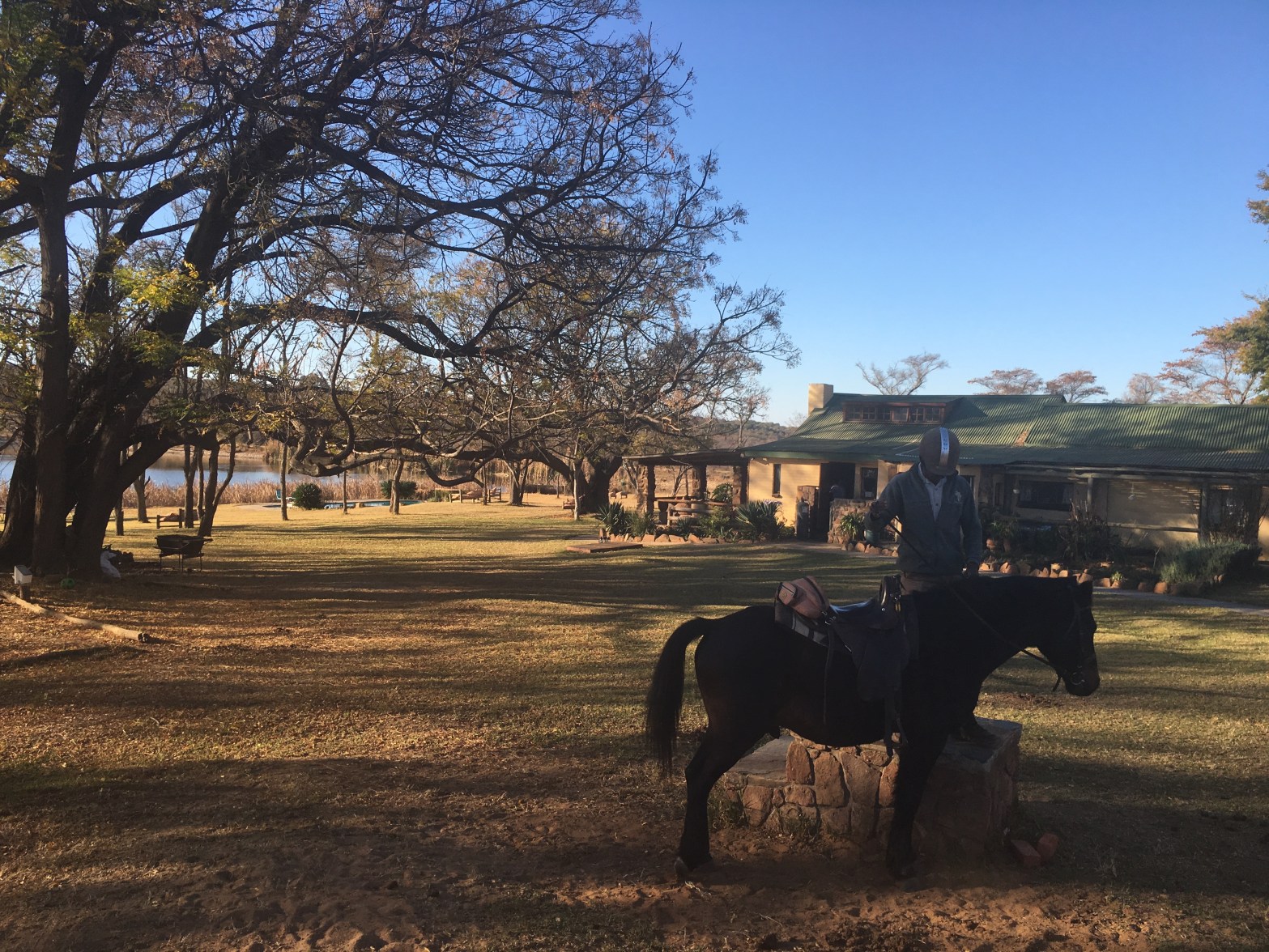
horizon-lodge

I hate game drives: I hate bumping up and down a gravel track, trapped in a noisy vehicle for hours seeing everything at a safe remove until you’re eventually let out for an anaesthetising sundowner and a handful of peanuts. The more time I spend in the bush, the more I hanker after being completely immersed in it. Hands down the most exhilarating way of doing so is when you’re in the saddle – as I discovered on a recent visit to Horizon Horseback Safaris in the Waterberg.

I arrive just in time for tea and scones on the verandah, before donning helmet and gaiters and heading to the mounting post to saddle up. Nervousness flickers through me as the mare is led to me — it’s been years since my last ride.

I needn’t have worried though — as we walk in single file past the neat stables into the bush she proves to be an easygoing gal. Nina Koerber, a German volunteer, has indicated the various hand signals – for “Slow down”, “Stop” and “Aardvark hole!” (there’s a few of those to watch out for). She’s made sure I’m sitting comfortably, that the stirrups are the right length, and shows me how to grip the reins in one hand.

What a ride! Watched by zebra, impala and kudu, we progress from walking to trotting. Then it’s time to canter. I marvel at the fluid, powerful grace of it – I’m flying, copper leaves and branches feathering out over me, dust caught in the sun’s sloppy descent. We reach a rocky outcrop. Bushy hills ripple away from us to the horizon; I can’t spot a single building. We dismount for sundowners — a G&T and snacks, while the kitchen staff who have arrived in a bakkie gather to sing gospel songs that seem to soar up into the glowing sky.

Back at the lodge, I shower and change in my spacious, thatched quarters before wandering with a torch through the cool grounds to the dining room. A massive fire spits and flickers in the grate. Ravenous, I tuck into a hearty stew at the communal table with the other guests.

The next few days unspool with a gentle predictability — scrambled eggs and toast for breakfast on the stoep, a morning ride, then lunch (delicious quiche, or salad and kebabs) in the sun close to the dam. A lazy afternoon of reading and writing is followed by tea before the sunset ride. There are more than 90 horses here, and they’re all different — some are more stubborn, others responsive and quick. As the head guide Kirsty Evans says: “Some horses you can be a passenger on; others you have to ride.”

It’s a beautiful additional dimension to the safari experience — instead of being a passive observer of the bush, you are a part of it, having to navigate its narrow paths with care. This consideration in turn makes you more attentive: you notice more, in other words. You won’t encounter lion or leopard here — but there’s still heaps to see: the flat hovels carved out by porcupines, the spray of a male hippo dung on bushes. As you traverse the sides of koppies, you’ll marvel at the surging candelabra euphorbias dripping their toxic red berries; as you saunter past dams and waterholes, you’ll most likely spy sunbathing Cape clawless otters, or wallowing hippos and crocs. I get up close to a pair of unperturbed giraffes munching leaves high above us, and spy an eland half-hidden in the trees.

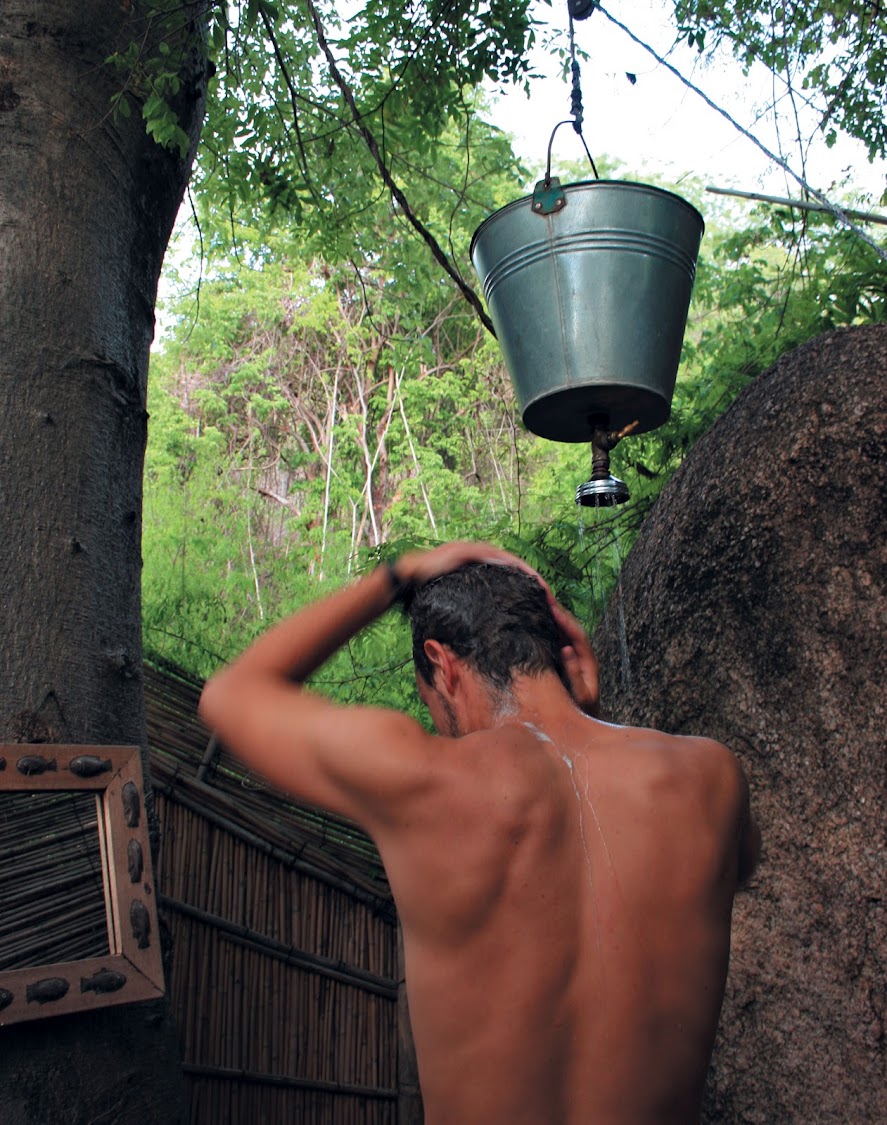
For my last night, I ride up to Camp Davison — perched atop a koppie about a half-hour’s ride from the lodge. I’m shown to my tent: there are two bunk beds, and on the other side is a screened-off bathroom area replete with bucket shower and flushing loo.

After the evening ride, I settle down in a director’s chair by the blazing fire. A new moon curls over in the thickening dusk. Later, as we tuck into braaied steak in the dining tent, we hear the lions rumble from a neighbouring property. I sleep blissfully.

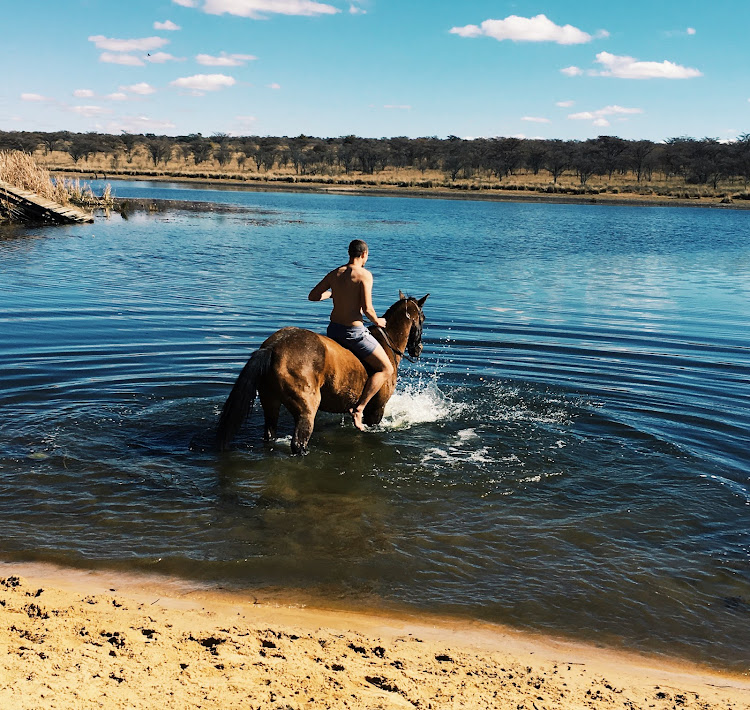
In the morning, I ride back to the lodge with the same horse, Spice — a plucky, strong beast who I’ve been told loves swimming as much as I do. His saddle unsheathed, I meet him at the edge of the dam. At the time, both of us are happily oblivious to the hippos lurking on the other side. I clamber onto his bare back, jabbing his sides so that he marches forward. It’s late winter and the water’s freezing, but we take the plunge anyway. I exit ten minutes later, soaked and triumphant and dizzyingly cold. Somehow it’s a fitting end to this invigorating bush breakaway.

The details

Horizon Horseback Safaris (ridinginafrica.com) is in the malaria-free Waterberg Biosphere Reserve, about a three-hour drive from Johannesburg.

Kayak cruising on Lake Malawi

Domwe Island stretches out to my right like a verdant finger into the lake. Behind me, the bustle of Cape Maclear has already faded: there is just the fish eagles’ call, the slap of waves against the prow. The wind rises, whipping water against my sunglasses, drenching my lifejacket.

I can’t see the camp until I’m right at the beach below, 40-odd minutes after we left — and even then, there’s only a discreet arch of thatch protruding between leaves betraying its presence. For the next two nights this will be home. The hours unfurl languorously. I wallow in the transparent, silky water, head tilted up at the sky, as hamerkops float over us; or face-down with goggles and snorkel looking at the fish. There are more different species in this lake than any other in the world: some are electric blue, others zebra striped, still others brassy or brown.

Joseph Kamanje, the chef, whips up hearty comfort food (pizza, spaghettiand meatballs, decadently soft and fatty catfish), which we eat in the glow of insect-pocked hurricane lamps. One afternoon we walk up through the forest,which pulses with birdsong, insect chirrups, and the crash of baboons and vervets between trees. After an hour, we reach a granite outcrop. The lake is spread out below, as wide and silvery as the sea; Mumbo Island, our next destination, is a dark blotch piercing the haze 8km away.

That night, a breeze mercifully shuffles through the trees. Maclear glitters like
a diamond necklace in the distance. Rain patters then pours down onto the thatch; lightning flashes as faraway fishermen yell from their dugouts. I fall blissfully, wonderfully asleep.

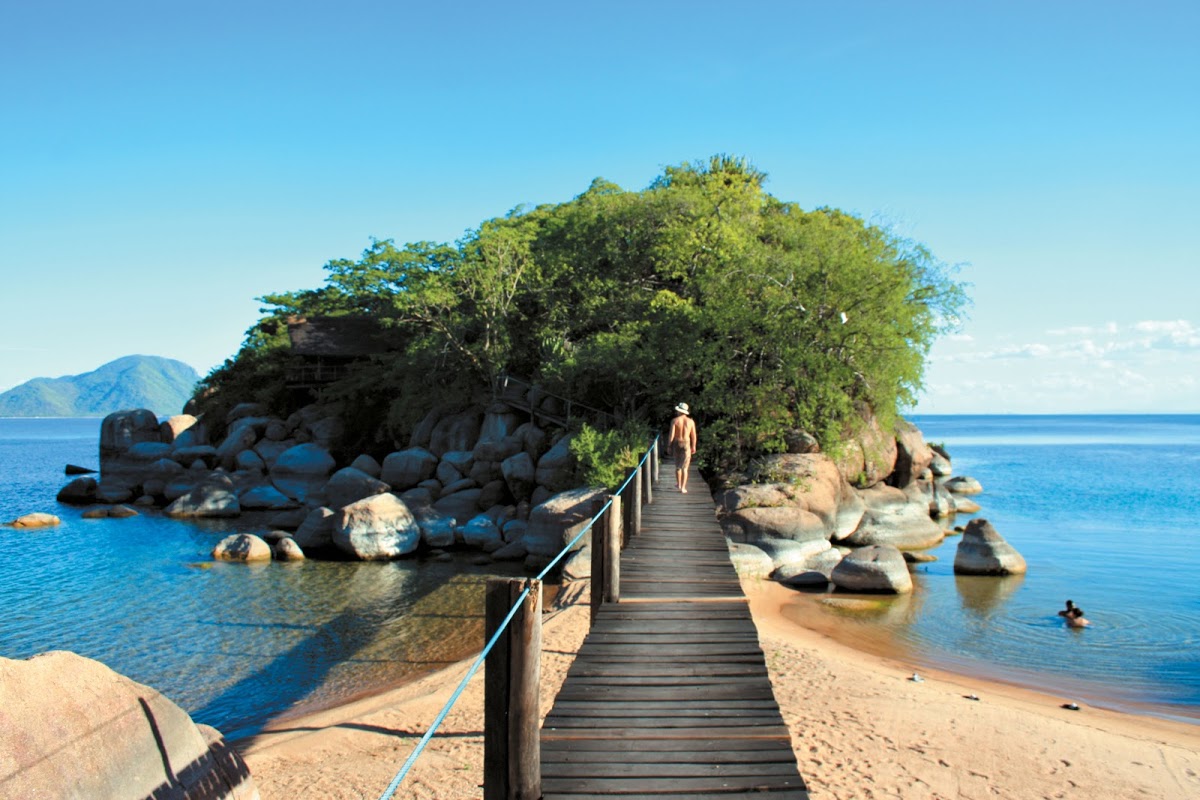
As we paddle the next day, Mumbo remains disconcertingly distant. Head down, I count — to 100 or 500 even, and then look up; each time the lush green mound ahead has grown slightly larger, the guano-spattered boulders lining its base slowly becoming more distinct.

When we rest intermittently, I scoop my cap into the water and slap it down on my head, letting the cool dribble down my face. Then suddenly, we’re near. Edward Stephano, our host, is waiting for us on the sand. We stagger out of the kayak, accepting juices gratefully. I glance around, up at the huts perched amidst the trees. My head swirls — this is a dream, The Lion King, The Jungle Book, Robinson Crusoe, heaven.

We are the only guests that night: the island is ours. Map in hand, we go exploring. The setting sun washes through the forest; we watch the last of it filter through amassing thunder clouds, then walk down to a little cove. I strip and run into the water. Twenty metres away, dark blobs loom. I shiver. They’re surely just rocks — the last of the island’s crocs were shot ages ago. I decide to return to shore just in case.

Mumbo, beloved by honeymooners and active families alike, has earned some serious kudos: in 2012, it was one of only 10 establishments in Asia and Africa to be included in the UK Sunday Times Travel Magazine’s Top 100 Hotels in the World. In 2015, it was shortlisted for the title of Africa’s Leading Tented Safari Camp at the World Travel Awards. It wears its luxury credentials lightly, though. Like Domwe, the lodge is fully off-grid; no bricks and mortar were used in its construction, and there are bucket showers and pit latrines (very nice ones at that). Cuisine (fresh fish, grilled chicken) is “gourmet camp food”, as another guest aptly (and rapturously) describes it on our last night.

Our stay melts away, a blur of swimming and paddling and snorkelling and lazing in the hammock. When it’s time to depart, we decide to get a lift on the motorboat carrying our bags this time — too lazy to paddle the 10km back to Cape Maclear. We wave goodbye, and I turn to face land. The bars of cellphone signal expand — reality beckons; so does home. Instead of the melancholy I expected, I feel a rush of something else, something insistent, iridescent. Four days unplugged and afloat in an island paradise has changed me, recharged me. I feel radiant and ready to face the world.

Getting there

Kayak Africa‘s Lake Malawi Island Hopping Adventure package includes all flights, transfers and meals, two nights on each island, and two at Gecko Lounge in Cape Maclear. If you decide to arrange your own travel  or want to visit only one of the islands, contact Kayak Africa for  a quote. South African Airways flies daily to Blantyre and Lilongwe from Johannesburg. A road transfer from either airport to Cape Maclear can  be arranged, or you can hire a car: the trip takes about four hours.

Photographs by Charl Edwards. This article appeared in the November 2016 edition of WANTED under the heading “Kayak Cruising”. I visited Domwe and Mumbo as a guest of Kayak Africa.

Durban: green shoots of a renaissance

Although regeneration of the inner-city is chequered, there remains much to enjoy.
rooftopgarden
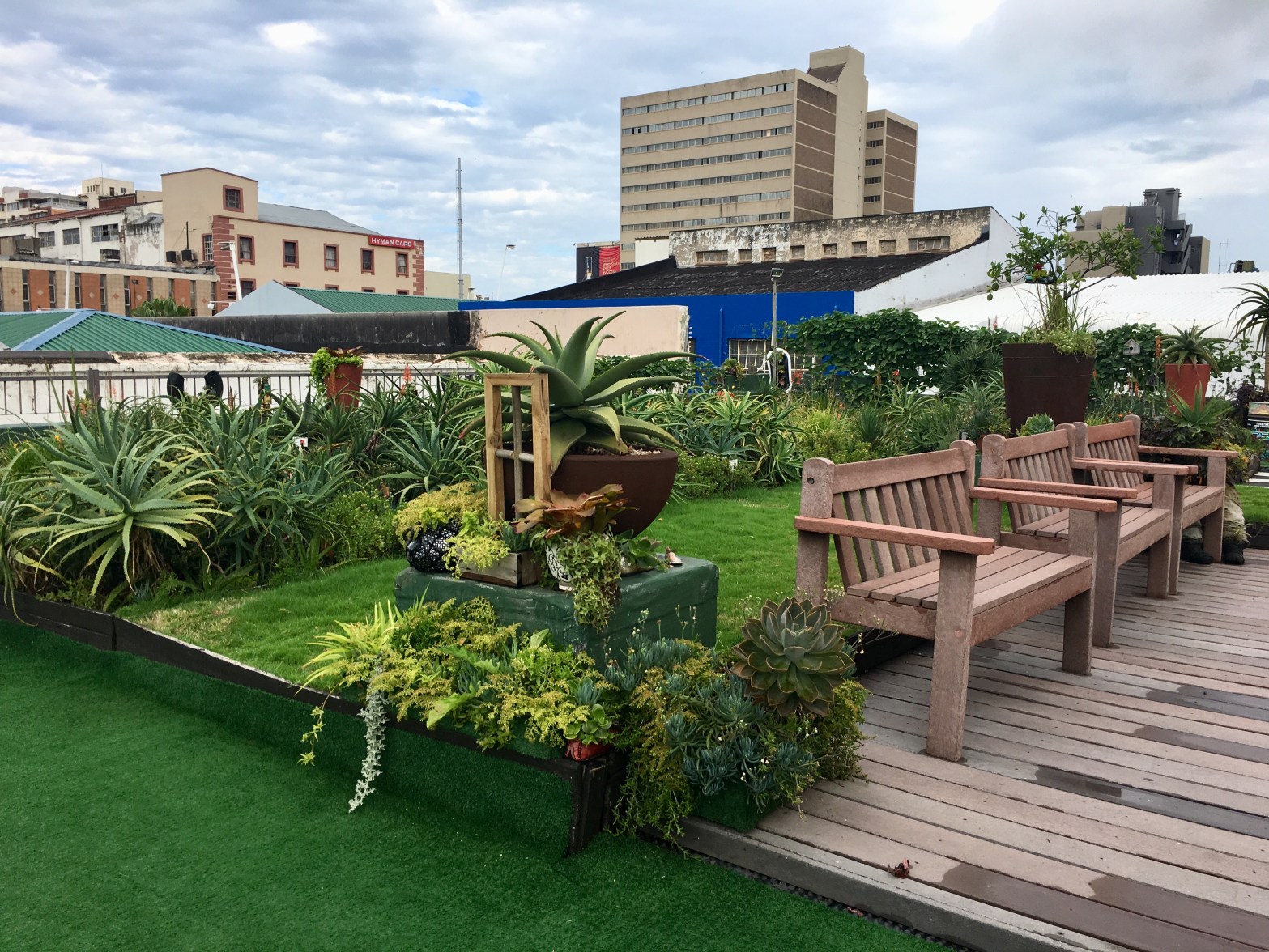
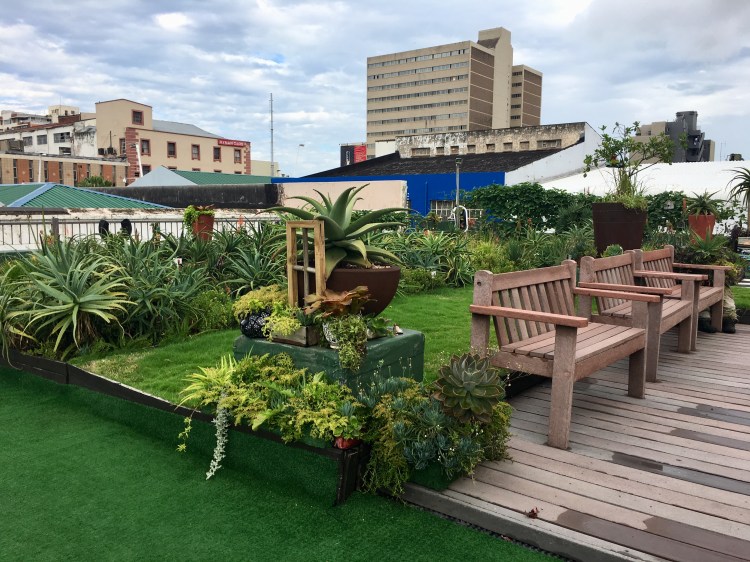
The rooftop garden at 77 Monty Naicker Road, developed as part of the Priority Zone pilot project.

Although there are green shoots of renewal emerging, a fully fledged renaissance of SA’s third-most populous city is far from assured.

I stayed at Curiocity, on the first floor of Ambassador House, an Art Deco beauty on Monty Naicker Road just a few minutes’ walk from the Durban International Convention Centre and the central business district (CBD). It is roomy, clean and classy, an effortless overlaying of the old and grand with the young and hip.

While it had spacious dorms (R225 a bed per night), single rooms from R690 feature a double bed and desk. It’s great for business people on a budget who are sick of cookie-cutter corporate lodgings.

I liked working in the airy, parquet-floored lounge, tapping away under a naked incandescent bulb with a symphony of street sounds flooding in from huge sash windows.

Pulling pints of local craft brew Poison City from behind the brise soleil bar, the friendly staff bantered with the foreign backpackers lolling on Scandi-style sofas.

That morning, I had gone to Station Drive, a hip, mixed-use precinct in a gritty industrial area near Moses Mabhida Stadium. It was a Sunday and The Morning Trade – an indoor market in The Plant, a former warehouse – was at full throttle.

I sipped yummy iced chocolate from Inca Cocoa and snacked on Scotch eggs. After drifting through the design and fashion stores neighbouring the market, I headed to Distillery 031, which distills Durban-inspired craft spirits, including absinthe, brandy and rum.

I had a gin and tonic made with D’Urban Durban Dry Gin — a London Dry-style gin that features 10 botanicals including African rosehip — the perfect antidote to the muggy heat. From a menu with mostly US comfort food with a South African twist, I picked the scrumptious deep-fried truffle mac ’n cheese.

The bar and restaurant is closed while the distillery expands, but tastings and tours explaining the distillation process are still conducted on Saturdays (it’s best to book in advance).

One floor below the distillery is S43, a restaurant that serves arguably the best burger in the city, and is also home to That Brewing Company.

Over the course of a pleasant evening I sampled a few brews. The nicely bodied, slightly tart American Pale Ale was my favourite, soaked up by a pulled pork bun.

Curiocity makes sure that you make the most of your time in Durban. Activities on offer include movie nights on a Monday, yoga and salsa in the courtyard on Tuesdays, evening cycles through the inner city on a Thursday and surf lessons daily. The hostel also offers tours of the inner city.

I headed out with Mondli Cele of Propertuity, the developer behind Johannesburg’s mixed-use Maboneng Precinct.

Propertuity established Curiocity in collaboration with Bheki Dube, who also heads its original Maboneng hostel. It has bought 19 buildings in what it christened the Rivertown Triangle, a 1km² area between Durban’s International Convention Centre and the beachfront.

Propertuity intends to convert former, often derelict factories and warehouses into office, residential and retail spaces. While huge murals brightly interrupt the urban decay, and the neighbourhood occasionally hosts slick concerts and events, the Durban edition of Maboneng is far from becoming a reality.

Originally envisaged as a market featuring gourmet food stalls, artisanal producers and other creatives, Rivertown’s first offering, 8 Morrison Street, has been a flop. Unable to draw sufficient crowds of well-heeled suburbanites, the venue was converted into a co-working space. Now even that has shut.

Construction commences soon on Propertuity’s first residential development for the area, the optimistically named Rivertown Rising, a 10-floor tower with 317 units to rent.

Propertuity’s regional executive, Luke Maurel, says that other residential buildings will only be developed “as a response to the market demand”. And, in turn, this will result in the development of commercial and retail space in the area.

So far Propertuity seems to be having a better time of it in the CBD, where it owns five buildings. Cele took me around Pioneer Place on Dr Pixley Kaseme Street, which has corridors lined with fashion designers and tailors in small pods.

We also went to Pixley House where Cele lives, a soaring Art Deco tower painted black and gold that has flats for rent and for sale at affordable prices. The residents we encountered were all young, hip and black.

As Cele and I walked towards the sea, I constantly craned my neck to see Art Deco marvels and Tropical Modernist masterpieces surrounded by hustle and hustling with commuters rushing and hawkers hawking. Slightly anarchic, grubby and not altogether safe, this is a CBD where past and present swirl together with intoxicating effervescence.

Later, I went to The Chairman nearby for an evening of jazz that was every bit as dizzying and discordant as the city. The club has long bar counters and clusters of comfy chairs, its warren of rooms a jumble of styles, Bohemian whimsy colliding with pre-revolution Havana. For years it has stood out as a lone haunt of the flush and plush in this seedy area.

It looked as if that would change with the impending construction of Propertuity’s Turning Point, but plans for the residential block were quietly shelved late in 2017.

Down Mahatma Gandhi Road towards uShaka Marine World is the Durban Point, site of a mixed-use precinct proposed by the eThekwini municipality and UEM Sunrise, a development company owned by the Malaysian government.

Hampered by court cases, progress has been glacially slow on the project, which by some estimates will require investment of R35bn. It will be decades before the Point’s five precincts – a mix of residential, retail, and hotel accommodation – reach completion.

Encouragingly, though, in March construction finally began on the first piece of the Durban Point jigsaw puzzle: an extension of Durban’s beachfront promenade from its current terminus at uShaka Marine World to the harbour’s northern breakwater. The 750m stretch will cost the city R300m.

The city’s chequered history of urban renewal is visible at 77 Monty Naicker. On its rooftop is a sprawling, slightly ramshackle garden featuring indigenous plants and vegetables.

The building was once home to Priority Zone, a pilot project launched by the city’s architecture department in 2010 with the aim of cleaning up a 15km² swathe of Durban’s inner city. The project’s interventions were based on the premise that a safer, cleaner urban environment would drastically reduce the vandalism of municipal infrastructure and help to instil a sense of pride and ownership.

Priority Zone employed a holistic approach, working with council departments such as parks and waste management, and bringing in private sector companies to provide top-up services (ensuring, for example, an rise in the number of times a day that litter was removed).

It oversaw the creation of a new central market for informal traders and improved the maintenance and security of the area surrounding the City Hall, home to the Natural Science Museum and Durban Art Gallery, to create a more tourist-friendly environment. It placed unarmed security personnel on the streets, helping to reduce petty crime to negligible levels. In 2014 Priority Zone was relabelled Urban Management Zones and absorbed into the city’s area-based management unit. Its budget and the privately run supplementary services it outsourced were drastically scaled back.

Wendy Gibson-Taylor, who had run the project since its inception, finally left in December 2017 because she was tired of working “with a team who just sit in pointless meetings”, she says. “The city isn’t being regenerated. In my opinion, nothing’s happening. It’s all talk.”

Gibson-Taylor says the city is failing to tackle the growing number of hijacked buildings because “nobody wants to take responsibility”.

She fears many of the gains the Priority Zone made have been gradually reversed. Crime and vandalism have increased again after the canning of 24-hour private security patrols in 2015 because, at R1m a month, they were too expensive.

Repeated requests to the Urban Management Zones for comment went unanswered.

Jonathan Edkins, the council’s former architect who was instrumental in getting Priority Zone off the ground, says he believes the effective neutering of the project was because it was seen by city hall as a privatising of public functions.

Now an independent consultant, Edkins is cautiously optimistic about the city’s recently launched local area plan for the inner city. But he stresses that the council “needs to develop the capacity to change those lists and words into developments and buildings”.

There is now a shortage of development management skills in the city, which is slow to collaborate effectively with the private sector.

“Because we’re so scared of the corruption bogey, procurement processes are now strangling any kind of development,” Edkins says. He cites the proposed new city library, which was conceptualised more than five years ago but has not yet been assigned an architect.

“There’s a balance between efficiency and ethical release of work,” he says.

Edkins hopes the council will realise that, when it comes to urban renewal, big catalytic urban projects “are not the be all and end all” and support should also be provided for small ecological projects that are holistically informed by an area’s history and social, cultural and environment. He says that working in consultation with locals, planners and developers “need to think about what we’re interfering with, and make sure the intervention is rooted in where we are and what makes this space and place unique”.

An example of this approach is Edkins’s work with the Spice Emporium, on the edge of Rivertown Precinct.

The iconic store will form the heart of a new Spice Quarter that will feature a 140-unit residential tower with a rooftop garden that grows ingredients and boosts the area’s biodiversity.

There are also plans for a spice museum and a test kitchen for cooking demos and classes. Eight security guards have already been employed to patrol outside the store, contributing towards the creation of a safe corridor that will link the International Convention Centre with the beachfront.

Edkins says that 30 people are working on the project on a pro bono basis because they are committed to improving the city and believe that projects like this can truly make a difference.

“It’s illustrative of what the private sector can achieve with not a huge amount of resources, with innovation and collaboration,” he says.

This article first appeared in the 3 May 2018 edition of Business Day under the headline “Renewal spices up central Durban”.