Zimbabwe has reason to hope — but not everyone shares in it

Processed with VSCO with m5 preset
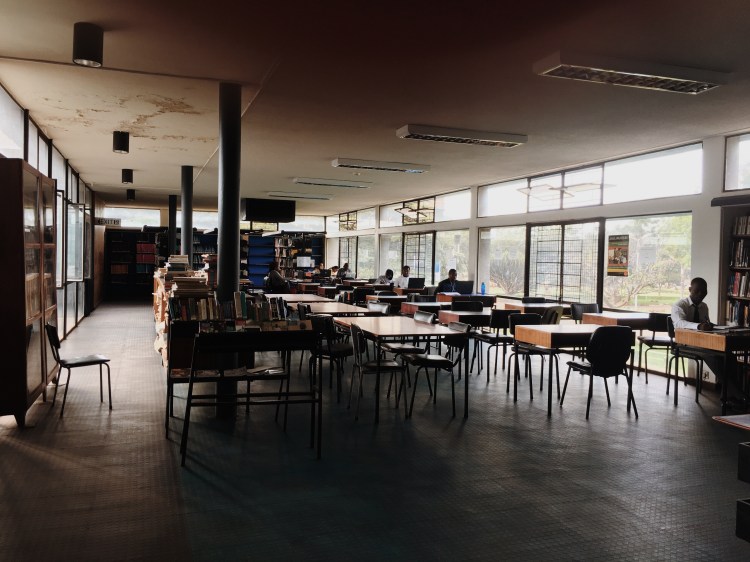
Harare’s City Library.

It is almost six months since the dramatic departure of Robert Mugabe from Zimbabwe’s presidency. As more than 100 political parties gear up for elections in July, citizens’ hopes for the future range from cautiously optimistic to fiercely sceptical.

“We can’t speak of much actual progress, but we can speak of lots of encouraging promises,” says John Robertson, a veteran economist based in the capital.

He is confident Zanu-PF will remove impediments to investment but concedes that in spite of “assurances that everything is going to be different, we’re still waiting for the actual changes to legislation and regulations”.

The most significant of these changes is the granting of bankable and transferable 99-year leases to black and white commercial farmers — whose position remains precarious. The promised change to indigenisation legislation, which requires foreign owners to hand over 51% of their companies to black Zimbabweans, is also still pending; the amendment will limit these requirements for platinum and diamond mines.

After the eviction of thousands of white commercial farmers, the agriculture sector struggled and Zimbabwe — once “the bread basket of Africa” — became a net importer of food. Reviving agriculture will be essential to supply factories with inputs such as cotton for textiles, timber for paper and vegetables for processed food.

If the manufacturing sector is revived, Zimbabwe should see increased exports and a drastic reduction in imports, improving the balance of payments.

Though tackling corruption and reforming loss-making and grossly inefficient state-owned companies will be difficult, Robertson says, “over the next five-10 years I think we’re going to see a lot of the lost ground made up. There will be dramatic differences in this country.”

The fear factor has been removed. “The government of Mugabe was oppressive, and people felt under constant threat of being bullied or punished for showing disloyalty to the ruling party. That disappeared overnight,” Robertson says.

“That’s made a very big difference. It’s a very important component of the improvement we have enjoyed.”

University of Zimbabwe economics professor Tony Hawkins offers a more sobering assessment. In the period after the election there will need to be discussions about “hard economic realities which no one is talking about”, he says.

To meet the requirements for assistance from multilateral institutions such as the IMF, he believes there will have to be “sharp cuts in government spending and layoffs” across a public sector that employs just over half of the employed workforce outside agriculture and which swallows up more than 80% of government revenue.

Growers receive $390 a tonne for maize — roughly $240 more than the average world price; these subsidies as well as ones for fuel will have to end.

A shortage of hard currency because of a reliance of imports has led the government to printing bond notes, which are officially pegged to the US dollar but in reality trade at 40%—50% less on the black market. If this continues to widen as Hawkins predicts, de-dollarisation will become inevitable, resulting in an initial period of high inflation.

He describes Zimbabwe’s debt situation as dire. In addition to $11bn of foreign debt (about 60% of GDP), there is $6bn of domestic debt With savings wiped out by the hyperinflation that led to Zimbabwe abandoning its currency and adopting the dollar in 2009, it’s likely the country will be forced to borrow more to pay its World Bank bill and keep the Paris Club of creditors happy.

Hawkins estimates that to create 60,000 jobs, inflows of $6bn a year would be required, but even this will fail to soak up the 200,000 graduates pouring out of schools each year. This results in a “very divided society — of those on the inside and those on the outside”.

Glenn Stutchbury, until recently CEO of Cresta, one of Zimbabwe’s largest hotel chains, remembers that at the height of the hyperinflation that caused the Zimbabwe dollar to be abandoned, he was forced to pay his staff with bread and other essentials because money had become worthless. Victoria Falls, the country’s biggest tourism drawcard, was a ghost town, its hotels and lodges largely empty.

Today, thanks to the opening of a shiny airport with new international connections, the town is buzzing. Mugabe’s departure has, in particular, helped to attract UK visitors who have long avoided visiting the country.

Though new rooms are being built, Stutchbury predicts a shortage of beds during high season in Victoria Falls, with increasing numbers of foreign visitors travelling on to the nearby national parks.

Bringing in almost $1bn of foreign revenue, tourism is a quick win in helping to revive the moribund economy, Stutchbury says, “because you don’t require huge inputs” needed by sectors such as manufacturing and mining.

Investment interest is key to driving commercial tourism in any country, Stutchbury says.

In Harare business travel has experienced a spike since November as potential investors flock to the capital.

No new hotels have been built since the early 1990s, but Stutchbury says that this will soon change, citing interest from both the Hyatt and the Radisson Hotel Group.

Since it began participating at the Venice Biennale in 2011, Zimbabwe has been making waves in contemporary art. Several artists are now represented by commercial galleries in SA and the UK.

“Artists have not given up the struggle,” Raphael Chikukwa, chief curator at the National Gallery of Zimbabwe, says. Due to the shortage of art materials, “they have found new ways of expressing themselves”.

The gallery oversees the Venice pavilion; its sleek but dilapidated modernist building in downtown Harare is also home to an arts school.

Following Mugabe’s ouster, Chikukwa predicts a burst of creativity and an abandonment of the self-censorship that was prevalent during his rule.

As Zimbabwe’s frosty relations with Britain and the EU start to thaw, the gallery’s role, he believes, will be to foster increasing opportunities for Zimbabwean artists to be showcased internationally.

Chikukwa is in discussions with British curators about possible exhibitions in the UK.

With improved access to funding likely, he also hopes Zimbabwe will increase the number of international events it participates in.

For Violet Mazvarira, the pouring rain is both a blessing and a curse. Without irrigation, it’s essential for her crops to thrive. But it leaks into her ramshackle mud hut, making her blankets sopping wet.

A widowed former school teacher, Mazvarira has lived at Manzou Farm since 2000 when its white owner was evicted. She tills her 4ha with a hoe; only her son helps her. Since 2012, the police have come to demolish her house seven times.

“Grace saw this place is rich,” she says, referring to the former president’s wife, who flouted court orders with various attempts to evict Mazvarira and the 120-odd other people who are living here.

Though Mugabe tried to establish a game park on the land, Mazvarira believes she was more interested in the farm’s gold deposits, which artisanal miners have been exploiting for at least a decade.

Though police harassment has stopped since the Mugabes’ fall from power, Mazvarira worries that without an offer letter (a certificate that identifies her as entitled to farm) harassment may one day resume.

“We are still suffering. There’s no clinic, no schools. We want good living conditions,” she says.

She wants the government to sponsor pesticide and equipment —, complaining that the only assistance she received in 2017 was 10kg of maize seed. She’s not optimistic about receiving help, however.

“The same government is still there,” she says. “Maybe I’ll be happy in heaven.

“But not here on earth.”

This article first appeared in the 20 April 2018 edition of Business Day.
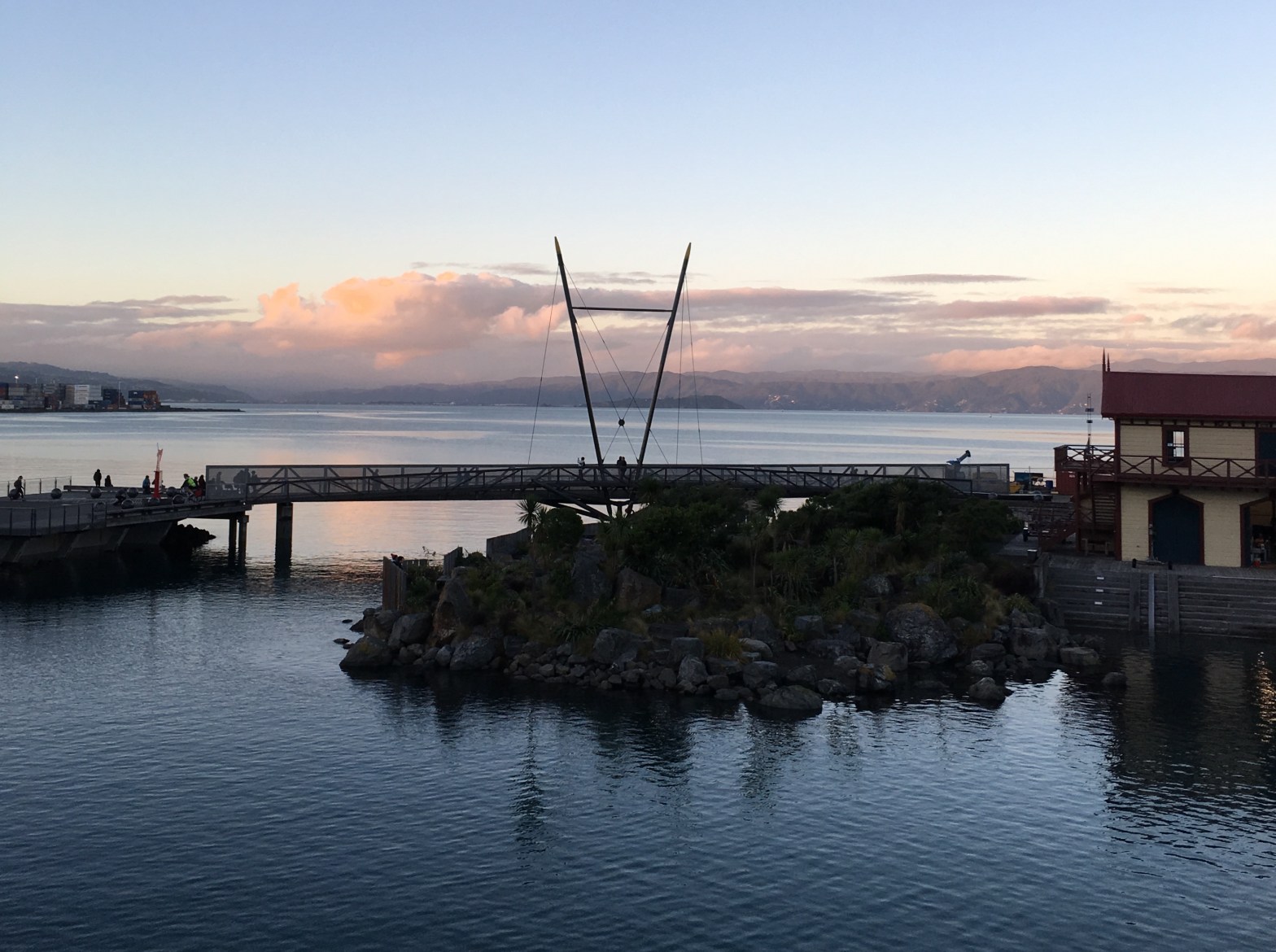
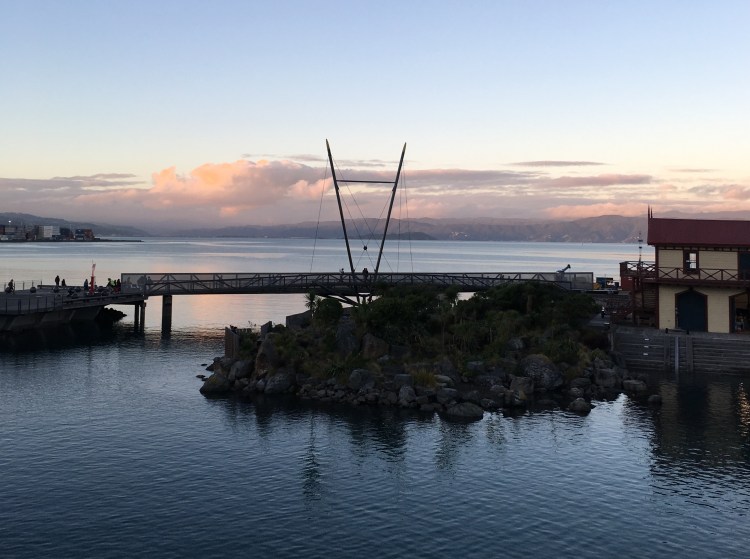
Wellington: New Zealand’s crafty little capital

IMG_5771

Recently, a couple participating in an Australian television quiz show lost the chance to win more than R5m when they failed to identify New Zealand’s capital from four Kiwi cities listed.

Although one might be tempted to snigger at their stupidity, to be fair Wellington does rather sail under the radar – the Antipodean equivalent of Switzerland’s Bern.

Everyone knows about Auckland because it’s New Zealand’s only proper-sized metropolis. Christchurch garners headlines for its devastating earthquakes and Queenstown draws thrill seekers to its near-vertiginous slopes. But Wellington? You might find yourself drawing a blank — wondering what, aside from being a seat of government, it has to offer. It turns out quite a lot, as I discovered over the course of a long weekend.

First, it’s very pretty. Sandwiched between ocean and lush hillside, the city has bent to nature’s will, rather like Cape Town has, while its wooden houses are reminiscent of a diminutive San Francisco. It’s no wonder the tourism slogan, “You can’t beat Wellington on a good day”, has entered the local vernacular – everyone here says it, though they won’t necessarily tell you how many of those in a year there actually are.

Wellington’s cable car (going since 1902) is possibly the most anticlimactic attraction, ascending what feels to be about 2m up a slope. It does, however, deliver you to the pick-up point for the free shuttle bus to Zealandia. Ringed by a possum-proof fence, this is a remarkable Jurassic Park-like attempt to restore 225ha to what it was like before humans began arriving here 800-odd years ago.

Settlers from the Pacific and then Europe brought with them plants, animals and parasites that have wreaked havoc on New Zealand’s fragile ecosystem. Since breaking away from the Gondwana super-continent 80-million years ago, an astonishingly unique biodiversity has evolved here, including a number of flightless bird species.

As you wander through Zealandia’s dense forest, you’ll encounter one of these: the opalescent South Island takahe, which until its rediscovery in 1948 was thought to be extinct.

Back down by the harbour’s edge, Te Papa Tongarewa, the country’s national museum, is fantastic – and free. Absorbing for adults and children, the country’s natural and social history is beautifully distilled into a sequence of engaging, interactive displays.

An entire floor showcasing the national art collection will launch in 2018. In the meantime, City Gallery Wellington (which predominantly shows temporary work by local artists) is a short walk away, as is the New Zealand Portrait Gallery.

And that’s one of the great things about the city: its central business district is compact and walkable. Bar hopping and café crawling is dead easy. Admittedly, if you’re travelling on the South African rand, getting a taste of the city’s culinary scene can be stomach-clenchingly expensive. Expect to pay about NZ$12 (almost R120) for a pint of beer; main meals typically vary between NZ$17 and NZ$26 in a lot of restaurants; starters hover at about NZ$10. It’s roughly NZ$4 for a flat white. The good news, though, is that whatever you order is most likely going to be very good.

While style trumps substance in so many other parts of the world, the good citizens of Wellington prize authenticity above all else. The golden thread running through this city’s eateries and quaffing spots is a passion for really good tasting food and drink made with really good ingredients. Everything else comes second.

Determined to tick off a few watering holes listed on Craft Beer Capital’s online map, I headed first to the Little Beer Quarter, a homely pub with lights in bottles hanging over the bar. From its wide range of craft beers, I picked the bold and beautiful Royal Tanninbomb, an imperial-strength Indian pale ale (IPA) brewed in Wellington by the Yeastie Boys.

Next up was Golding’s Free Dive bar, a riot of bright colour, with light bulbs of every hue. The interior might be playful, but it’s serious about great beer, with a great selection of local and US craft. I tried the Citra, another imperial-strength IPA from Auckland’s Liberty Brewing that was big in every way — hoppy and bitter.

Across the courtyard the bar’s founder, Sean Golding, has teamed up with Shepherd Elliott of the nearby Leeds Street Bakery and Ti Kouka Cafe, launching Shepherd, one of the most hyped restaurants in the city.

Low lighting and industrial décor pay homage to its setting: an old shoe factory. The restaurant is big on seasonal, farm-to-table ingredients; here (wallet permitting) you can literally taste New Zealand.

However, we opted for Pomodoro Pizza instead — made right next door and which you can order from the bar at Goldings. Owner Massimo Tolve imports his mozzarella from Naples and is a member of the prestigious Associazione Verace Pizza Napoletana.

We had the four-mushroom pizza with truffle oil: chewy and light dough topped with creamy mushroom goodness. The slices disappeared within seconds.

Afterwards, we braved the Saturday night crowds of Courtenay Place — the city’s drinking and partying strip — veering down a side street to Black Dog Brewery where you can sample beers. While most patrons were focused on the Lions getting thrashed by the All Blacks in Auckland, I had eyes only for the deliciously bitter IPA in front of me.

Feeling a bit beered out, I had a gin martini at Vinyl on Courtenay Place – a long and narrow bar with records stacked on the shelves. I was feeling peckish again, so we wandered through the Wellington Night Market, a pedestrianised street full of food stands including Cambodian, Chinese and Greek. It is open every Friday and Saturday evening. In the end, I opted for a delicious butter chicken roti and a warming cup of chai.

We weighed up getting a night cap. The songstress accompanying the jazz band at The Lido bar spotted us dithering on the pavement outside and motioned for us to come in. We were tempted but headed to the hotel instead.

The next night, I visited the Garage Project in the Aro Valley – a cool, cute neighbourhood with pretty wooden houses that is a short walk from the city centre. The Garage’s brewery adjoins an old petrol station forecourt and you can taste brews here, though it’s better to head a few doors down to its narrow, cosy taproom.

Decked out in bunting and other tat, it was celebrating the launch of its Silk Road-inspired beers, one of the many limited-edition ranges it has produced. On the way back, we passed the Bresolin, an elegant wine bar with ceiling-high windows. We were tempted to go in but went to the slightly scruffy Capital Market instead, where we ate Mexican-Korean tacos: bulgogi beef and prawn tempura.

If you’re not a beer person, then head to the eminently civilised Hawthorn Lounge. Our Peruvian barman was an alchemist, concocting a superlative chocolate negroni for me.

Happily, if you’re a little worse for wear the next day (like I was), Wellington’s daytime dining scene has got you covered. The appropriately named Fidel’s on the café-lined Cuba Street is justifiably crammed on weekends. Order its amazing, feisty spiced Bloody Mary, which comes topped with crispy bacon-wrapped celery. I followed this up with an excellent flat white and a bacon and egg butty with melted cheese on a super-fresh, crispy ciabatta.

At Leeds Street Bakery, you can watch the young bakers at work prepping batches of sourdough while you sip on Red Rabbit coffee. I tried the famous salted caramel cookie – crumbly with chewy caramel and flecks of salt: perfect, basically. Another great breakfast option is Hangar, the home of Flight Supreme coffee. I had the rich and creamy braised duck Benedict on English muffins with peppercorn hollandaise. While there’s a host of roasts to choose from, start off with a pillowy latte made with the smooth house Bomber blend, which has hints of burnt sugar and chocolate.

Customs by Supreme offers yet more fantastic coffee in a mid-century-accented space populated by stacks of Monocle and cool kids in beanies, skinny jeans and their grandad’s jumpers. Next door, Precinct 35 stocks exquisite design objects including Welfe jewellery handcrafted in Melbourne, Postalco stationery from Japan and Sphaera soap bars (including one containing coconut milk, jojoba and bamboo charcoal) made in Wellington.

The tourism people had it wrong. If nature on tap and unpretentious, delicious food and drink is your thing, Wellington is hard to beat – come rain, wind or shine.

This article first appeared in the 16 November 2017 edition of Business Day under the headline “Ale and arty in New Zealand’s overlooked and culinary capital”.

Scratching away bling veneer to discover where Dubai’s soul hides

Processed with VSCO with g3 preset
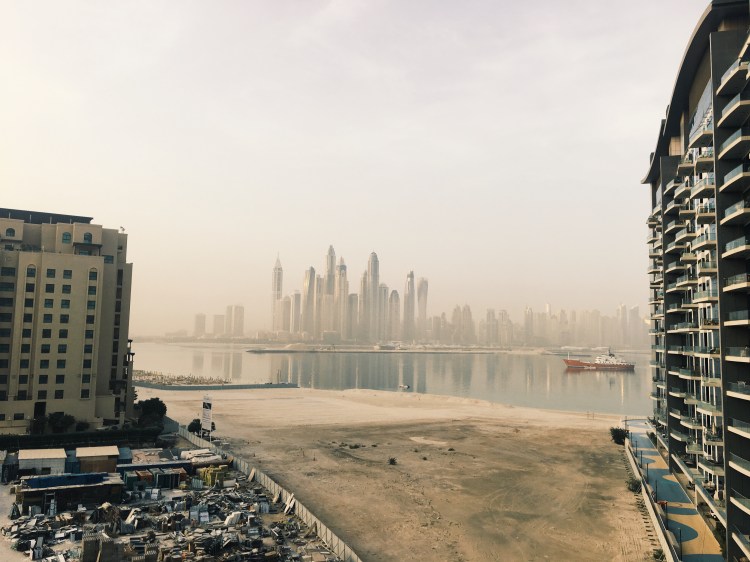
Hotel room with a view.

At first glance, Dubai embodies conspicuous consumption and glossy artificiality — everything I stand against. And so, I was curious: in the 48 hours I had to explore the city, could I scratch away its bling veneer to uncover the real and the surprising: experiences antithetical to the clichés of shopping centres and theme parks — neither of which I was interested in visiting?

My accommodation for two nights was a promising omen. As the newly opened sister to the original in London’s Mayfair, it’s only fitting that Dukes Dubai offers hints of British restraint and gravitas in a metropolis where both are in short supply.

Dukes is positively understated by the city’s standards: a luxurious yet low-key respite from clogged highways and seething malls.

Having dumped our bags and downed a gin and tonic, we head to Dubai Opera House to watch Mary Poppins, on tour from the West End. The show is beautifully executed, but what really is entrancing is its setting. The Atkins-designed opera house is a remarkable building — more than holding its own against the nearby Burj al Khalifa, the world’s largest tower.

The opera house’s transparent exterior is far more inviting than the grand, intimidating facades of its much older counterparts in Europe and elsewhere. Inside its concert hall, sinuous wooden elements and velvety red seats confer warmth and intimacy. The effect is unshowy yet plush — like the treasured jewellery box inherited from a grandmother. After the performance, avoiding the glitz proves impossible. In search of a taxi, we weave between selfie stick-wielding tourists as a choreographed fountain display rips across the Burj Khalifa Lake, something of a misnomer as it resembles a well-chlorinated paddling pool. We brave the hordes in the Dubai Mall, seeking sanctuary among the hushed, smartly edited stacks inside the vast Kinokuniya bookshop.

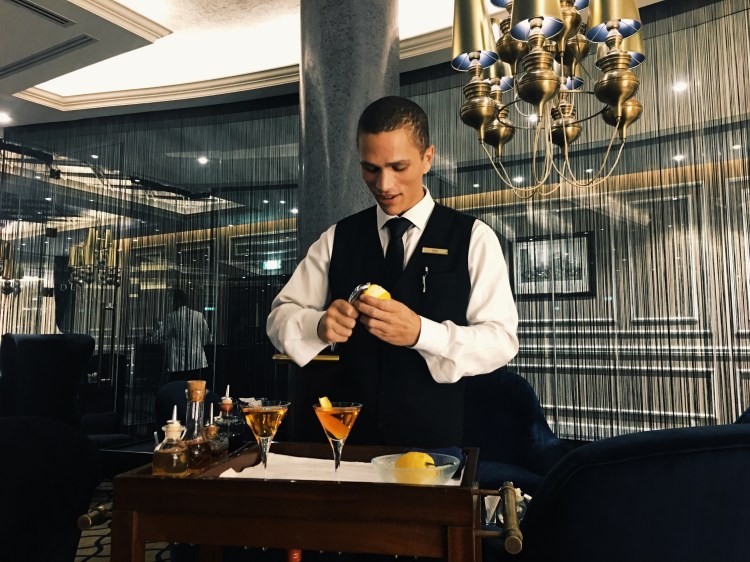
It’s a relief to get back to Dukes. We make our way down to its Great British Restaurant for dinner. I tuck into the Lancashire hot pot, a hearty braised lamb stew with pickled cabbage and beets, with perfectly cooked duck fat fries as a decadent side. The wine our charmingly attentive waiter suggests is spot-on: a silky, savoury Bordeaux red blend from La Croix.Afterwards, we head upstairs to the Dukes Bar where the chatty Kyle September, who hails from Mitchells Plain and is one of several delightful South African staff members we encounter during our stay, is on duty. We pick a classic from the long list of martinis — the Vesper that was first featured in the James Bond novel Casino Royale. September makes them right in front of us on a trolley and the result is a drink as smoothly potent as 007 himself.

Processed with VSCO with g3 preset
Barman Kyle September preps our Vespers.

Not quite ready to head to bed yet, we have an Old Fashioned nightcap in the moodily lit confines of the Cigar Lounge, puffing on an H Upmann Half Corona as we melt into our Chesterfield sofa.

The next morning, slightly worse for wear, we hastily graze the vast breakfast buffet before driving across the city to the Sheikh Mohammed Centre for Cultural Understanding. Established by Dubai’s ruler, Sheikh Mohammed bin Rashid Al Maktoum, in 1998, the centre aims to promote crosscultural interactions, offering tourists a window into Emirati life and heritage through various tours, meals and events.

The portly and charismatic Waleed Nabil, our guide for the 90-minute tour, is already in full flow as we join a cluster of date-chomping foreigners sitting cross-legged in the centre’s courtyard. “I can read your minds – you are wondering what I’m wearing underneath,” he beams as he starts explaining traditional dress — the kandora (robe) and ghutrah (headdress) that conspire to keep Emiratis cool and concealed from the searing sun. I’m rather envious of Nabil’s attire as we exit the building, smacking into a wall of hot air. Sweat is pouring off me almost instantly as he leads us along the narrow alleys of the Al Fahidi historic district, one of the oldest parts of Dubai, with coral buildings from the 1800s.

He points out architectural features such as the barjeel — a wind tower that acts as natural air conditioning, funnelling air into the house — and the large front doors that have smaller ones inside them. This forces the visitor to stoop as he enters, allowing a woman in the house time to cover herself up before he sees her.

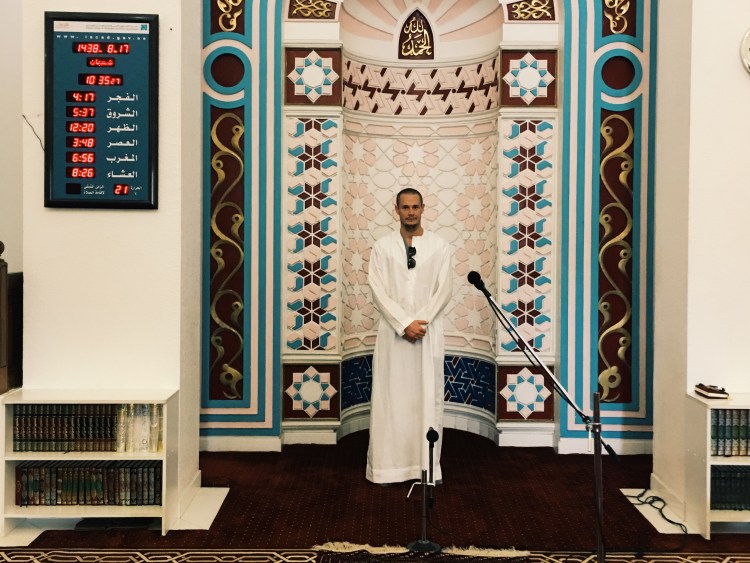
Donning robes to cover our arms and legs, we enter the cool serenity of the Grand Mosque, sitting on lush blood-red carpet under the chandelier hanging from its enormous dome. An electronic signboard lists the five times a day Muslims should pray; like aspirant preachers, a few of us take turns to stand behind the microphone at the front podium.

Processed with VSCO with g3 preset
In the Grand Mosque.

We slowly wend our way back to the car through the maze of alleys, stopping at Make Art Café, a rather lovely agglomeration of local art, design and fashion showcased in little rooms, with a shady chill-out space on its roof. We also pop into XVA Art Hotel, where contemporary pieces line the walls of its three air-conditioned courtyards, and its design shop offers stunning handcrafted jewellery such as Noal Zaher from Afghanistan’s semiprecious-stone earrings.

It’s tempting to linger in this delightful part of the city, soaking up its human scale and higgledy-piggledy intimacy, so sorely lacking elsewhere in Dubai, but time is running out. We head to Alserkal Avenue, a hub of galleries and design studios in the bleakly nondescript industrial suburb of Al Quoz about a 20-minute drive away.

Our first stop is A4 Space — a coworking zone, community library and exhibition space with a small café attached. On the ground floor, vertical gardens are on sale, while on the mezzanine, cute creatives and students tap away on MacBooks at communal tables or pore over books in hidey-holes with comfy beanbag seats.

Suitably revived by an iced coffee, we strike out along the precinct’s streets. It’s a Friday and so, in keeping with the Middle East’s weekend, quite a few establishments are closed.

Happily, Mirzam’s bean-to-bar chocolate factory is open. Through the window we can see the dark gold pouring and folding and swirling and setting. In the tasting room, we eschew the range of classic single-origin 65% bars, instead sampling the special-edition Winter in Morocco range, including the silky White Chocolate with roasted almond and orange blossom, sublimely wrapped in arabesque packaging.

At the cavernous Third Line gallery, which represents a stellar line-up of Middle Eastern artists, we lose ourselves in legendary photographer Fouad Elkoury’s solo show Suite Egyptienne — with black-and-white images that document his travels in Egypt, ranging from stolen, intimate moments indoors to sweeping, austere landscapes.

We move on to Leila Heller Gallery, the satellite space of the New York original; at 14,000 feet, it’s apparently the largest gallery in the UAE. On show is Lebanese artist Marwan Sahmarani’s Drifting Island – a series of enormous canvases exploding with visceral, sumptuous colours, offering an abstract meditation on the ubiquity of violence in the news-saturated turmoil of the contemporary world.

Finally bested by the heat, we return to Dukes, joining the lobster-pink throngs for a splash-about in the pool. The Arabian Gulf shimmers in front of us, as smooth as milk.

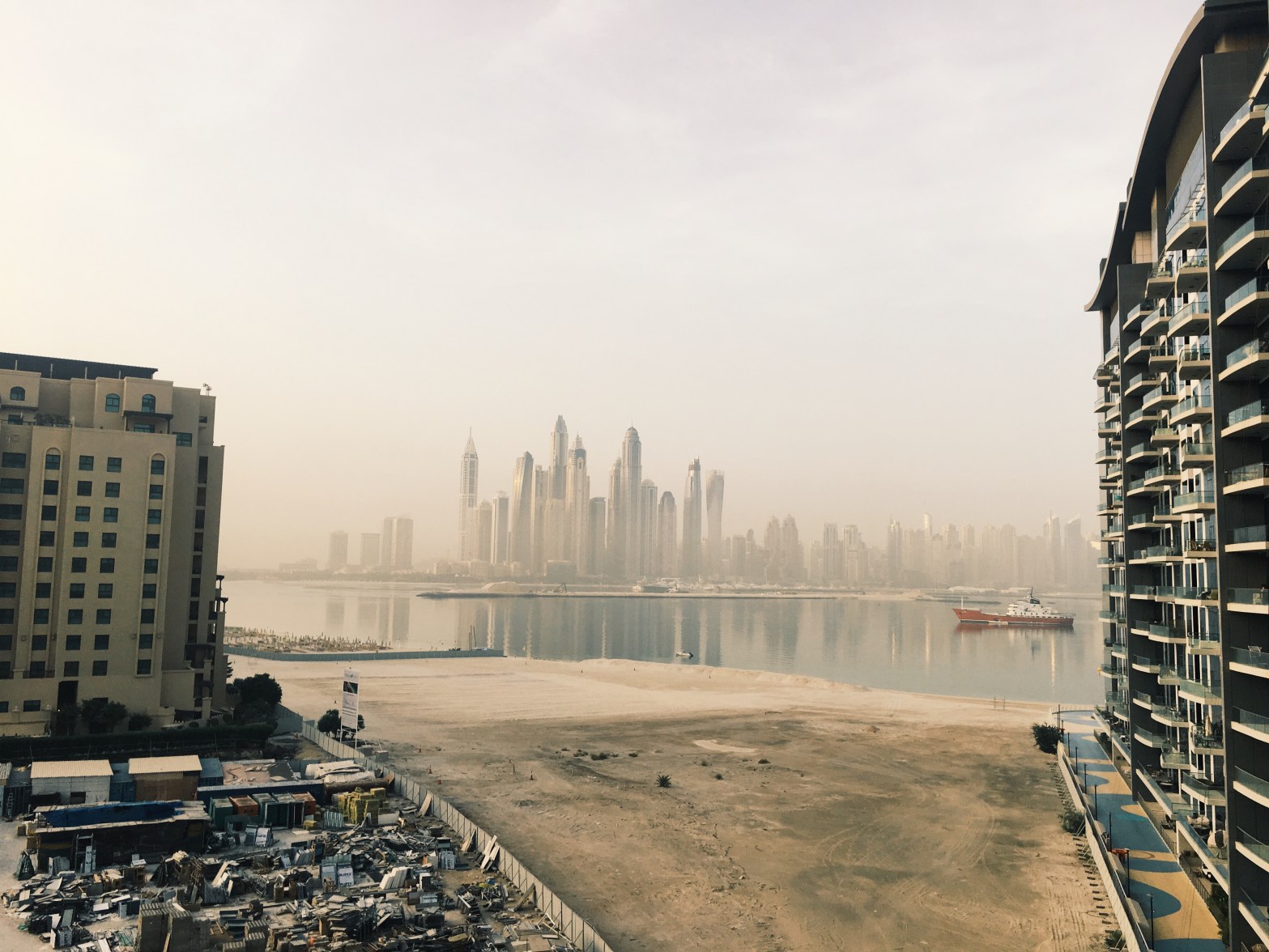
That evening, as I pull the curtains across my room’s windows, I reflect that the view is quintessential Dubai: down below is a construction site, then rising above the water, a tiara of towers glittering through the haze. This is a city built on dreams not yet fully realised.

I realise to my utter surprise that I’m not quite finished with Dubai – I’m not all that keen to say goodbye. I’ve had a taste of what lies beyond its relentless ambition and dizzying bling and I’d like another bite. Perhaps someday I’ll have one.

Diving into the city that stole my heart

(Or why, after a week, I didn’t want to leave Sydney.)

Processed with VSCO with g3 preset
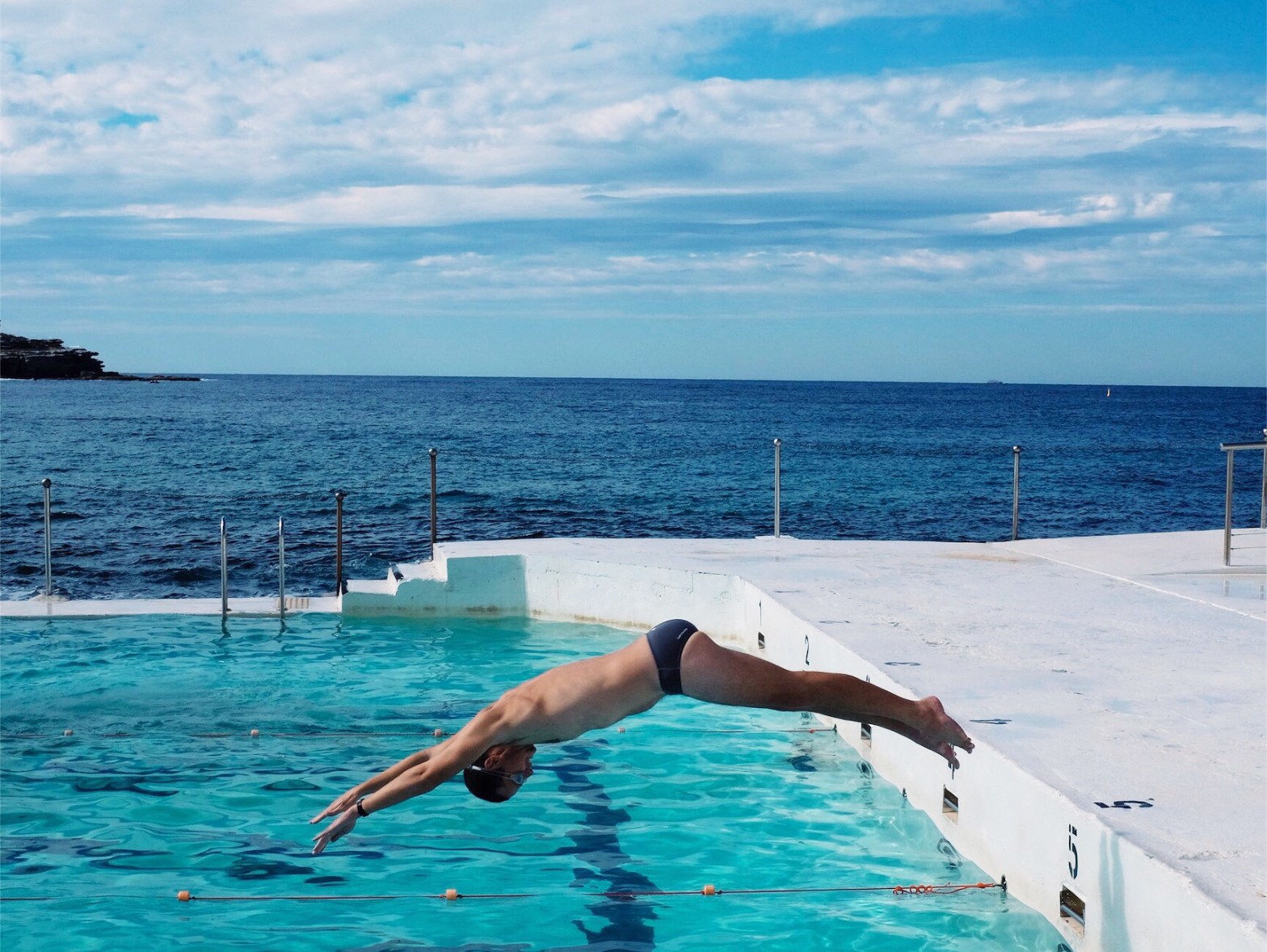
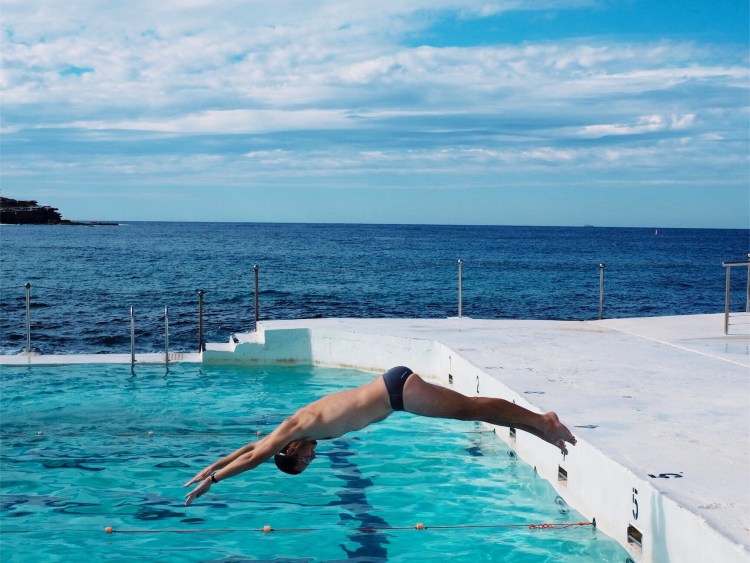
The Bondi Icebergs: surely the world’s most beautiful swimming pool.

As the plane glides into its airspace, it’s clear that Sydney knows how to impress. Bordering the inky Pacific, the city is a sprawling, sparkling brocade beneath clouds ablaze with the evening’s last light.

Little more than an hour later, I’m at the Radisson Blu Plaza Sydney, ensconced in my room – a modernist-tinged sanctuary of golds, blues and greys. Travel-weary, I’m tempted to soak in the marble-topped bath before passing out, but I’m starving and it’s not even 9pm.

A nearby Frankie’s Pizza By the Slice offers Neapolitan-style pizza, a decent selection of mostly Aussie and Kiwi craft beer and live music every night. I demolish a slice of Puttana (salami, onion, chilli and olives), nursing an Exit Amber Ale as Frankie’s World Famous House Band, which plays every Monday, rocks and surges with infectious energy.

The Radisson Blu offers everything expected from a business travel-focused hotel, including free Wi-Fi, a gym and swimming pool, more than 500m² of conferencing space and a business centre. While it might not have the harbour views of some of its other five-star rivals, it more than makes up for that.

Its historical setting offers a welcome contrast to the cookie-cutter blandness often asso-ciated with business hotels. Constructed in 1856, 27 O’Connell Street was, until 1955, home to Fairfax, publishers of Australia’s oldest continuously published newspaper, the Sydney Morning Herald.

Although much of the interior has changed since the building became a hotel in 2000, there are still plenty of elements acknowledging its architectural heritage — including stunning black-and-white photographs lining the passage walls.

The original offices of father and son media barons Sir James and Sir Warwick Fairfax have been transformed into elegant meeting rooms as part of an A$13.5m refurbishment completed in July 2016.

After a yummy omelette in the Radisson’s Lady Fairfax Room, I take a sunny stroll to the Art Gallery of New South Wales, a grand neoclassical edifice in The Domain park. Although the gallery also features Asian and European art, I focus on the Australian and Aboriginal and Torres Strait islander collections.

In the Yiribana Project Space, there’s a temporary exhibition of Mervyn Bishop’s striking images of Aboriginal life. I wallow for ages in the glowing blue expanse of The Balcony 2 by the late Brett Whiteley – one of Sydney’s most heralded artists — and am dazzled by the vast Untitled (Jupiter Well to Tjukula) by Uta Uta Tjangala.

The gallery’s enormous picture windows eventually lure me back out into The Domain. I walk along the water to Mrs Macquarie’s Point. The shaded path leads me past the rough stone chair carved by convicts in 1810 for Mrs Macquarie, wife of the then-governor of New South Wales, taking me into the Royal Botanic Gardens.

Although there are greenhouses, a fernery and a grove of more than 300 palm species to explore, the water has me in its thrall – and so I stick to its edge until I reach the Opera House.

Despite undergoing extensive renovations, the 44-year-old structure still hosts more than 2,000 events a year. I sneak into its austere lobby to use the toilets which, with the glowing ambience of a Stanley Kubrick-designed spaceship, turn out to be my favourite part of the building.

Outside, the sun shimmers across the harbour, drenching joggers and the patrons of waterside cafés and restaurants. I escape from the throngs around Circular Quay, slipping into The Rocks – a warren of old buildings that hosts design and food markets on weekends.

Fortified by a ham and Swiss-cheese toastie at the Fine Food Store, I drift dutifully through the nearby Museum of Contemporary Art Australia.

After the gravitas and diversity of the Gallery of New South Wales, the museum is a tad underwhelming — although its rooftop restaurant has spectacular views of the Opera House.

Although tempted to enjoy a pint at craft brewery Endeavour’s retro Tap Rooms, I decide to have a taste of history instead, walking several blocks to The Lord Nelson Brewery Hotel – the city’s oldest continuously licensed hotel, which brews six ales on site.

Surrounded by nautical regalia and crusty regulars, I knock back a pint of the Victory Bitter, a caramel-tinged British Pale Ale with a bitter kick.

Back in the city centre, I stick with the historical theme, visiting The Strand Arcade, an elegant Victorian complex that has a range of fashion, jewellery, antique and food stores.

I’ve long coveted an Akubra felt hat. Fortunately, Strand Hatters has hundreds to choose from — and after 20 minutes of agonising, I settle on a wide-brimmed olive green one with a barramundi band — and leave the store broke but happy.

A few doors down on bustling George Street, I pop into the home of another Australian icon – RM Williams, makers of timelessly stylish boots handcrafted in Adelaide and loved the world over.

I leave empty-handed and head to The Grounds of the City a short walk away. Already well-caffeinated, I don’t have to call on the services of its coffee sommelier – instead I admire the sumptuous Art Deco-inspired interior and spiffily dressed staff while sipping peppermint tea at the bar.

Over the next few days, I explore more of the city and even head into the snooty and self-consciously hip Inner Eastern suburbs. These neighbourhoods contain a plethora of great restaurants, bars and shops where you can have languid lunches in the dappled courtyard at Pieno, or a flat white at the Brewtown Coffee Roasters.

More welcoming, though, was the taste I had of Sydney’s gritty and unpretentious Inner West. In the rapidly – and controversially – gentrifying Redfern, we have a drink at the whimsical Arcadia — think friendly bar staff, high ceilings and fairy lights.

We head to the nearby Redfern Continental, passing the bright young things feasting in the restaurant, to get to Gunther’s Dining Room. It’s like stepping behind the Iron Curtain: with its wooden panels, banquettes and disco ball, it’s a sexily lit mash-up of ’60s communist chic and contemporary campness. After drinking the best negroni I’ve had, we go next door to Dock, a tiny bar hosting a rambunctious karaoke night.

A couple of nights later I head west again to the Marrickville Portuguese Madeira Club for a dance party hosted by Kat Dopper who, under the moniker Heaps Gay, organises events for Sydney’s queer community.

It strikes me as a special thing to see young people from across the spectrum of gender and sexuality jolling together in the same space. It is all the more poignant for occurring in a country where marriage equality is still up for debate.

My ears are still ringing with the sound of Ariana Grande when, several hours later, I jump into an Uber and head to Manly Beach, a seaside suburb about 20 minutes from the centre.

It’s a little after 6.30am and the sky is glowing yellow and blue as I join the pink-capped members of the Bold and the Beautiful squad, whose hardened regulars swim every morning to the neighbouring inlet of Shelly Beach and back, for a total distance of 1.5km.

Tiny fish dart below me as I slice through the calm, clear water – an invigorating 19°C that has my teeth chattering.

Slowly thawing, I eat a bacon and egg bun at Bluewater Café on Manly’s pine-lined promenade, then wander up through coastal forest to the lookout point on the Shelly Headland to take in the endlessness of the Pacific below.

After a crisply bitter In Season IPA at the 4 Pines Brewery opposite Manly Wharf, I cross the road for my ferry ride back into the city, chugging past residential enclaves and patches of bush towards the dazzling sails of the Opera House.

As a lifelong swimmer obsessed with outdoor pools, I had to make a pilgrimage to arguably the most beautiful one in the world: the Bondi Icebergs, wedged between cliffs and ocean at the southern edge of the famed Bondi beach.

I’m tired and grumpy when I arrive, but that instantly melts away as I leap into the bracing water, which is constantly replenished by waves smashing against the pool’s sides.

After eight lengths, we amble along the clifftops to the neighbouring suburb of Bronte, where I take another dip in the tidal pool adjoining its beach. Then we wander up between mid-century bungalows to the Three Blue Ducks, a gorgeous pavement café.

Sated by fish pie and hearty braised beef, we order flat whites and lean back, eyes closed to the late winter sun. For a moment, at least, life is perfect. I don’t want to leave.

This article first appeared in the 23 October 2017 edition of Business Day under the heading “Sydney — a liquid city of craft beer, caffeine, crisp seas and hip scenes”.

Conversations with my soul: an interview with Igshaan Adams

igshaan
Igshaan Adams in his Cape Town studio in 2012. Photographed by Lar Rattray.

Igshaan Adams and I are sitting on cushions on the paint-spattered wooden floor of his room at Greatmore Studios in Woodstock.

“I sometimes say that creating artworks for me is almost having a conversation with my soul,” he tells me. “I’m Muslim, but I also identify as being homosexual which is very conflicting.” His Christian grandparents raised the 29-year-old as a Muslim, and this “also created a bit of conflict in terms of where exactly do I fit in”.

The result is work that is a constant grappling with the self: a quest to achieve an understanding about who he is, how he fits into the world, and how to negotiate the complexities and contradictions of his own identity in tension with his culture, community and religion.

As a child growing up in Bonteheuwel on the Cape Flats, he was never exposed to art. “I had no clue, even, that I could make a living off this,” he says. He wanted to become a chef, but the hospitality course he wanted to do was too expensive. He settled for his second option, visual art, which was a third of the price. After two years at the College of Cape Town, he enrolled at the Ruth Prowse School of Fine Art where he majored in mixed media, graduating in 2009.

His graduation piece was Jou Ma se Poes – an installation representing “a typically Cape coloured living room” using objects from his family and community, and with eight self-portraits made up of fabrics from his home lining the walls. “I was looking really at identity and asking is it possible to be yourself in every situation,” he says. One portrait contained the most obvious reference to his sexuality – a ghostly depiction of himself in a blonde wig, with the first prayer of the Qur’an (considered, he says, the most holiest) carved out in the frame around it.  “At the time I was still thinking I will conform, I will probably get married to a woman. What I was saying in that work was that I need to acknowledge the fact that this part of me still is there – it’s just being contained by the religion I choose to follow. It’s not going to go anywhere.”

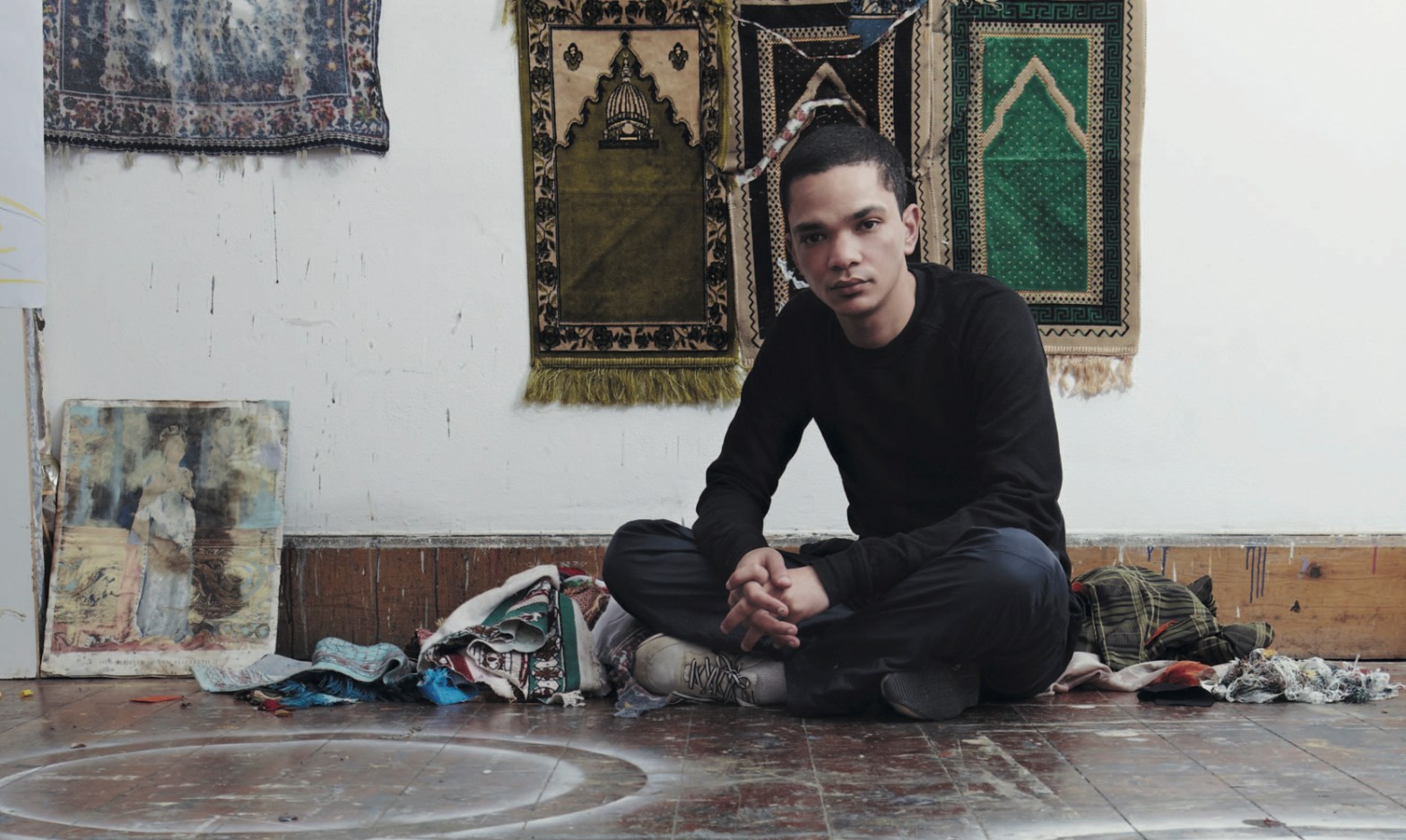
In 2010 a version of the installation was shown at Blank Projects (the Woodstock gallery which recently signed him) as part of the queer-themed group show, Swallow My Pride. Adams’s sexuality is often present in his work, but “it shows up more as the conflict, the internal struggle,” he says. An example of this was In Between, his installation at Stevenson Cape Town in late 2011 featuring prayer mats quilted together, the carpeting shaped so as to depict a snake sliding across the floor. On the wall was a stitched canvas portraying a fez.

“I don’t want to sit with the same issue; I definitely want to grow. But for now I am having fun with where I’m at,” he says. He wants to continue working with carpets as a medium. In addition to a recently completed self-portrait, he is also working on a large installation piece featuring a dog sitting in the holy city of Mecca.

“I’m hoping that people will see that if you look at my work it’s always just been a very personal statement. I’m not trying to say anything about Islam in general because I just don’t know enough to say something about that. The only thing I feel like I really know is myself – so that’s what I can speak about. I think it’s inevitable that the work would be read politically because of the materials that I use and I can’t get away from that but I certainly don’t create from that point of view. It’s always about me, about my own home, family and community and the roles they have played in developing me.”

This perspective was deeply embedded in Vinyl, his first solo exhibition. Held at the Association for Visual Arts in April 2010, the show featured pieces of flooring from households he knew in Bonteheuwel. Adams went about “co-opting their stories as my own”, using the surfaces as canvases upon which to explore the notion of these objects as being silent witnesses to the joys and traumas of home life – an intimate layering of history, identity and domestic ritual. Hanging above a cluttered shelf in his studio is a rectangle of flooring which once belonged under the bed of a paralysed man. The worn vinyl is caked in brown, with subtle marks Adams has made using an earbud and Handy Andy.

“I always try to look at the work from my perspective and keep it about me,” says Adams, although he admits “that the work goes beyond that”. In working with prayer mats in his later pieces – mats used by millions of Muslims around the world and richly illustrated with Islamic motifs – he is connecting with something greater and universal.

This article first appeared in the September 2012 edition of Wanted, as part of the magazine’s annual roundup of most promising Young African Artists. Adams has been announced visual artist of the year at the 2018 Standard Bank Young Artists Awards.

Finding space and silence at !Xaus Lodge in the Kalahari

Processed with VSCO with g3 preset

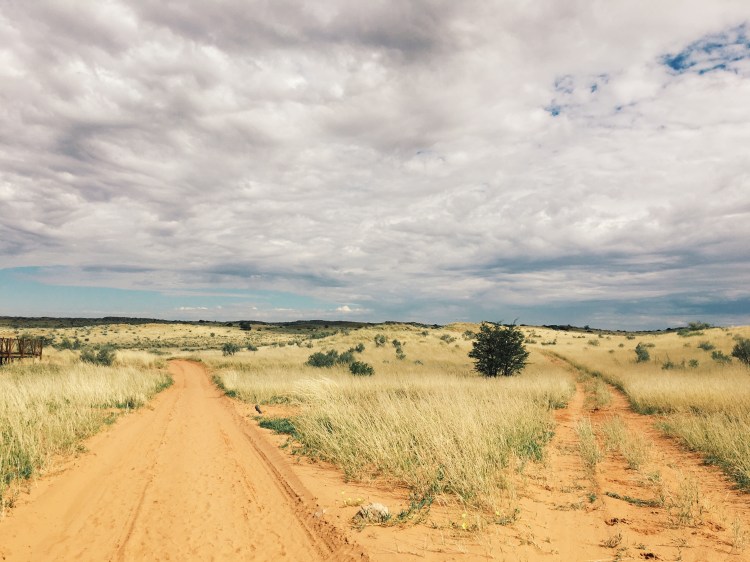
At the Kgalagadi Transfrontier Park, the welcome committee is out in full force as we arrive and slowly drive along the dry Auob riverbed. We spot ostriches, herds of gemsbok and wildebeest and a bustling family of meerkats. Under a camel thorn, a black-maned lion rests and looks rather unimpressed by his newest guests.

Fortunately, the two !Xaus Lodge employees who meet us at Kumqua picnic site are much friendlier. They show us where to park our car, and we jump into their open-air game viewing vehicle.

We bounce and glide interminably along a strip of coppery sand, slicing through shimmering waves of grass-covered dunes. Splotches of cloud shift across the burnished sky. I feel drowsy. Relaxed.

Our cell signals disappear. !Xaus has no Wi-Fi and the lodge has only a satellite phone. The whole world suddenly feels a universe away.

Our digs — one of 12 thatched, earthen chalets dotted along a boardwalk — are simple and comfortable, with a deck looking out onto the terracotta-coloured pan where a distant red hartebeest idles.

I drink a Windhoek by the pool, a growing sense of gratitude replacing the shock of disconnection. I am grateful to be under the vast, darkening sky, surrounded by silence and stillness. I am grateful, too, to be witnessing the tentative signs of redress and rebirth (following decades of dispossession and persecution) that !Xaus embodies. Meaning “heart” in Nama, !Xaus sits at the meeting point of the two blocks of land awarded in 2002 to the ‡Khomani San and Mier peoples — descendants of people kicked out of the park.

The 50,000ha area still falls within the park’s boundaries, with SANParks responsible for its environmental management. The lodge is jointly owned by both communities (who supply the bulk of its staff); they receive a turnover-based rental from Transfrontier Parks Destinations, which manages it on their behalf.

The next morning, we take a short game drive to a sandy ridge. “We are in lion territory,” warns our San guide, Kallie Swarts, whose late parents were both trackers.

He says we should also keep an eye out for a puff adder or Cape cobra that might be hiding in the nearby grass.

“We use the dune as our newspaper,” he explains — the sand reveals which animals have come past in the night. He points out the Kori bustard’s huge claws, the overlapping back and front footprints of a caracal and the butterfly print of a spring hare’s hind legs. Swarts picks up a spiky gemsbok cucumber, which appears after the rains. The San cook it with sugar or salt and pepper. He finds us another water-rich fruit, the tsama melon, which he says can live for up to two years, remaining fresh on the inside.

After breakfast, Swarts takes us on a walk. He points out long-legged bushman grass — one of the few perennial grasses in the desert and much loved by gemsbok. There are three-thorn shrubs, which are used by the San in a concoction to cure stomach ache; the branches are also used to make walking canes or stirring sticks. A cloud of red-headed finches gusts out of a shepherd’s tree as we march past in single file. Ants scurry across the sand, collecting seeds.

Next to the pan, Swarts traces a circle around the tracks made the previous day by a male lion.

At the craft village, ‡Khomani San men, women and children hunch around a fire, making jewellery. Initially I cringe. The little village is a nostalgic pastiche of a mostly extinguished way of life, the crafters’ traditional attire (rarely worn today) a way of indulging tourists’ romantic fantasies of San life.

Then I think again. Living on the fringes of the park in desolate settlements, the ‡Khomani working here come for a few weeks at a time to practise their craft.

They have so little, and without this opportunity to earn an income (which in nine years has earned the community almost R900,000), they would have even less.

Pastiche it may be, but this craft village is also an economic lifeline to a community sorely in need of one and a way of keeping age-old skills alive. And what skills! I’m moved by how beautiful everything is — the bracelets, necklaces and key rings made with materials gathered from the desert.

Ostrich shell shards and fire-roasted seeds have been transformed into beads (dark ones from tsama; green and yellow ones from gemsbok cucumber). Springbok and gemsbok bones are incorporated into the designs too.

Back at the lodge, the afternoon melts away in a daze of reading, writing and thinking. On our game drive that evening, metallic clouds swell overhead. Rain is smudging the horizon, singed by lightning.

A pair of black-backed jackals saunter across a pan; a lonely gemsbok munches grass; a kori bustard, Africa’s largest flying bird, stumbles into the air.

Rain — at first sporadic, then a furious spatter — comes down as we sip gin and tonic.

We speed back to the lodge like a boat at sea, rattling and straining as the wind and rain lash against us.

The blue sky returns the next day. As we skirt pans and sail over dunes, we see precious few animals, but that really doesn’t matter — we are luxuriating in space, in silence, in the complete absence of the manmade for as far as the eye allows one to see.

And there you have it.

You don’t come to !Xaus for its hit-and-miss cuisine, temperamental showers, or if you’re hoping to see a lion around every corner.

You come here to slow down, to step into the present moment, to discover the secrets of a tenacious ecosystem bristling with life, despite its incredibly harsh setting.

You come here for the stars — a glistening nocturnal tapestry — and the sense of smallness and connectedness that such a sight evokes in one.

After check-out — as we drive towards the park entrance at Twee Rivieren, towards cell signals, towards reality — I realise something has shifted. I feel different — recalibrated, reinvigorated.

“The pure stillness of a pause forms the background that lets the foreground take shape with clarity and freshness,” writes clinical psychologist Tara Brach in her exquisite book, Radical Acceptance.

“In the midst of a pause, we are giving room and attention to the life that is always streaming through us, the life that is habitually overlooked.”

And what a powerful pause it is. !Xaus Lodge allowed me to do just that.

This article first appeared in the 12 September 2017 edition of Business Day.
Katse Dam’s deep flood of suffering

unnamed-8
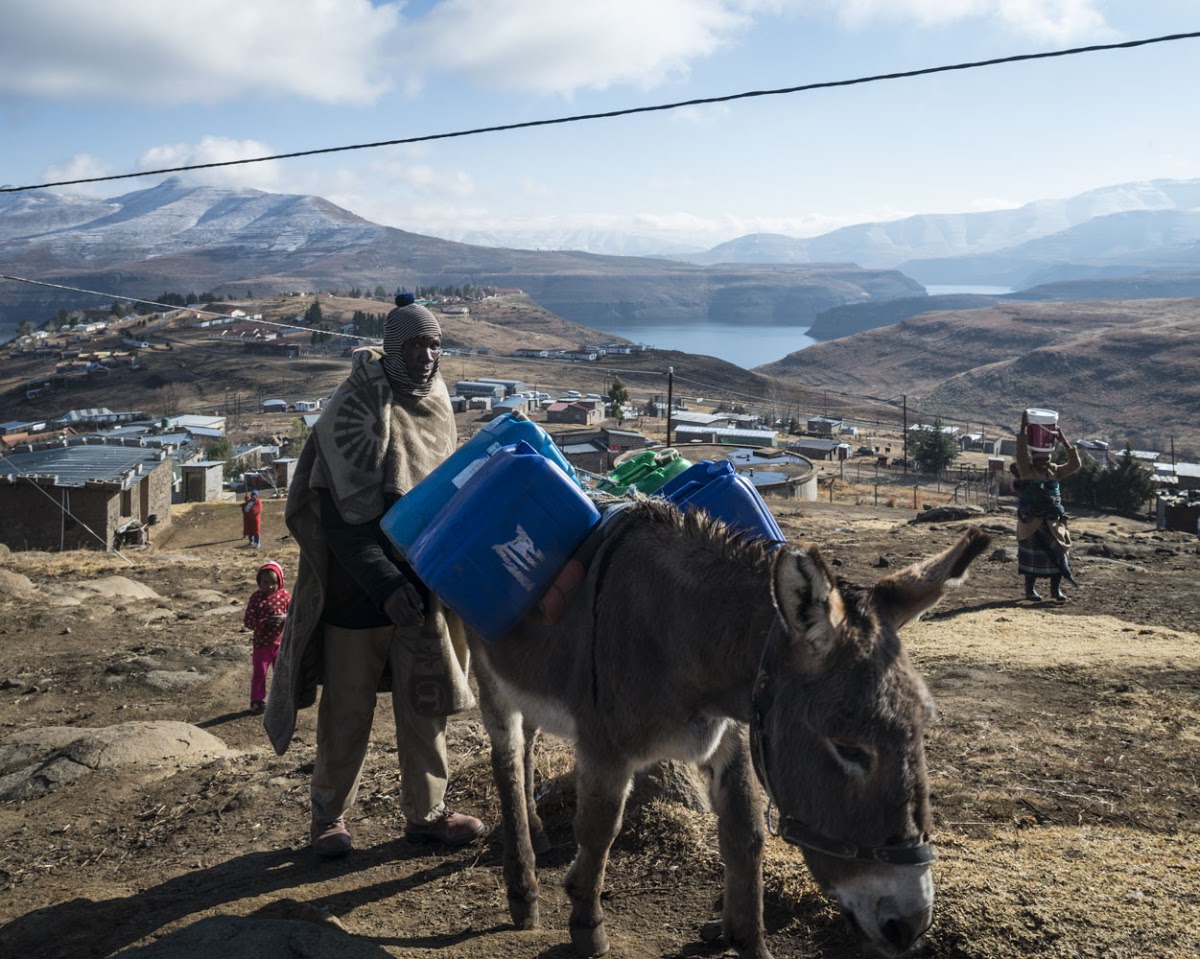
Photograph by Dave Southwood.

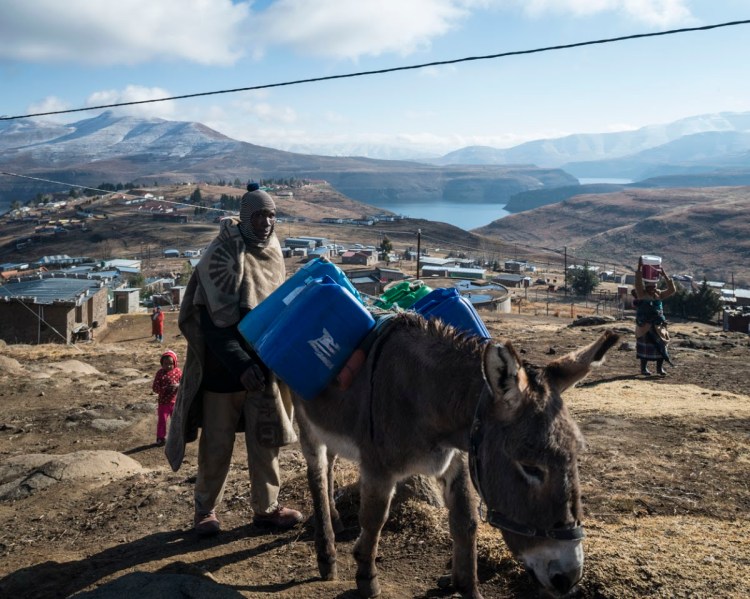
A Basotho pony is struggling up a cliff, burdened by jerry cans that have been filled up at a spring. Behind the animal, far below and out of reach, lies the fat gleam of Katse Dam.

This is the memory that sears through me when I recall my visit to Lesotho in July 2016.

I travelled there with photographer Dave Southwood, who has been visiting the mountainous kingdom frequently over the past two years.

Initially, he came to make portraits of the balaclava-clad shepherds who mind their flocks on the steep slopes above the dam. It was a way of exploring how, in portraiture, a blank mask complicates “the act of seeing and being seen”, he says, triggering “questions about the viewer’s projections and the subjects’ power”.

But, as he worked, the backdrop intruded. Ever-present and preternaturally still, the dam’s “ridiculous, unnatural vertices” and “dense and depthless magnetism” captivated him.

Southwood wanted to dive deeper into the socioeconomic and cultural ramifications of Katse’s construction. It, Mohale Dam and various reservoirs and tunnels form the first phase of the Lesotho Highlands Water Project. By June 2017, the project had earned the Lesotho Highlands Development Authority, which manages the scheme, almost R8bn from 19 years of supplying water to Gauteng.

Some have described this as a win-win – with impoverished Lesotho getting much-needed revenue for its “white gold”, while helping to quench its big, industrialised neighbour’s relentless thirst.

But what of those whose lives have been inexorably altered by the dam’s presence?

We headed to Sephareng, one of the many tiny villages dotted around Katse, to find out. Among those we spoke to was Tsenyeho Sehole, who trained as a teacher in Maseru, but has since been unable to find work.

Sitting across from us in her immaculately tidy hut, she explained that the dam initially created jobs for her parents’ generation: the men helped build and the women cooked and washed clothes.

“The work is finished now,” she says. Most people are jobless — the fish farm and Katse Lodge (the only hotel for miles) employ only a fraction of the adults in the area.

She says communities around the dam are not allowed to use Katse’s water (which is intended for SA only) and rely on springs that weaken to a trickle in times of drought. “We are running short of water.”

Although taxis and buses ply the tarred roads that were built as part of the project, “they are too expensive” if you don’t have an income. It costs Tsenyeho R12 to get to Katse village, where a clinic was constructed and there are now two bank branches. And so she walks there if she is well enough; she takes the taxi only if she is too sick.

Tsenyeho’s grandfather Ramatseliso Sehole is also grateful the road has made access to services much easier, but he mourns the way the dam has made travel to once close-by villages so much harder for those without a vehicle.

He says the Lesotho Highlands Development Authority promised the villagers boats to allow them to cross the dam easily — but these have not been provided. “We are unable to reach our friends and bury our beloved ones who have passed away. We are not happy with this dam.”

Before the water filled the valley floor “all the animals were grazing very nicely and there was a lot of pastoral land”, Sehole says. “Even when the snow had fallen, there was still pasture for the animals.”

While the Lesotho Highlands Development Authority has provided compensation for the loss of arable land (in the form of money or food), this has not made farming on the cramped, infertile slopes any easier.

Before the dam, villagers would fish in the river. Although he is a fan of the trout introduced into the dam (which is exported to Japan), Sehole said “we are not allowed to fish anymore”.

He says people are arrested if they are caught doing so.

The dam “has affected us a lot when it comes to spiritual things”, he says.

Sangomas in the area require flowing water for their rituals; the dam has denied them access to this.

“It’s clear that phase one, like most massive damming projects, has fomented socioeconomic problems that haven’t been fully addressed by those responsible,” Southwood says.

“If these problems are not addressed in law, countless thousands of Basotho will continue to have their lives negatively affected as successive phases of the scheme unfold.”

Encouragingly, there has been some success in using the legal system to improve the lot of those affected.

In 2012, Seinoli, Lesotho’s first independent public interest legal centre, won a court case with an order that forced the Lesotho Highlands Development Authority to restore access to running water for the 610 residents of Mapeleng village after phase one had resulted in them losing this. It is a legal precedent that will benefit more than 4,000 other Basotho who have also lost water.

Another court victory three years later resulted in the authority having to pay compensation to the Ha Lejone Community Co-operative for brushwood, fodder and medicinal plants lost as a result of the dam. The ruling should lead to compensation for the 63 other co-operatives formed to represent the interests of affected communities.

Although about seven years behind schedule, preparations for the next phase of the Lesotho Highlands Water Project are under way. With roughly 5,000ha that will be flooded to make way for the new Polihali Dam, phase two is likely to cause similar upheaval for the communities who live there.

Tente Tente, divisional manager for phase two, says this time it will be different. “A much-improved compensation policy, a livelihoods Restoration programme and a strong public participation approach are some of the improvements that underpin the intent of the Lesotho Highland Development Authority,” he says.

He did not respond to further questions about what these would entail.

With the grinding poverty and near nonexistent employment prospects around Katse, I ask why there haven’t been greater efforts to deliver job opportunities to the communities affected by phase one.

Tente suggests that “many avenues of beneficiation were created”. This included “vocational training (plumbing, metal works, shattering, bricklaying, handicrafts, cooking and catering). Many schools, clinics and community centres were also built at this time and handed over to the government at the completion of this phase.”

Asked how many people received vocational training and how many schools, community centres and clinics were built, he did not reply.

Although, should funding allow, Southwood also intends to document the region that will be impacted by phase two, the lure of Katse remains strong, and he will be returning to the dam soon.

His visits are as much about solidifying relationships, listening and sharing images as they are about capturing new ones. A portable printer he keeps in the boot of his car ensures that all of his subjects receive hard copies of their photographs.

His images from the dam were posted over the course of a week on the Open Society Instagram account in August 2016, while a portfolio of more than 20 photographs will be exhibited at the 2017 Joburg Art Fair from September 8-10.

Southwood’s images offer a reminder of the human cost of ensuring SA’s water security, even as the media focuses on phase two’s delays and tender irregularities. (The Organisation Undoing Tax Abuse plans to take legal action against the Department of Water and Sanitation over alleged delays.)

Through continuing to document and share the stories and struggles of people at Katse, he hopes they — and the others who will be affected by future phases of the Lesotho Highlands Water Project – ultimately get a better, fairer deal.

A portfolio of Dave Southwood’s Lesotho prints will be showcased at the AVA Gallery booth Ao5 at the 2017 FNB Joburg Art Fair.

This article first appeared in the 30 August 2017 edition of Business Day.
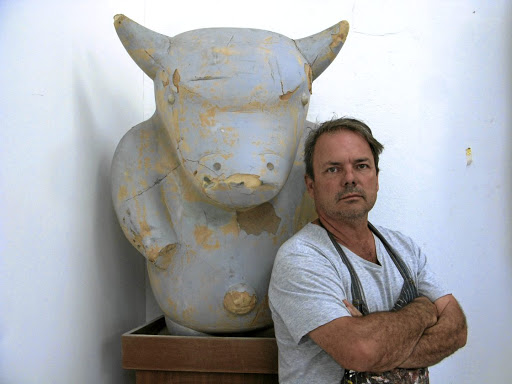
Coal mine canary Brett Murray shows the elephant in room

unnamed-5

Perhaps the artwork that most aptly sums up where Brett Murray is at is Call and Response, two panels featuring schoolboyish cursive admonishments. On the left, repeated over and over, is written, “I must not make political art”. On the right, “You are a corrupt fuck!”

The controversy about The Spear, a painting depicting President Jacob Zuma with his genitals exposed, has faded away like a bad dream over the past five years.

The ANC’s backlash to this satirical work “was a profound eye-opener”, he says as we chat in his sunny studio in Woodstock, Cape Town. He regards the debates that emerged as “positive” and carefully followed the “vibrant conversation” and believes “that can only inform me and whoever looks at making similar works or works around uncomfortable, difficult issues going forward”.

“Hopefully, it’s made me a bit wiser; not scared. And I don’t think it has,” he says.

Being a white South African means “you are in an uncomfortable position of privilege that you always have to reflect on in this place”, being especially mindful of the consequences of “trying to articulate uncomfortable things about ostensibly a black government … without self-censoring”.

Taking on Zuma or President Donald Trump is “like shooting fish in a barrel: it’s so easy” but in doing so, one can “lose sight of the big picture, the context”: the many other examples of malfeasance or mismanagement; the tragedies such as the Marikana massacre or the deaths of mentally ill patients relocated from Life Esidimeni hospital.

“I can’t solve any of those problems. I can just look and try to reflect and articulate my horror at those kinds of things in an abstract way, for my own therapy, otherwise I might go mad,” Murray laughs.

His work “is certainly about reflecting what is out there, but ultimately it is reflecting what is in here”, he says, tapping his chest, “trying to forge a path within the landmine-filled landscape of SA”.

While he hopes his art might effect change, “it is more a kind of a therapeutic process and it is very personal — it is trying to establish for myself through making things who I am, where I am, my vision of myself in the world, my vision of the world in which I live. I bring the personal into the political.”

Several “little short fat” sculptures “echo my shape — it is kind of autobiographical physically sometimes”, he says.

A bronze bird, Dead Canary, is another self-portrait. “It gave the warning, no one listened, and then [it] died,” he says.

Murray recalls the posters from his 2012 show, Hail to the Thief II, where the ANC logo was overlaid with the words “FOR SALE” and “SOLD”. Today, “the entire conversation of the nation is about state capture and how the ANC sold out, so the canary in the coal mine — I’m now dead,” he laughs.

While two bronze hyena sculptures, The Predator and Predator’s Head, are a reference to former Cosatu general secretary Zwelinzima Vavi’s depiction of the country’s leaders as a “predatory elite”, Murray says they were also inspired by watching The Lion King “a million times” with his two children. The little elephant in the room, a series of elephants, was partially inspired by watching Dumbo with them repeatedly. These works are “about life — it’s on that level as well”.

And the elephants’ phallic trunks? “I’m crude. I like dick jokes,” Murray laughs. “And when you are dealing with patriarchy, you are dealing with the dick. For me, it’s very straightforward,” he says.

“Hopefully, there is kind of a thread” connecting this show to his previous works. “I’ve always used text and I have enjoyed the craft of making things.”

He often makes wall sculptures and there are a lot of rotund sculptures that “mirror Asian vinyl toys” and echo the fleshy pieces produced by his Michaelis lecturer Bruce Arnott, in whose studio he used to assist.

A smaller version of Again Again ran at Goodman Gallery Cape Town in 2015. In February, a revised and expanded show opened with the same name for Everard Read Johannesburg. Not only has this allowed more people to see the art, it’s also “a way of completing the body of work”, Murray says.

“I don’t really know what I am making and what it is ultimately going to look like. There are lots of loose ends and ideas and avenues that I would like to pursue that that body of work might generate.”

Honing and refining the exhibition is aided by feedback from friends and the public as well as critical self-reflection. People too often see creative output “as an end-point in a discussion of something”, he says. “It’s not. It is part of an ongoing process and my own responses to works that I have done years ago and more recently shift and change as I go on.”

When the work is publicly displayed, “suddenly it starts to resonate in a completely different way — when people chat to you about it or reflect on it … you can start to see the connections that you have forgotten about and the devils on your shoulder that you should have been listening to but you might not have, and so you go forward with those checks and balances.”

In the 2015 Again Again, he used sculpture to explore, in an abstract way, populism and demagoguery, the rise of the EFF and the alarming similarities and parallels between white and black nationalism. Since then, Trump has moved into the White House, Britain has decided to leave the EU and a wave of right-wing populism has surged across Europe. In noticing a chilling resonance with events unfolding in other parts of the world, “it has been interesting seeing how some of the stuff that I am doing about patriarchy and all those things has a global context”, he says.

The show’s title, Again Again, is a reference to the fact “we’ve come kind of full cycle”. He references Karl Marx’s assertion that, “History repeats itself, first as tragedy, second as farce.” Murray says history is tragedy repeated twice over — a view captured by a 2.6m sculpture.

A few weeks before the show opens, I accompany him to Bronze Age Art Foundry in Cape Town’s harbour. Masked workers stand around his huge piece, spraying chemicals, the metal sheen slowly turning a moody black. The 40 panels of bronze were cast and welded together. As it took shape over six months, Murray visited frequently, checking details and finishes. “One of the nice things about making big things and public art is working with crews who are incredibly skilled at what they do,” he says, estimating that about 30 people have been involved.

Conjoined, his “dumb, powerful bulls” face away from each other in surly stalemate, posing the question: “What has changed and what has not? It is kind of in perpetuity,” he says.

Again Again runs at the Everard Read Johannesburg gallery until 5 April.

This article first appeared in the 29 March 2017 edition of Business Day.
The Swazi hot sauce brand fired up about fair trade chilli

fw29chilli2
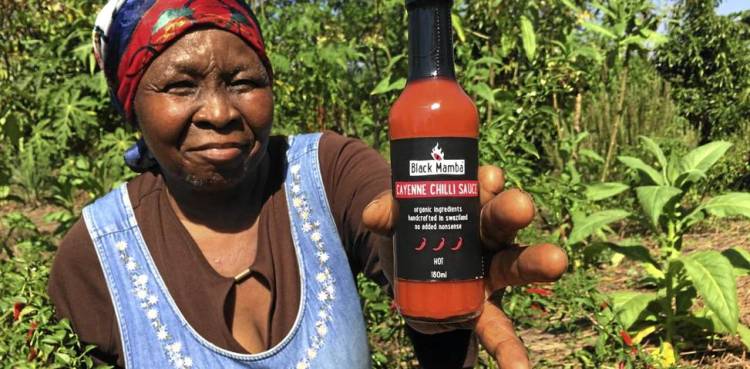
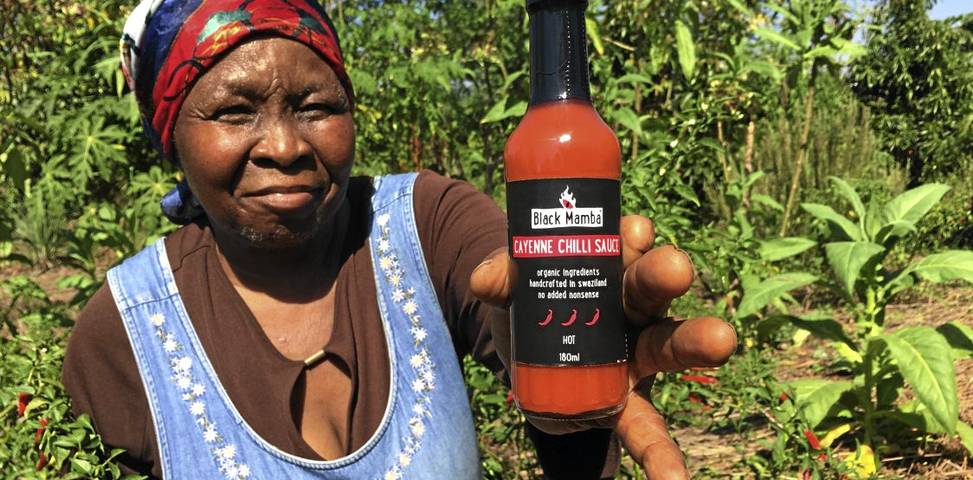
Chilli grower Thembelihle Dlamini

“I always wanted to come save Africa,” says Claudia Castellanos with a sardonic grin. Bored with her fancy corporate job at Danone – the dairy behemoth – in Italy, the Colombian approached MBAs Without Borders, which places volunteers in advisory roles at socially-minded companies abroad. When she was offered a post in Swaziland, “I was like, ‘Hold on!’ – I was just trying to Google quickly where Swaziland was, making sure it was in Africa.” With that detail confirmed, she hastily accepted.

“I was supposed to be here for four months and I’ve been here already for eight years,” she says. While helping out with the marketing strategy for Gone Rural, a Swazi homeware brand which works closely with a network of rural women weavers, she fell in love with the tiny kingdom (and one of its citizens, Joe Roques, whom she subsequently married). When her volunteering gig came to an end, she joined TechnoServe, a business NGO. Throughout this time she got to witness firsthand Swaziland’s thriving fair trade network – a bunch of predominantly handcraft companies that produce high quality, low-volume products, empowering thousands through decent wages, training and a raft of other social and environmental commitments.

When Roque, a chilli-obsessed builder and graphic designer by day, told her how he had made a hot sauce under the name Black Mamba as a side project a few years before, Castellanos suggested they give it another go – this time, professionally. In 2010, they cooked up a trial batch at home and sold it at Bushfire; by the end of the three-day music festival there were no bottles left.

They’ve come a long way in the six years since then – upscaling from their kitchen to a squash court-sized factory in Matsapha where the sauces are cooked up, bottled and labelled – all by hand. Their socially conscious principles have remained the same from the start, though: all ingredients are locally sourced, and to help tackle the yawning gender inequality that persists in Swaziland, they work with three groups of mostly women growers – many of them grandmothers who use the income they get from Black Mamba to support extended families. The 60-odd growers have been trained by Guba, a food security and agriculture NGO, in permaculture principles (which view a farm as a self-sustaining ecosystem) to farm chillies and herbs (such as coriander and basil) without chemical fertilisers or nasty pesticides.

Castellanos hopes this is a model that more of Swaziland’s agriculture sector will embrace – moving away from ubiquitous, cheap crops to focus rather on farming high-value crops organically – “because then you get the premium price for that”. “The land here is so fertile; everything just grows beautifully so why don’t we just take more advantage of that instead of growing maize and sorghum?”

Although neither are trained chefs, Roques and Castellanos both love experimenting with new recipes in the kitchen. From the fiery cayenne sauce and a milder jalapeno one they launched with, the Black Mamba range has steadily expanded. The super-hot habanero sauce is a nod to Castellanos’s Latin American roots, as is the seductively smoky chipotle sauce. When a distributor told Castellanos that pesto was all the rage in Cape Town, they developed cracker-friendly basil cayenne and coriander jalapeno pestos. The beetroot ginger and spicy mango chutneys offer another mild alternative for those who aren’t hard-core chilli aficionados.

Although Black Mamba is stocked in various gourmet stores in South Africa and at the Swazi Candles Complex in Swaziland, it’s Europe which has been the brand’s most important market – particularly the UK and Germany where fair trade products are popular. Castellanos says the brand appeals to three distinct buyers – “the chilli-heads” (those who like it hot), “the ethical foodies” (people who support fair trade principles) and the “health ambassadors” (people who buy organic for its perceived health benefits).

Castellanos wants Black Mamba be “a cult brand” – “I know we’re never going to be like Nando’s or Tabasco – and we’re not interested in that,” she says. “We don’t sell chilli sauce – we sell Black Mamba. It’s a concept, a lifestyle.”

An edited version of this article appeared in the 12 February 2017 edition of the Sunday Times.

Thania Petersen: the art of reclaiming the past

Through her powerful artworks, Thania Petersen is reclaiming the dignity that colonialism denied her forebears.
Thania Petersen
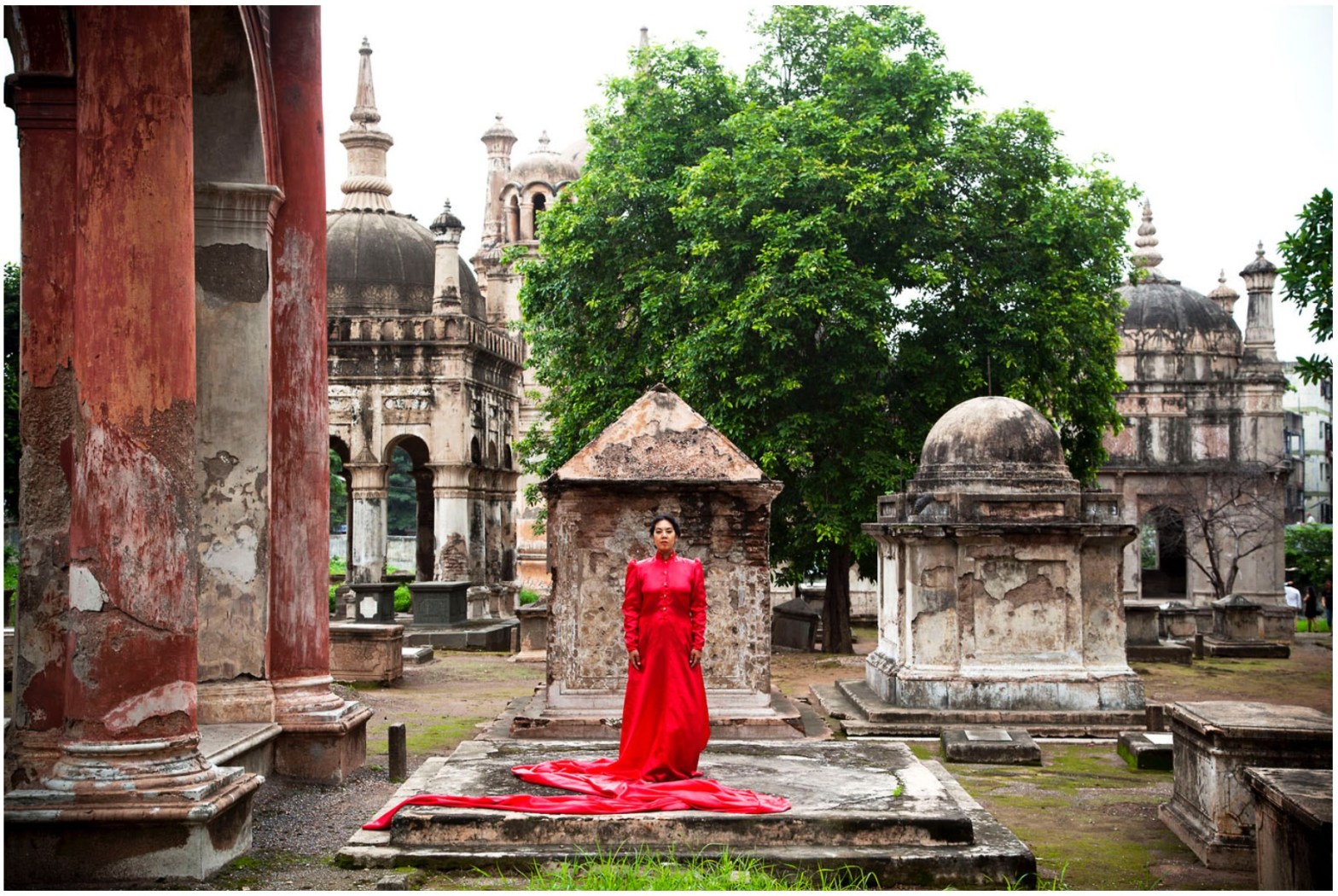
Thania Petersen’s Remnants.

Sometimes life takes you to some surprising places, and sometimes the most surprising place of all is home. Just ask Thania Petersen, who left Cape Town aged 10, when her family joined her dad, a political exile, in London. After dropping out of her sculpture degree at Central Saint Martins (she couldn’t afford the fees), a chance encounter with the sculptor Sylvester Mubayi at a posh art fair near Oxford led to an apprenticeship in Chitungwiza, Zimbabwe. Here, a South Korean popped out of nowhere, while she was carving stone under a mango tree. He told liked her he liked her work, and invited her to come back with him to work in Yeojoo. He turned out to be a bit of a jerk, but luckily the acclaimed ceramicist Hwang Yea Sook took Petersen under her wing – she was her apprentice for almost a year, and exhibited her own pieces at the 2005 World Ceramic Biennale in Icheon.

In 2007, Petersen came to South Africa on holiday. “I didn’t plan to come back at all – I had absolutely no intention of staying in Cape Town,” she recalls. But then she met her husband, Amin. Three babies later, she’s still here.

“Art is really something you need to dedicate yourself to – you can’t really compromise, so I couldn’t work, because either I would’ve compromised my kids or I would’ve compromised my work, so I just had to wait until they were old enough for me to work.” Her youngest is three – capable, she says, of making his own breakfast.

“Never in a day of my life have I ever wanted to be anything but an artist,” she says. Perhaps that’s because her mother tied rice bags to her bag to prevent her from walking prematurely – it’s a Japanese belief, she says, that babies who walk later are more creative. “This is the myth in the family, whether or not it actually happened, I don’t know.”

Although her “extremely bohemian” parents were “a bit crazy”, at least “they were not obsessed with me having a serious money-making career… I was never encouraged to do anything but what I wanted. Shame, I think they regret it now that I’m poor,” she laughs.

In 2015, she staged I AM ROYAL, her first solo show, at the AVA Gallery in Cape Town: a series of photographic self-portraits that trace the strands of her history and identity all the way back to the arrival of her forebears from Indonesia – which included the Prince Tuan Guru – in the 1700s.

“What urged me to do it was this absolute feeling of not belonging and not being noticed and being ornamental in the landscape and just not being taken seriously,” she says. The Cape Malay are “neither black nor white – so we’re sort of stuck in the middle of nowhere with no name and nothing to draw on. I felt a loss, and a sense that history had betrayed us.” This sense of displacement, of homelessness, undermined her confidence. “You don’t feel good enough… it’s been subtle for so long: that you think the white man is better.” She noticed how some women in her community would straighten their hair or wear green or blue contact lenses in a bid to emulate a white version of beauty. I AM ROYAL was a response to that, a way of saying “there is more to us, and we can be proud by just being who we are”. “The most important thing for me is not concentrating on weakness but concentrating on strengths. History as it’s taught is oppressive and teaches us that we were nothing more than slaves. I needed to readdress this history.”

“The reason why I put myself in the front and centre [of each image] is because for so long we’ve been invisible and I think a lot of my intention is about creating visibility – and so I am no longer going to stand at the back or next door; my image is just representative for a person who has just been on the sideline for far too long and, in a sense, it’s saying: ‘We are here and we are present. We’ve always been present, but you will acknowledge our presence.’’

Having reclaimed her heritage through these images, she felt transformed by them into “a whole person”, and was inspired to travel the Indian port town of Surat last year – once a major outpost for the Dutch East India Company. She visited the elaborate mausoleums where the company’s officials are buried. These were the men responsible for bringing her forebears to the Cape from Indonesia, as well as transporting and enslaving countless people from Ceylon, India and Madagascar.

“I was so confident when I walked in,” she says. “I thought that I would be confrontational – I thought it would be as though I’m confronting the past, but actually when I walked through, the past had lost its power over me – it wasn’t about confronting anymore, it was more about just being present and being there because I can.”

It was a process of internal decolonisation. “It’s got nothing to do with claiming anything… I had taken something inside back, which was amazing, I just felt so fulfilled; I was at peace.”

Photographs from the visit form the heart of her new show, REMNANTS, which recently opened at Everard Read Gallery in Cape Town. “We carry the remnants of the past with us in our hurt and pain as people with no sense of belonging. These feelings are not exclusive to us but to displaced communities throughout the world who have been moved from their indigenous homelands in the name of trade and industry,” she says.

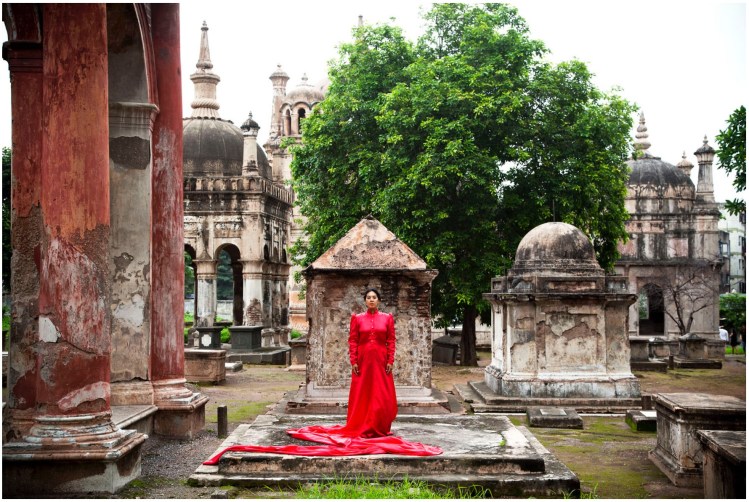
Red fabric, an extension of her dress, flows dramatically across the grey, in remembrance of those who came before and “symbolic of the blood spilt in the history of all these colonial empires”.

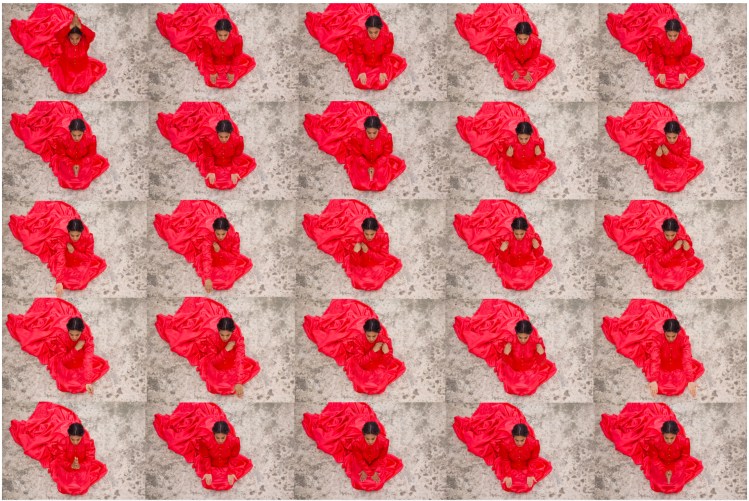
A composite of 25 images capture her performance of saman, an Islamic dance from Indonesia. I comment on the delicious irony of her performing this in a colonial space, given that the Dutch had sought to ban the practice of Islam in their colonies.

“I can’t imagine anything that would irritate them more” she laughs.

She had had to learn how to perform it from an American girl on YouTube because, in the clips from Indonesia, the dancers were moving too quickly. Initially this frustrated her – but she realised that this offered apposite commentary about the loss of cultural heritage, exposing “how far removed we are from our own history”.

Thania Petersen
Petersen performing the saman.

Last night Petersen had a bit of wobbly. Over tea in her book-filled study, she tells me about how she felt like giving up, about how she was considering stopping being an artist.

“You become so emotionally involved, it becomes so difficult to not be affected by how maybe people react or how your work is going to impact and if what you’re trying to say is coming through visually.” She admits that “sometimes I do work and I don’t tell the full story about what the work’s about because I don’t have the guts, because I’m scared of offending people or being too confrontational. I’m not the kind of person who likes to upset people.” She has “a huge social circle and in that everyone feels their own sensitivities and you can’t always accommodate everybody’s sensitivities. It’s a difficult space to navigate.”

I suggest that perhaps it’s the role of the artist to make people feel uncomfortable. She agrees: being “uncomfortable can actually be a healthy thing,” she says.

“It’s just such an incredibly sensitive time that you actually just have to watch what you say because people are so defensive… I’m just scared of saying things – that’s why I’d rather do it in my work… There’s some things where I just feel the work will talk in the right way because when I just speak English it can always be misinterpreted. So sometimes maybe I’ll talk just about the top layer and maybe not further in.”

In ARAVANA (Sanskrit for “the veil of ignorance”), a video performance and sequence of photographs that will be appearing alongside REMANTS, she walks through the Castle of Good Hope in a black hijab.

Aravana
From Aravana.

She notes how many secular societies frown upon the veil; some have even banned it outright. “Muslim women are losing their rights to practise their faith as they choose to. The West views the hijab as oppressive, yet Muslim women the world over feel oppressed not by the hijab, but by the ideals forced upon them by the governing bodies under which they live,” she says. “In certain Islamic countries the hijab too is used by men in an unlawful manner towards women. We are being robbed of our choices on both sides. I question where we are safe if even our safest spaces and what is meant to protect us is used to oppress us. Which way do us as women turn when sanctity as interpreted by men betrays us? We are vulnerable and our bodies exploited and hurt as if they are not our own.”

The “extremely masculine, overpowering” Castle embodies “an oppression we all understand”: imperialism and apartheid. “My movements are reminiscent of the circumbulation practiced on pilgrimage around the Kabaa; however, I am going in the opposite direction as this walk is a silent outcry to be heard above the structure and confines that we find ourselves in.”

Lighter but no less poignant, is Flamingoes, a series of kitsch, crazy images. Originally inspired by the deluge of selfies that her husband, a casting director, receives from women hoping that he’ll make them super stars, they became a meditation on the social media-obsessed madness of modern life.

“Our lifestyle is so fast. Everything is superficial. Modernity is not accommodating us fully; it’s not giving us everything we need – it’s just keeping us busy. Deep inside there is a feeling that something is missing. What I’ve come to realise, through all of this and through the other work, combined, is that we are all displaced.” Both colonialism and consumerism have left us “spiritually barren”. “What is this void?”

“I never know where I’m going to with this stuff, because I’m kind of figuring things out,” she says. Her searching brought her to Bahasagalaramashari, a fictional word – and world – that embodies the “place we all imagine we should be. Utopia. It is about the false ideals that we create which stems from the false perceptions we have of ourselves not knowing who we are and what we need.”

“Only each person will only know what truly will fulfil themselves but only they can find it within themselves,” she says. “I think it’s so individual. It’s hard to look deep inside yourself – I think it’s a lifetime’s work because once you start looking inside yourself you have to look at everything about yourself” – even the nasty bits. “So we’d rather spend our days solving other peoples’ problems,” she laughs.

Remnants runs at the Everard Read Gallery in Cape Town until 5 March.

An edited version of this article appeared in the 19 February 2017 edition of the Sunday Times.