Author Colm Tóibín on ‘Pulling Things Up and Out’

The Irish master discusses the creative impulse, his writing process, and why he finally started writing about queer characters.
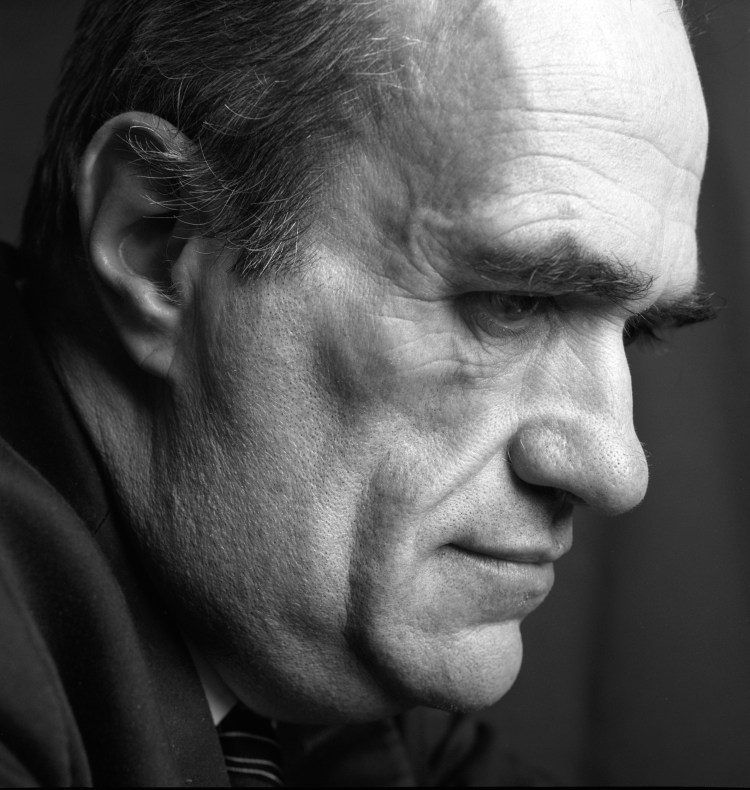
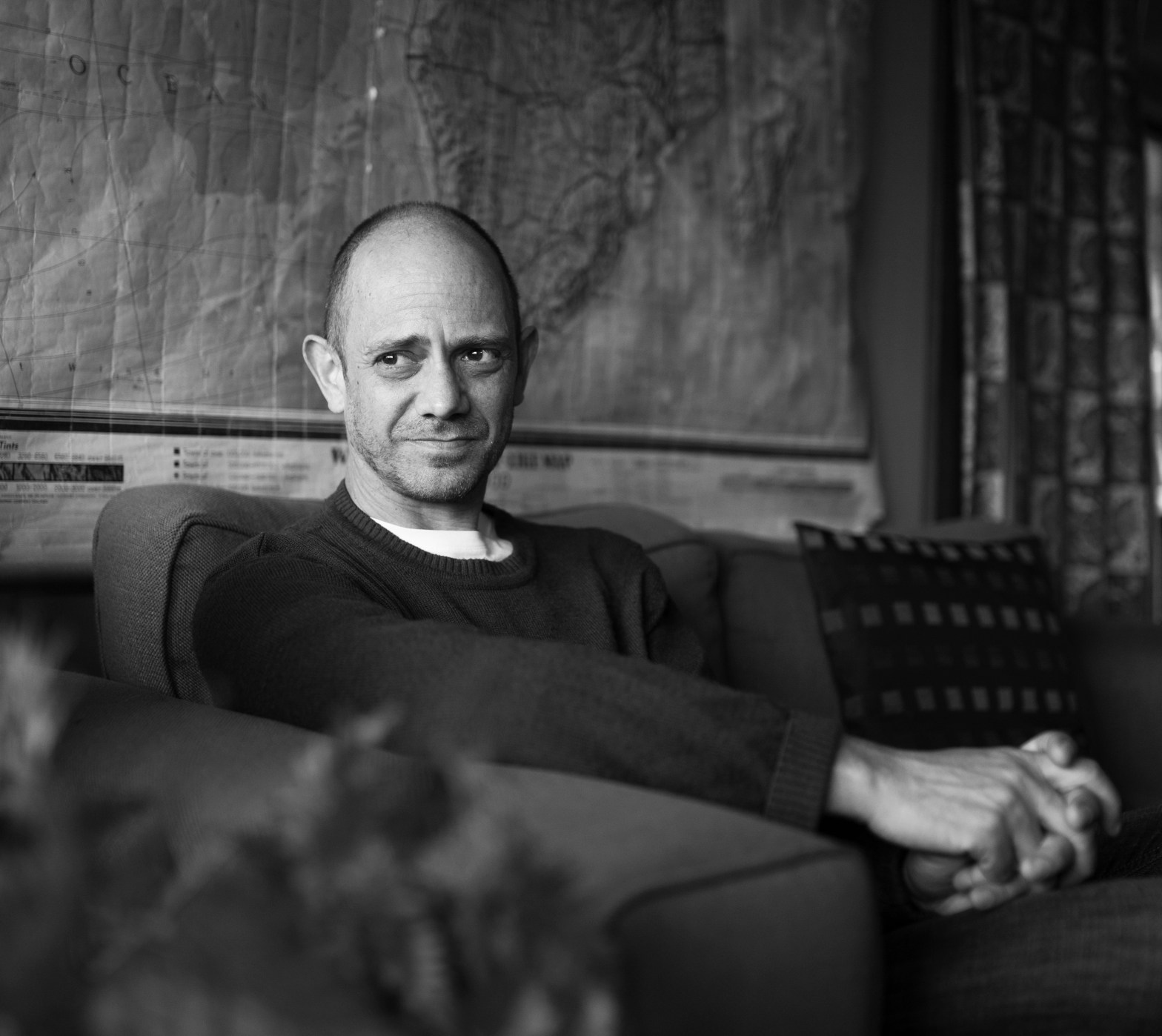
Colm Toibin@Steve Pyke BW
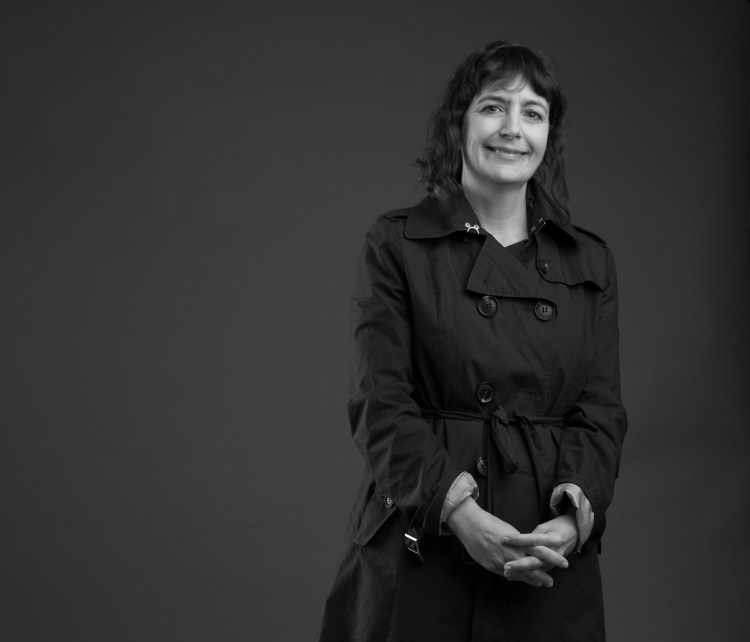
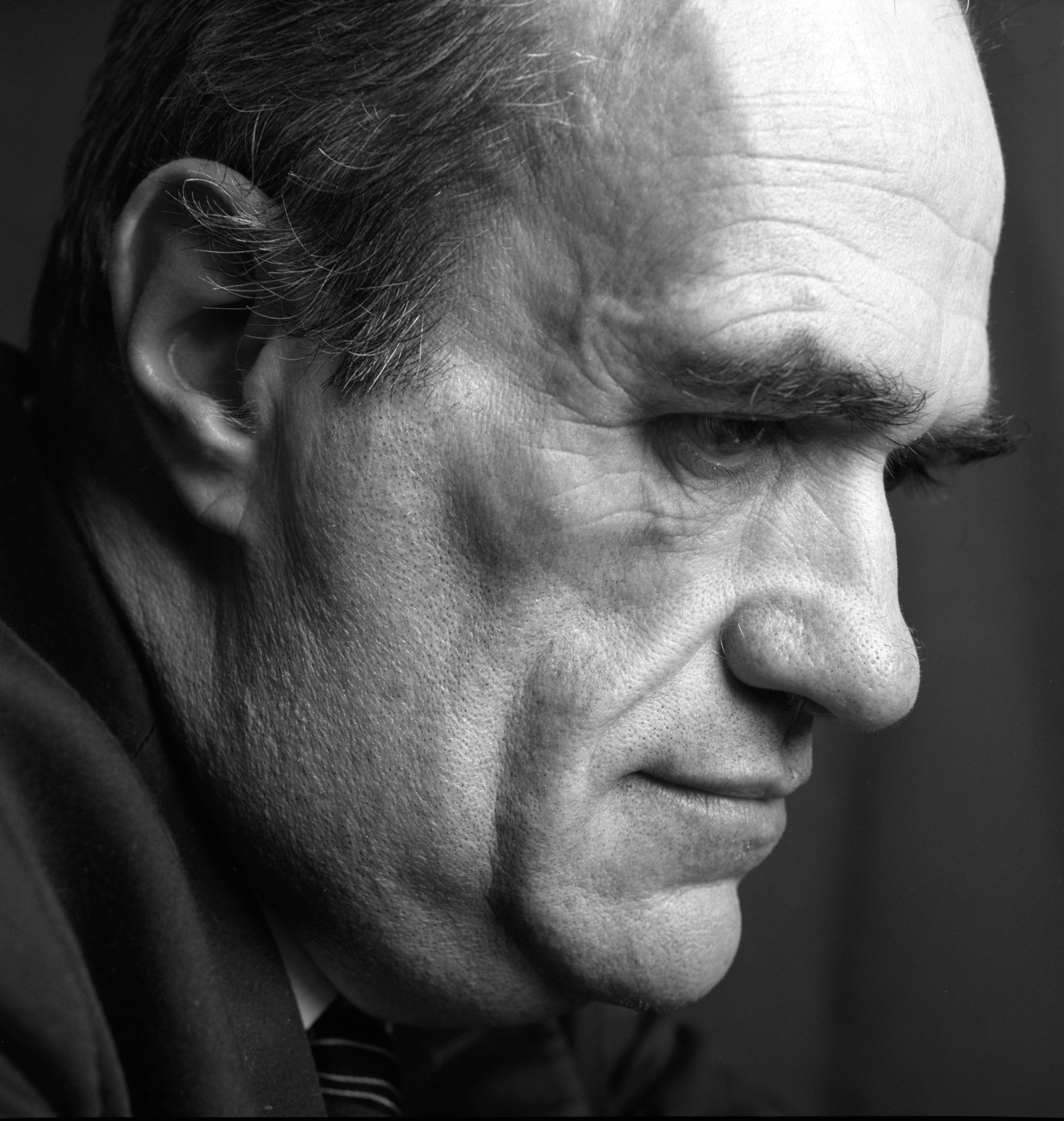
Colm Tóibín in a photography by Steve Pyke.

It’s almost 5, an April afternoon. I stride into Columbia University’s nearly deserted Philosophy Hall, and climb the stairs, heart thudding from exertion, or nerves, or both. Colm Tóibín is on the sixth floor, waiting for me behind a big desk in his little office. Ahead of my New York visit, a mutual friend put us in touch, and he’s agreed to an interview.

His bibliography bulges with reportage, essays — but it is his fiction that has enthralled me the most. I’ve been a fan for years — ever since I read the Dublin IMPAC Prize-winning The Master about Henry James when I was at school.

Did he always know he was going to be a novelist? I ask.

“No,” he replies, explaining that throughout his teens, he wrote poems. When he moved to Barcelona at the age of 20, this stopped. Not only had the feedback he’d received from readers been less than effusive, the city itself “just didn’t lend itself to anything other than just being out. It was all too exciting.”

He remembers feeling “very clearly that the mechanics of fiction seemed to be so close to the mechanics of journalism — and clunky and not worthy of my attention. In other words, the images were always burdened down by having to connect things and explain things.”

He did attempt a few short stories, however — “which were no good. I couldn’t find a tone for [them]. I was so nervous that I couldn’t get the open, clear rhythm that was like somebody breathing naturally in my opening paragraphs.” He would cram in too much information or insert too startling an image. “It just didn’t work, so I stopped altogether.”


Back in Dublin after three years of teaching English in Spain, he became a journalist, writing for, among others, The Sunday Tribune and In Dublin. He remembers telling friends in 1981 the outline for what would become his first novel, The South. He started working on it tentatively the following year.

Tóibín says many Irish journalists were writing novels, but they were mostly based on their work as journalists. “Mine was the opposite: it wasn’t about that at all. It was about painting, exile, Spain, civil war — it was as far away from what I was doing in the day as possible, really.” He was drawn to that story because of “the poetry”. “Whatever was there first was image-based or language-based rather than about exploring the society or attempting to write a novel that was about the real world. Things came to me as sounds or as as melodies or as images. I couldn’t have gone on writing sentences that were really informative or indicative.”

The South was published in 1990; his second, The Heather Blazing, about an Irish judge, came out two years later. He recalls having dinner with the editor of his first book, who announced to him that she had only just discovered that he was gay, pointing out that homosexuality didn’t feature at all in his novels.

“It just would be unthinkable that you’re going to go on writing novels and this thing that is at the very centre of your being is not going to be explored,” she told him.

Why hadn’t he broached it in his early work, I ask.

“It would’ve been very difficult in Ireland — and indeed in England… the idea of being put into a category and not being able to get out of the category,” he says — especially when he “was interested in history, in many other things”.

“It just would be unthinkable that you’re going to go on writing novels and this thing that is at the very centre of your being is not going to be explored,” she told him.

“But also my own homosexuality was something that I hadn’t come to terms with in many ways. Although I was having probably a whale of a time, I was doing it the way that many gay men did.” He was, he says, “out and in” — out to his close friends, but closeted to the rest of society. “It wasn’t as though there was a huge gay community in Dublin who were all friends of mine and we could all hang out together — it wasn’t like that. So I didn’t have a sense of how I could write about it, what it would look like if I wrote about it.”

“The problem is that once you let the genie out of the bottle, trying to get it back in is hard… so writing [The Master] was one way of navigating that — where I could write about a character whose homosexuality was something hidden and present. And I knew about that, so I could write that book.”

But we’re getting ahead of ourselves. Before 2004’s The Master — long before it — was the exquisitely erotic The Story of the Night (1996) about a gay man living in 1980s Buenos Aires. Tóibín remembers reading an excerpt at a literary event in London, where the editors and writers present expressed surprise that he was gay. “There was a certain pleasure in that,” he says.

He was reassured by a friend who told him shortly before the book was published: “You cannot be assaulted in this country because of the books you’ve written now and the way in which you’ve presented yourself in this society. You could say anything and it’ll be OK.”

The novel was partly inspired by his time covering the trials of the generals who had ruled over Argentina’s military dictatorship. After a day spent in court, he would drift through the narrow streets of Buenos Aires’ El Microcentro, which was “filled with guys looking at shop windows pretending to be very interested in some suit or other — but actually they were just using the window to see who was stopping and who was coming by. It was the cruisiest place I’ve ever been because there was nowhere else you could go.”

The novel was also, he says, “set in a version of Ireland — in the sense of a society where homosexuality was almost unmentionable”. In 1985 Buenos Aires there were no gay bars; the gay guys he did meet would tell him that no one knew they were gay, that they had a girlfriend they were going to marry.

“I had a pretty good time of it because I was Irish… no one worried about having sex with me since clearly I was going home. I just took full advantage of that situation,” he smiles.


“I can work anywhere,” he says. “I’ll work in a hotel room. Often I’d love to make this room into where I’d live. Put in a top floor with a little ladder and a desk up there and a bed and a little kitchen and a little bathroom and just live here.”

If you think of writing as a form of self expression — a form of pleasure, a form of comfort, a way of comforting yourself, a way of even amusing yourself — I think you’re missing the point.

He sometimes goes to Spain or California (where his boyfriend lives) to write. And then there is Dublin. “I always think someone of my generation, home is where the CDs are,” he grins. “My CDs are in Dublin.”

I can’t resist asking him about the uncomfortable chair he apparently writes at when he’s in Dublin. He groans before I’ve barely phrased the question — it’s come up with painful frequency in interviews over the years.

He explains anyway: “If you think of writing as a form of self expression — a form of pleasure, a form of comfort, a way of comforting yourself, a way of even amusing yourself — I think you’re missing the point. For me, it’s a way of pulling things up and out — guts. Things that have not been spilt before. It depends on memory, on imagination. It depends, for me, on things that are very difficult,” he says. Sitting on “one of those master-of-the-universe swing chairs that are made of some extraordinary fabric that’s soft on the bones — well, I don’t think that would be good for me.”

So, does the chair make him focus? I ask.

“It’s one thing that focuses you. The other thing that focuses you is just not looking up. Just settling down to the fucking thing and doing it.”

If it’s so difficult to do, why does he bother?

“I think that I have some basic urge to communicate levels of feeling — things from the nervous system, and from memory, to other people,” he replies. “It’s a basic urge, it seems to have always been there — that somebody wishes to record or set down feelings or things of what they were like on a given day,” he says. “In the same way as when people went hunting many thousands of years ago, someone stayed behind to paint the hunters on the walls of the cave. It’s a mysterious thing because it really has no material value.”

He says his answer “sounds slightly metaphysical and precious; but there it is, there isn’t any other answer.”


Is there a particular time of day he writes?

No, he answers: “If you have to finish it, finish it. The urge to finish sometimes is a big one, that you’ve really got to try and develop. I can do a lot in a day, but only when I’ve got everything in my head.”

“If you have the character, if you’re me you have everything then because you can work around and you can build up the story. You always will know what they would do, or what they must do in a given situation. Then you can work from that.”

While Brooklyn (2009) developed quickly, his novels typically have a long gestation period — he admits to having four in various stages of development currently. He started working on 2014’s Nora Webster in 2000. It’s closely based on his childhood, on the aftermath of his father’s death. “That was the big one that I couldn’t get an arc for. And also, the material was so personal — giving it up was going to be difficult.” He dreaded “not having that story to tell anymore” — “because once I finished it, I realised I can’t really revisit this material — I have to sort of let it all go”.

The hardest part of the book was a passage where the title character (who was inspired by his mother) sees a vision of her late husband. Tóibín grabs a copy of the book from his bookshelf, and reads it, the words emerging so quietly that my voice recorder barely catches them.

He closes the book. He tells me about how he went alone to Wexford — the setting of the book, where he grew up — specifically to write it. He spent the whole of Saturday at his desk.

“The reward was going to be a big swim. And it started to rain — being Ireland, of course,” he smiles. After writing it, he went swimming anyway. “I stayed in the water for quite some time just thinking, ‘I will never have to do that again; I will never have to do that again.’” Afterwards he packed up the car and drove back to Dublin — he didn’t want to be in the room where he wrote it.

“With that, you can’t do a second draft of it. It’s one of those bits that you write down as though it’s happening in real time to you, now, and you can change words or make little cuts but you can’t rewrite it — you can’t start again; you do it once.” It’s not a vision, he emphasises — “you’re in full control over it. You’re concentrating fiercely; it’s an act of will.”

I ask him if writing something so personal results in catharsis.

“No — you’re manipulating, pulling out and you’re using, you’re not releasing. It’s funny — if anything it hardens it.”

A recent story Tóibín wrote for the New Yorker he based on his experience of hypnosis with one of Ireland’s top psychiatrists. I ask him if therapy has influenced his writing.

“It’s been useful,” he replies. “It gives you a sort of knowledge so you can see things more clearly. So if you’re dramatising things you actually know why you’re dramatising them — or you can see the conflict; you can know why, as you turn a page, you’re suddenly going into this territory — without doing it blindly or foolishly.”


I ask him how time away from Ireland influences writing about his homeland.

“My problem is that I don’t have any real sense of contemporary Ireland. A few times in short stories I can do it, but I don’t have any real sense of the society.” He thinks that’s because “I haven’t had children there and lived in the suburbs and watched them going to school… I’ve been very solitary and I have not had a job [there] for a long time.”

“I think when you get to a certain age it doesn’t really matter where you live. I know people disagree with that — I talked a lot at one point to your compatriot Nadine Gordimer about that. She was very intent, very emphatic about the idea that if you missed the small daily, businesses of a society — not even one that’s changing, but just one that’s there — then you lose a flavour for your book, the things you just won’t know. But in my case, I’m not that interested in societies anyway — as she was,” he says. “The flying in and out has been good,” because returning after time away results in “a sudden re-familiarisation — a smell, the look of something, the sound of someone’s voice, when you’re not used to it”. “If you’re there all the time, you might not feel that as sharply, it wouldn’t seem so stark or oddly interesting.”

“I didn’t plan to start living in America,” he says. “I just got offered jobs and suddenly sort of drifted into it.” He loves “everything about” Columbia. Instead of teaching in the creative writing faculty, he lectures for one semester in the English literature department. Surrounding him are theorists, academics who have written serious critical books. “I’m the writer in the department. I think there was a bit of suspicion to begin with that I wouldn’t know what I was talking about, and that the students wouldn’t be getting value for money,” he says.

On Mondays, he teaches to postgrads a course called Ordeal and self-invention: the heroine from Jane Austen to Edith Wharton; on Tuesdays he gives one on Irish prose to undergrads. Instead of looking at literature through a theoretical prism, “I’m looking at the thing as it’s being made, as though it not been made yet — and looking at what the strategies are to create something.”

Today he explored with his 15 students that sometimes “a novel is a way of rescuing a novel — meaning that half-way through a novel you realise that if I don’t get involved in the rescuing of this book, then I’m going to lose the book. And often it’s because you’ve given characters too much definition, and they’re now only going to live in character for the rest of the book. We talk a lot about not having settled characters”. Henry James realised “he had to soften characters or make characters seem more foolish or give characters moral agency they didn’t have before.”

“You’re talking book all the time,” he says. “It feeds its way back into the books some way or the other. But it also keeps me alive — in the sense that you really fucking worry about these classes before you go into them.”


One of several books Tóibín has edited is the Penguin Book of Irish Fiction (1999). I ask what the common threads tying together the tapestry of Irish literature are.

“We can’t really do domestic bliss, and we can’t end a novel in a wedding,” he says. “There is always a bit of a propensity to break up any peace that’s been had… There’s a problem always with chronology: many novelists feel you cannot handle time directly, that time has to be the first thing you play with — you usurp, you turn around. There’s a lot about death, and dwelling on death and dwelling on solitude and grief.”

“Irish prose fiction tends to be poetic,” he adds. “The sentences are constructed for their sounds, their melody as much as for what they might signify. And so you’re always listening to a rhythm.” This stems from “an aboriginal set of feelings” — “the impulse itself comes from the same impulse as to sing and make music.”

There is something discordant, uneasy about these stories — because “nothing was communal or politically agreed”; “everything was disputed or broken or ready to be burned down — or ready to be erased, including memory.” He can sense the contrast between Irish and English writers “very emphatically” when sharing the same platform. “Their thinking and their speech and everything they’re doing is entirely different.”

“Being in New York is much easier for me than being in London,” he says. In the Big Apple, “nobody has any preconception that if you’re Irish you’re one of two things” — the English either perceive you as “alarming in some odd way, or that you also have a natural talent with words that the entire society has — that words are sort of pouring out of all of you all the time.” The English think “you’re always storytelling and your grandmother must’ve told stories… I hate storytelling,” he says, defining the form as “arising from an oral tradition which is unmediated by a literary tradition and which makes its way unstructured onto the page as though it’s a sort of form of flowing water”.

“You’re constantly trying to get them to stop fucking making a cliché out of you.”

Nora Webster was published by Penguin in the UK, and Scribner in the US. An edited version of an article which was originally published at AERODROME on August 31, 2016.
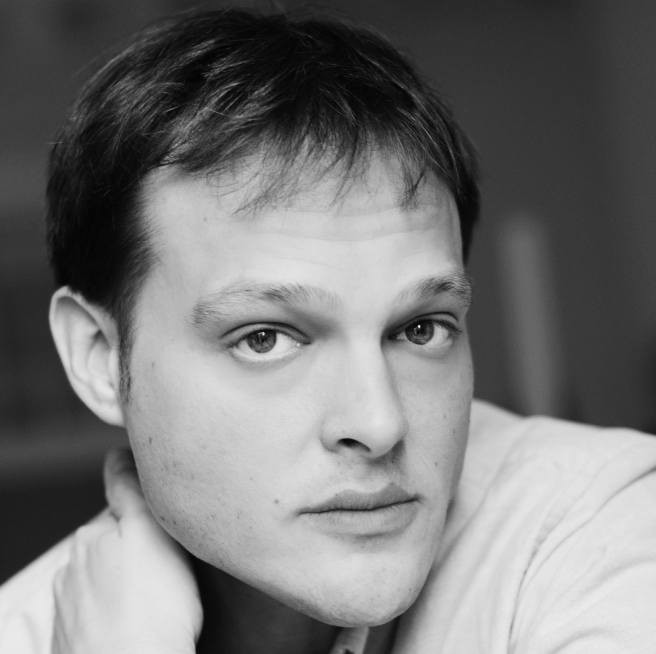
Garth Greenwell on the Poetry of Being an Outsider

“I had no intention of writing about childhood or Kentucky in the 90s or being a queer person there…”
0*foCS6hSEEQw_DFGK

What Belongs to You is one of the best novels I’ve read in a long time — so brilliant, so haunting, piercing open some private, tender part of myself with a painful precision that, at times, made it difficult to read.

When I heard its author, Garth Greenwell, was coming to Cape Town for the annual Open Book Festival, I knew I had to meet the man who wrote it. I meet him in the lobby of his hotel; we head out into the breezy sunshine in search of a lunch spot. In the end, we settle for an Italian restaurant overlooking Cape Town’s Bree Street. I dive into the questions almost immediately, by asking when he knew he wanted to be a writer.

“It was the first thing I wanted to be when I was a kid,” he replies. “I had two older siblings and I remember being so jealous that they could read and I was so eager to learn to read… I loved stories.”

The urge to write faded as he grew older. “For a long time I didn’t write anything; I didn’t have any real connection to the arts.” Then he studied opera singing in high school and university and this, he says, “took me back to art, and took me back to writing. Opera I think is really important to how I think about narrative. I encounter in music much more than anywhere else what seems to me like the ideal of art.”

For a long time, art “has been central to my sense of the source of value and meaning in my life,” he says, admitting to “very romantic notions about art as a calling and as a source of a system of value that stands in contradistinction to the system of value that is capitalist commodity culture”.

For Greenwell believes in “the whole Matthew Arnold art-as-replacement-for-religion shtick” but doesn’t think it’s limited merely to writing. “What seems important to me is access to that system of value and a way of trying to understand one’s experiences as deeply as possible” — it doesn’t matter whether that’s through poetry or music or sculpture

Over 15 years, Greenwell published “a lot” of poems and poetry criticism but never a collection. After dropping out of a PhD course at Harvard, he finished a manuscript when he first arrived in Bulgaria to teach English at the American College of Sofia. He put these poems away, thinking he would take a break before returning to revise them. “And instead I started writing [ What Belongs to You] — and it really was that I just started hearing sentences that I could feel were not broken into lines. It was very disconcerting to me because I was so attached to the identity of poet.”

When he finished what would become first the section of the novel, called Mitko, “I just felt very strongly that it kind of destroyed the poems. And I haven’t wanted to go back and write poems — all of the projects that I imagine are projects in prose.”

“One of the things that made prose able to accommodate things that poetry couldn’t accommodate for me is the question of training,” he says. With a poetry MFA from Washington University in St Louis, as well as a MA in English and American Literature from Harvard, he was “really well educated as a poet — to the point that basically any choice I made as a poet I felt like had a kind of lineage — I could think of another poet who had done it.” He adds: “I had all of this language for craft, and all of this knowledge of the moves that a poem could make, and in prose I didn’t have any of that because I had never studied prose, I had never written prose for anything other than scholarship.”

What Belongs to You is, to him, “a poet’s novel in a lot of ways”.

Being in a space where you don’t know what you’re doing, “where you don’t even have a measure for failure or success because you don’t understand enough to know what those things would be”, he says, “was really valuable to me as a writer of fiction.”

Poetry fed into his prose “in a lot of ways,” he says. “Because I lacked all sorts of equipment that fiction writers have, I think I made do with the equipment I did have”. What Belongs to You is, to him, “a poet’s novel in a lot of ways”.

While he’s drawn to the syntax of Henry James and Proust (who both “attempt to try to dramatise and act out and embody the shape of thinking as an action, not of thoughts as discrete things”), he thinks the novel “owes even more to poets” — especially the Latin poetry he studied, and American poets such as Carl Phillips and Jorie Graham. “The way I think of scene is quite indebted to a kind of lyric shape,” he says. “I think the way the book makes use of time is quite lyric.” This happened subconsciously, he says: “It wasn’t anything I was thinking about.”

The protagonist, too, is “quite mysterious” — he “doesn’t deliver certain information about himself that you would expect in a novel [and] I think that’s because for lyric speakers you don’t have those expectations.” When you’re reading a poem, you’re not busy wondering why someone’s ended up in Bulgaria, he says. “Poems are interested in seeking out emotional intensities and intellectual intensities and are not really too worried with the nuts and bolts of cause-and-effect-based plot.”

Greenwell, who wrote the entire novel while he was living in Sofia, describes Mitko as “a self-contained narrative — it has a full narrative arc in the relationship between these two men” (one an American teacher of English, the other a rent boy he finds while cruising a public lavatory).

“When I had that, I didn’t know what it was or what to do with it,” he remembers. He showed it to his only fiction writer friend, who said that because it was too long for a magazine but too short to be a standalone title, he should send it to Miami University Press, which has a novella prize. When it ended up winning this in 2010, Greenwell thought the piece “would be a standalone thing” and that he’d go back to writing poetry.

Instinct had other ideas, however: he was seized by a voice. He allowed “it to take me to places I had no intention of going — I had no intention of writing about childhood or Kentucky in the 90s or being a queer person there… It seems so kind of coy and mysterious but it’s really true that I wrote the book sentence-by-sentence without a sense of a grand idea. Sometimes, with a sense of a particular scene, that something would happen — kind of like beats; I might have the three key moments of a scene on a Post-It note beside my notebook, but that would be all. And then there was just sentence by sentence, trying to stay true to the moment-by-moment of what was happening between these two men.”

I ask if the events described in the novel were happening in real time; was it a bit like working on a diary?

“It wasn’t,” he replies. “In large part that was because I really had so little time to work on it. It took me a long time to write the book and part of the reason is that I was teaching high school full-time, so I was waking up at 4.30 to write for two hours before class and so the book inched forward.”

What gave him the discipline to get up at that ungodly hour, I ask.

In the past, “the idea of a writing routine was really kind of repellent to me,” he says, “because it is so painful to sit and not write. It was fine for me to go weeks without writing a poem and then I would spend a weekend where I would do nothing else, I would like sweat it out, I wouldn’t leave my apartment or shower…”

In his first year of teaching high school, he didn’t write a word, he says, “and that really freaked me out”. He realised that if he was going to be serious about it, he needed to write every day. He tried initially in the evenings, but felt “fried” and so started writing in the mornings instead. Initially he had no idea at all that the scribblings would be a novel. Placing words on the page was important “not because of a product but because the day-to-day practise of it really became crucial to my sense of okayness”, he says. Writing “is when I’m most in communion with myself.”

“One of the reasons I’ve been so bewildered” in the months following the book’s publication is “because I’ve haven’t been able to write on the road,” he says. “I’m a super-super-anxious person all the time.”

When working on a project, the “beginning is always anxious and ending is always anxious but the middle section when you’re just sort of turning the page, filling a few lines every day, inching forward, that’s the only part of writing I enjoy and I enjoy it because it’s that practise more than anything else that helps me manage anxiety.”

“All of the external questions that sometimes plague me — like questions of success and questions of publishing — those things just totally fall away. It just feels like I’m doing the real work, I’m doing what I should be doing, and I almost never feel that.” When he’s not writing, he’s “always questioning — I never feel like I’m in the right place, I’m always anxious that there’s some other place I should be in, some other thing I should be doing, some other book I should be reading. But when I’m writing, I don’t feel any of that.”

I ask about the autobiographical nature of the book — does writing about things close to home offer catharsis?

You’re creating something separate from you, and then, as you shape it, the questions that lie behind the shaping are not therapeutic questions, they’re aesthetic ones.

“The book is full of invention and it’s not in any way a sort of transcription of reality… but it does draw on experience; my experience of [Sofia], my experience of my childhood, especially, in the second section,” he replies. “I do think anytime you can take a painful experience and make art of it, there’s a way in which you become grateful to the experience, you become grateful for having been able to make a thing.”

Despite this, though, he says, “It’s not the kind of the work I would imagine one doing in therapy where one really tries to look a truth hard, or look at an experience hard and face-on, and work through it. That’s not what it feels like. You’re creating something separate from you, and then, as you shape it, the questions that lie behind the shaping are not therapeutic questions, they’re aesthetic ones.”

Arriving at the Iowa Writers’ Workshop, he already had a full manuscript; it was only the third section he workshopped in the novel workshop facilitated by Lan Samantha Chang, the programme director. He did make some revisions based on feedback received there, but nothing major. His agent sold the book in his second semester.

While he’s writing, “I try not to prune or withhold anything — I just try to be as self-indulgent as possible — the slightest little squiggle of thought I want to follow I’m going to follow it and then that does mean that pruning and cutting is the main revision activity.”

In the summer between the two years of his MFA, he edited the book with his editor, the “brilliant” Mitzi Angel. Between the two of them they culled about 18,000 words.

“She, in this sort of hyper-sensitive way, put pressure on every moment and every clause and sort of said, ‘this doesn’t hold up’ or ‘cut it and make it better’ — that was such luck, that the book found an editor that was willing to lavish time and that also had the right sensibility and was tuned to the right frequency and was just the right editor for the book. It was a collaborative thing, I’m very grateful to her — it would be a much, much, much poorer book without her.

“It was very intense and very emotionally hard,” he recalls. “She’s quite a firm, assertive editor… she just made me work really hard and I was scared about this question of what is the meaningful eccentricity and then what is a deforming self-indulgence? What are the things that make a book distinctive and what are the things that make a book flawed? And that’s hard and I don’t think there are absolute right answers. So I think it is just about finding an editor who understands your sensibility and the vision you have of a book better than you do and can see that better than you can.”

A gay couple lunching next to us recognise Greenwell, and interrupt us to lavish praise on his work. Greenwell responds with heartfelt thanks. I ask if the praise he’s been getting for the novel (it’s been listed as a ‘best book of the year’ by more than 50 publications in nine countries and hailed as a “masterpiece” by Edmund White) has put pressure on him.

“I think probably most artists have a void of doubt and despair and I don’t feel like any of the commentary about the book has even touched that — that feels very secure and solid and not going anywhere,” he replies. “When you face a page, you’re facing a page. Something that the New York Times said about your book isn’t going to help.”

Narrating the audio book recently involved him reading through the book for the first time since sending in the last edits. “I was scared to read it from beginning to end again,” he says, but doing so made him realise the book was solid, like it was the book he wanted to write. “I’m glad — I’m really relieved that I feel that. I believe in the book, but I don’t believe in the things the people say about the book. I’m so grateful that the book got attention because almost no book does.”

“There were responses to the book that did feel very moving to me,” he says. Among these was Damon Galgut’s review for The Nation. “I’ve revered him for years.” Galgut’s novel, In a Strange Room, “really did unlock some of the problems of my own book for me,” he says. “I feel like I owe him a great deal.”

How did Galgut’s novel helped with unlocking? I ask.

With its structure, he replies. He had been struggling with a sense that the three sections forming his own work were separate pieces, with the childhood middle section interrupting a continuous narrative of the first and third. And yet, he still felt “there was a kind of gravity that held the pieces together”. Reading In a Strange Room he could see that it was “so clearly a novel and yet is made up of these three chunks that are not narratively continuous and yet there’s a kind of gravity in the book, there’s a deep coherence, and structural and imagistic echoes in the book that to me very clearly make it one thing that is greater than the sum of its parts”. Seeing this “was really freeing”.

He also appreciated “the confidence of some of the formal risks [Galgut’s] book takes, the confidence of its reticence — the confidence of its withholding things from the reader and just its implicit faith that the reader would be able to handle that. All of that was just so heartening and enabling for me in my own project.”

Other writers working today that he admires include Colm Tóibín and Alan Hollinghurst, and Lydia Yuknavitch. There are three traditions of writing that he hopes his book is in conversation with. The first is poetry, the second is “the novel of consciousness — especially the three writers who to me are my holy trinity of modern prose styles which are Thomas Bernhard, WG Sebald, and Javier Marias”. He defines this tradition as “the attempt to write in a very deeply immersive way — to immerse the reader in the experience of another person’s consciousness”.

Then there is “the tradition of queer writing that overlaps to a very great extent with the tradition of the novel of consciousness” — that includes Proust, Henry James, Virginia Woolf and James Baldwin.

“I’m drawn to careers, to writers who feel like they make carefully structured books with a kind of architectural integrity about them that are like well-made objects but are also like chapters in an ongoing book,” he says, again citing Proust, Sebald and Marías.

“I want to write about the queer community that I think has become hard to write about”

“I have no idea whether that will feel like an appealing model 10 years from now, but right now it does, and the two books I’m working on, I think they are of a piece with What Belongs to You. They’re still interested in queer communities, they’re interested in the queer sexual body, and writing sex — actually much more intensely than in the [first] novel.”

What draws him to explore these themes, I ask.

They’re “the urgent things I want to explore and think through,” he says. “I want to write about the queer community that I think has become hard to write about”; he wants to write about “cruising places”, and “sex as a kind of thinking — that’s the thing I think is often missing. In one way we live in a world that’s just utterly drenched in sex and obviously the internet has given us access to representations of sex unlike at any other time — but it seems to me that we’re surrounded by images of bodies but there’s a real dearth of embodiedness — of the experience of being in a body, the experience of being a consciousness in a body, the experience of being a person in relation with other human persons. Sex as an occasion of ethical regard.”

He believes that even ephemeral encounters, or sex of a fetishistic or non-normative nature involves “acts of intimacy between human persons that engage with the whole gamut of ethical and emotional response. That’s just what interests me.”

My phone’s battery is about to die, our plates are empty, and an afternoon of panel discussions awaits. And so, reluctantly, I stop the recording, and ask for the bill. We discuss his plans. He has found the last few days in Cape Town “especially wonderful” — and would love to return, perhaps for a stint of teaching. After a few weeks back home in Iowa, he’s on the road again, headed to Bulgaria, rounding off a book tour that began almost 10 months ago. He’s looking forward to returning to a far more sedentary life after this — back at his desk, quietly working.

“It has really freaked me out how far publishing a book takes you away from writing — I feel farther away from writing than I’ve ever felt,” he says.

What Belongs to You was published by Picador in the UK and Farrar, Strauss and Giroux in the US. This is an edited version of an article that appeared on AERODROME on June 21, 2017.

Writing as Therapy: Damon Galgut on Unpicking a Psychological Knot Through Fiction

The award-winning gay author reflects on the compulsion behind crafting stories  —  and what it means to be a “real” novelist.
damon copy
Damon Galgut photographed in his home by Michaela Verity.

It is a silvery, windy day, not cold, in Cape Town. Damon Galgut has let me into his apartment. I glance around at the clutter and the drying laundry while he makes me tea. It is clear that international acclaim hasn’t exactly made the twice Man Booker-shortlisted author lavish — which I rather like. It has, however, given him the financial flexibility to spend four “laborious” years working on his novel, Arctic Summer, which was published in 2014.

Mug in hand, I follow him to a neighbouring flat, which he owns too. A tenant has just vacated it; the surroundings are therefore sparser, more anodyne than his own home.

We sit down on sofas, casting small talk aside. The voice recorder is glowing.

Why does he write?

“There’s a certain mystery attached to why anybody writes books. And maybe it’s best left as a mystery,” he says.

But there are, at least, some clues he is willing to share: a “traumatic childhood” — five years of chemotherapy which began when he was diagnosed with lymphoma at the age of six. He was read to frequently during that period, learning to associate stories as a “positive space” where people were paying attention to him, comforting him — creating “an internal glow” he still experiences when he picks up a book. “It wasn’t such an odd thing to want to take the next step — to writing stories myself,” he says.

Starting in primary school, he wrote two “dreadful” full-length novels. And then his third — A Sinless Season — was spotted by Alison Lowry (who remains his editor) and published by Penguin when he was just 17.

Writing has been the only consistent feature to his life ever since then, he says. For much of the time, he has done other jobs to support himself. He has been a nude model for life drawing classes and served in a London teashop. For eight years he has taught on-and-off at the University of Cape Town’s drama school, making use of his only qualification — a diploma in speech and drama.

Although he admits he’s not prolific — it takes him a long time to write a book — writing is “something that preoccupies my mind most of the time”.

“I become very fretful and a bit ill, actually, if I’m not doing it for too long,” he says. “It is a compulsion — it always has been.” Writing fiction is “an odd activity” — an amassing of “fantastical lies that comment on actual life from a strange angle”. “No one entirely sane I think would feel the compulsion — but there’s something a bit unbalanced about writers, I guess,” he says.

Galgut first went to India 14 years ago. Back then it was cheap — he could eek his rands out for longer than at home while he wrote in silence, a universe away from his “interrupted” life in Cape Town.

He has been going back periodically ever since. This was why he re-read EM Forster’s A Passage to India (the last time he had done so was as a teen). He became interested in Forster’s life story “and I realised that the process that he went through to produce that novel was unusual”. It had taken Forster 11 years to write it: he had begun a draft and then abandoned it for nine years. Why had he been stuck for so long? No one had really explored this “really rich material” in fiction: Arctic Summer would be his attempt to do so.

The purpose of Forster’s first visit to India (in 1912) was to spend time with Syed Ross Masood — an Indian man he had taught Latin to in England, and who had subsequently returned home. Masood was ebullient and loving — but straight and unable to reciprocate Forster’s infatuation.

“What Forster was going through didn’t seem that peculiar to me — I could get my head around it. And, rightly or wrongly, I felt as if I had some kind of insight into the stuff that was blocking him and that he was wrestling with — which is really the crux of the book,” he says.

“I’m pretty close to a particular Indian man and we said goodbye to each other at one point in India,” he says. He was facing three months alone: his friend was returning to south Africa, while Galgut was going to explore the Barabar caves and various other places that Forster had visited decades before.

“It suddenly dawned on me that the feeling of being alone in a strange country must have been really present for Forster,” he says.

A cryptic reference in Forster’s diary suggested that he had made some kind of a move on Masood the night before he was due to continue his travels. Forster was spurned — a rejection so hurtful that Galgut believes it created a powerful frame of mind in which the writer visited Barabar. The caves would ultimately inspire the setting of A Passage to India ‘s pivotal scene — when a prim English schoolmistress, Adela Quested, imagines being assaulted by a young Indian doctor.

“The fantasy of being touched by Masood turned into the inverted fantasy of being attacked,” Galgut says. He believes Adela Quested was a projection of Forster who “was such a spinsterish old aunty, actually”.

Arctic Summer follows a disappointed Forster back to England and then on to Alexandria in Egypt where he served as an ambulance driver during the First World War. It reveals the tentative steps towards sexual consummation — a hurried blowjob from a soldier, and then the unfurling of an affair with Mohammed el Adl, an Egyptian tram conductor. This turbulent bond reverberates well beyond Forster’s time in Egypt. It is perhaps this connection, as well as a second visit to India, that results in his creative block crumbling: the power of Masood’s rejection weakens as the writer’s sexuality gains greater expression. When Forster serves as the private secretary to the Maharaja of Dewas senior and unhappily but lustily couples with a court barber, he gains a better, darker understanding of empire and power — and their personal implications for both conqueror and conquered.

He was ready to finish the novel.

“Forster’s life, in certain key respects, overlaps with mine,” Galgut confesses. Arctic Summer was “a way of being able to write about someone else but also more covertly about myself at the same time. Writers are all narcissistic; I think on some level they’re always writing about themselves.”

I ask what the two have in common.

“Well, obviously we’re both gay, we’re both writers, we both have this ongoing fascination with India, we share just a general sensibility to some extent. I relate to the way Forster thinks and feels, and I don’t relate to the way many writers feel,” he says.

Galgut believes one reason for this shared sensibility is their homosexuality: many gay men (though particularly so in Forster’s time) have “really wanted to be with a particular person and couldn’t have that” and so great emphasis has been placed on connections with friends instead.

“My friends are probably the most important element of my emotional life,” Galgut says. “Forster very famously said that if he had to choose between betraying his country or betraying his friend, he hopes he’d have the guts to betray his country. I admire that view a lot. I think if all of us placed affection for other people before national loyalties, the world would be a much better place.”

Galgut felt that it was important to show that while Forster might have been timid about his sexuality (he was terrified of his mother finding out he was gay), he was a courageous man, too, having — in a fiercely patriotic milieu — “absolutely unyielding objections” to the First World War. Galgut wanted to illustrate that Forster “could see both sides of a question and be paralysed as a result” — a quandary he can relate to.

“Forster was not a man of action; he lived constantly inside his head,” he says. “It’s good for the world that there are such people, but it doesn’t drive history forward.” Throughout Arctic Summer, Forster is preoccupied as to whether he deserves (or even wants) the label of “novelist”.

“I don’t think his uncertainty around that question is unusual; I think a lot of writers that I know are prey to the same kinds of doubts. I certainly am,” Galgut says. “There’s many times I’ve felt I’m actually an impostor — other people are the real deal. And I don’t know what that’s based on. The perception that actually for some people writing comes far more easily, maybe,” he muses. But then again, “writing’s just not easy,” he says. “Everybody struggles, and if it comes too easily I think there’s something wrong.”

“I’ve got a line in the book about the writing feeling like grinding craft rather than lofty art and, basically, I think that’s how writing feels most of the time,” he says. “The inspiration you see in Hollywood movies where people just have this breakthrough I think is really a fantasy. Mostly it’s a grind. If you force yourself to sit down to it and you do it every day, day after day, you will get to the end, eventually. It’s a series of problems that you have to solve. Invariably you don’t really know the answers when you start and the process of writing the book is actually a way of finding out why you’re writing the book.”

Writing has often felt to me like a form of therapy — that there’s a psychological knot that has to be unpicked.

I ask him how he would define a novelist.

“A real novelist is somebody who would need to do this regardless of how much money or attention they got; they would still feel the compulsion,” he says. “You can feel it in the way they use language — what they’re in love with is not the idea of themselves as a writer; it’s the language… and the pleasure of using language well,” he replies.

Galgut believes the books that really matter convey the sense that “there was something that that person really needed to say; there’s a need that’s personal” — “a problem that needs to be solved”. “Writing has often felt to me like a form of therapy — that there’s a psychological knot that has to be unpicked.”

“I would say that 90% of the books that get published are not written in that spirit at all.” He blames the “endless creative writing courses that are being offered all over the place now” for this. “Someone who’s not a real writer is not ever going to be more than competent — they’re never going to have those moments of inspiration or desperation, really, that elevate writing from the merely competent to the sublime.”

This is an edited version of a piece that was originally published on AERODROME on December 3, 2014.


Acclaimed Author Edmund White on Capturing The Gay Experience

“In fiction you have an obligation to show representative characters… you don’t just want to show a bunch of freaks.”
Edmund White credit Andrew Fladeboe
Edmund White. Photograph by Andrew Fladeboe.

Before my interview with Edmund White, I walk along the High Line in Chelsea. I do this partly because it is my first time in New York City — and a stroll along the High Line is the kind of thing one does on your first time here. But partly, too, because I’m gnawingly nervous: looming ahead of me is a conversation with one of the greatest gay writers on the planet and I’m not sure I feel up to the task.

I first discovered White in the Cape Town Central Library, when, as an 18-year-old, I was hungrily searching the stacks for gay sex scenes. Some thoughtful (and presumably queer) sod had labelled the spine of every vaguely homoerotic book in the fiction section with a pink triangle — this helped my quest inordinately. Under “W”, there was White’s luminous, exquisite (and incidentally not-very-explicit) novel, A Boy’s Own Story. Much later, I read his personal memoir, My Lives, and what was then his most recent novel, Jack Holmes and His Friend. (Since our chat, an even newer one, Our Young Man, has been published.)

Weaving between the tourist throngs clogging the blustery spring afternoon, I feel woefully underprepared. Because aside from more than a dozen works of fiction, White has written essays, journalism (for American Vogue, Time and plenty of other titles), plays and biographies (including ones about the legendary French writers Genet and Proust). He’s a member of the American Academy of Arts and Letters and was made Officier de L’Ordre des Arts et des Lettres by the French. Only three books in, I’ve barely scratched his oeuvre’s surface.

It turns out, though, I needn’t have worried. Within seconds of my arrival at his Chelsea apartment, White is pottering about in his cramped kitchen fixing me up with some tea, chattering all the while like he’s a great uncle I’ve known for years. I take the giant cup into the living room where books burst from shelves and crowd the dining table. The room’s rather like a literary cocoon — a bookworm could stay wrapped up in here for days. It all has a rather soothing effect — somehow it now seems most unlikely that I’ll be laughed out of the building for asking a silly question.

I scan through a set of scribbled questions, inhale, and begin. Has the reason why he writes changed since he was young? I ask.

Until he turned 30, his writing mostly flowed from “a confessional urge” — a form of therapy, he says, “to keep my head above the water because I was kind of always about to go crazy.”. After that, “I began to write just from, I think, love of the craft; also, love of the truth. I’m always shocked when people talk about creative non-fiction — that just sounds like an expression that means lying, to me. I don’t think you should be creative when you write non-fiction; I think you should write all the truths, and nothing but the truth. Of course you keep trying to hone on different things — like I’m now writing a memoir about a life of reading. [This has] kind of unlocked something for me, because all my life I’ve been reading.”

Read a lot, but not to the point of letting your own impulse to write be overwhelmed.

Reading has been intrinsic to the development of his craft. “I never knew any really good writer — except for Tennessee Williams — who didn’t read all the time,” he says. “Read a lot, but not to the point of letting your own impulse to write be overwhelmed. If you develop such a brilliant little critic in your head, then you’re going to not like anything you’re going to write. I think in a way you have to clear your head once in a while — maybe go through several months of not reading, and then start writing.”

As he became aware of his own sexuality, gay literature was nascent at best.

“People say, ‘oh, you poor thing, there weren’t any positive role models’,” he scoffs. He believes readers don’t look to books for those: instead, “I think that sometimes the things that the author does almost inadvertently are more useful to the reader — for instance, showing gay men living amongst other gay men.” While Larry Kramer’s Faggots was “sinister and destructive”, at least it “he presented his self-hating characters as all living amongst each other in a kind of gay ghetto. And that was news to me, and I think to a lot of people. They had never seen that portrayed before.”

While he types all of his non-fiction on the computer, White writes the first draft of novel in longhand then dictates to someone: “Usually it’s another writer I admire, someone young, who needs the money”. Reading out loud is a form of editing: “There’s sort of a cringe factor — some things are so stupid that I’ve written that I suppress them when I dictate it, and other places I can see need filling in.” It also means he gets to hear how the book sounds, enabling him to catch false rhymes.

This “performance piece” is oddly resonant with his childhood and with theatre — the first art form he was ever drawn to. When he was a kid, he would stage adaptations of works written by others and claim them as his own — “but since I lived in dim places like Texas, nobody ever caught me,” he chuckles. As a playwright in his 20s, he recalls “trying to second guess the market, which is fatal to a writer because you lose your whole inner gyroscope: you don’t know what you think anymore”.

He wrote his first published Forgetting Elena “because I thought ‘Well, I’m never going to get published, so why don’t I just write a book that I would enjoy reading?’.” The fifth or sixth he had written since he had first put pen to paper aged 14, he had submitted it to 24 publishers over a three-year period; it was published when he was 33.

A Boy’s Own Story, his third novel, came out into 1982. In the UK, where it was marketed as a teen novel, it quickly sold 100,000 copies. In the US, where it was marketed purely as a gay one, he estimates it sold only 5,000 in its first year.

That didn’t surprise him: “I just can’t picture straight teenagers who are so self-conscious crossing the aisle and going to gay studies and buying a book and standing in line in a bookshop,” he says.

“I think that publishers, for a while, thought that gay books would be like black books — like Toni Morisson — that there’d be a huge crossover audience. But there wasn’t, because whereas heterosexual white people can read about heterosexual black people and identify because everything’s the same — childbirth and so on, and marriage and divorce — that gays, until recently, were so strange, they were really a race apart, and the things they did in bed, and the things that they did with their friendship circles and everything was so strange for straight people,” he says. “In other words, people really loathed gay literature, so it didn’t sell.”

Unlike France where “a notion of universalism” ensures reductive labelling is discouraged, White says that in America, “We have lobbies, we have special interest groups, everything is ghettoised.” He believes this is responsible for a much bigger profile abroad than at home — something which I had only realised after receiving a couple of blank looks from Americans (including one from the editor of a major NYC-based gay magazine) when telling them I had an interview scheduled with Edmund White.

A novel’s first obligation is to be entertaining and interesting.

A Boy’s Own Story is inspired by his childhood and adolescence; two later novels — The Beautiful Room Is Empty and The Farewell Symphony continue to trace an autobiographical arc. If his own life is the raw material for fiction, then why bother to write proper autobiographical works too?

“A novel’s first obligation is to be entertaining and interesting. So, if you had 12 lovers, you reduce it to two,” he chuckles, “unless you want to do a portrait of a slut. You just sort of shape things. With A Boy’s Own Story, I was a very precocious child — I must’ve been to bed with 500 people by the time I was 16, and I was smart too — I also got good grades so I thought, no, I’ll dumb him down a bit, and I’ll make him very shy sexually, because that way he’ll seem more representative. Because I think in fiction you have kind of an obligation to show representative characters. Maybe only minority writers do — you don’t just want to show a bunch of freaks.”

He adds: “Nabokov said he wanted to show not the genus, not the species, but the aberrant variety — like [Lolita’s] Humbert. But I don’t subscribe to that. I do want to show the genus and maybe the species but not the aberrant variety. When you write a true story years later in a memoir, then you can put yourself in warts and all and just describe how strange you really were.”

My agent said, ‘Too much information!’ and a lot of people were shocked by it, but I just thought ‘what the hell’.

I ask him about “My Master”, a chapter of My Lives, which with tender and shocking precision captures the flaring (and demise) of a brutally intense S&M relationship.

“My agent said, ‘Too much information!’ and a lot of people were shocked by it, but I just thought ‘what the hell’. There is probably an element of exhibitionism and an element of truth telling which kind of dovetail neatly,” he giggles. It was also motivated by a desire to explore something new: “I don’t think any mainstream writers have written about gay S&M that much… And I was professor at Princeton and member of the American Academy and all this stuff, [with] all these honours heaped on me, so I was very eager to show that I was still a renegade.”

While books sometimes get commissioned, many others are the result of “a very long gestation period”. “I’ll probably have a spark of a thought and then 10 years later I think, ‘Gee I could do something with that maybe.’” An example of this is how an entry in the Dictionary of American Biographyabout Frances Wright (a beautiful, rich Scotswoman who established a utopian colony in Tennessee) that he read while working for Time inspired the novel he wrote about her decades later — 2003’s Fanny.

At Time magazine, “everything had to be so exaggerated” so “in my fiction I just wanted to steer of that and just be extremely precise and describe things visually and not make big windy claims about everything,” he says.

“This sounds vain and ridiculous — but when I do non-fiction I’m really good at taking lots of information and synthesizing it,” he says. “I think I got that as a journalist,” because it forced him to transform a pile of research into a succinct, interesting piece.

Journalism also ensures “you can’t be word proud because you have editors always editing you, and you can’t get blocked as a writer because you have to write if you’re a journalist”. When he was young, churning out so many pieces did mean he’d struggled to find the time to write fiction. He followed the advice of poet John Ashbery’s shrink — to wake up, make a cup of coffee, go back to bed and write in longhand for half-an-hour.

“I tend to be very self-satisfied — I like what I write usually, and I only write one draft.” He loves good copyeditors who can help him at the level of the sentence — “I never object to that stuff”. He has heard many other writers do. “But they’re the ones who weren’t journalists,” he says smugly.

He has taught at Princeton since 1998. Has that affected his own writing?

“I’m always trying to tell my students to not be monotonous formally — to alternate scenes of description with scenes of dialogue, to describe action and then meditation… [to] keep the reader off-balance all of the time.” Because of computers, he complains that people write “subject, verb, object” of the same length “which is horrible”. “Anyway, after telling them all that, I have to remind myself of all that too.”

“My students will write about their own experience and I have this voyeuristic fascination plus it gives me the illusion, at least, of being in touch with youth culture,” he says. At the Ivy League college, he says, “There are almost no gay people, but there all these straight people and they are always fucking each other all the time, and it’s fascinating to read about.”

Although a creative writing course gives “timid and confused” writers a deadline, a goal and “very good, almost rabbinical readers who go over every word”, he warns of the risk “that everything begins to sound the same and what is distinctive about somebody’s writing is often what the other kids will criticise because it’s visible; I try to be a force for the opposite.”

While he once described becoming “grouchy and ill” when he had to write, he says: “I enjoy it more now.” At 76, and with Our Young Man freshly arrived on store bookshelves, White says he’s been “cranking it out” partly because “I’m poor, so to get more money” and partly because ever since his HIV-positive diagnosis in 1985 “like everybody I assumed I would be dead in two years”.

“I guess I’m proudest that I can keep on renewing myself over a long career,” he says. “So many people just repeat themselves or just stop writing.” Every year he sojourns in Key West, a writer’s colony where he reckons the average age is 80 and there are plenty of writers who haven’t written a book in the last decade or two. “They’re not as poor as I am because they might have been more successful so they can afford to lie on their laurels, but there’s a lot of people who just aren’t inspired anymore.”

We have been chatting for almost 75 minutes — a lot longer than I’d realised. Beyond the room’s warm glow, the window-framed sky has grown murky. I stop the recording and thank him. We get up.

White mentions that he had been hoping a 20-year-old “mad guy” with a penchant for walking naked round his apartment would be visiting him a bit later, but that his parents had refused to drive him in from New Jersey. I nod, too shy to tell him that we had actually agreed over email to having dinner after our chat. I wonder if I should remind him about our arrangement. But I don’t. After all of that rapt listening (and having fielded a few courteous questions of White’s own: Am I Damon Galgut’s boyfriend? Have I been using Grindr while in NYC?). I feel exhausted. I suspect so does he. And anyway, there’s a guy of my own (admittedly not as young or as mad as White’s) with a stash of Broad City episodes waiting for me in the East Village. We shake hands warmly, before I start striding through Chelsea’s redbrick warren towards home.

This is an edited version of an interview that was originally published at on June 28, 2016 on AERODROME.


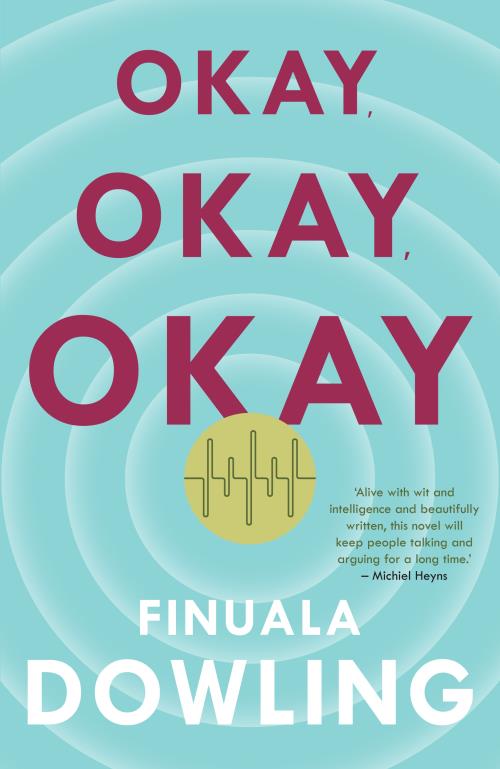
Capturing campus politics with wit, warmth and nuance: “Okay, Okay, Okay” reviewed

Finuala Dowling_6543 landscape
The author. (aerodrome/Gareth Smit)

Acclaimed poet and novelist Finuala Dowling’s employment at the University of Cape Town over the last several tumultuous years has provided fertile material for her captivating fifth work of fiction, Okay, Okay, Okay.

At its core are two shocking deaths. Siphokazi Nonjinge, a young student at the fictional University of Adamastor (very obviously inspired by UCT) is driven, through exploitation and abuse, to commit suicide. Then there is the academic Miriam Landor who dies, at 30, of a heart attack – her symptoms having been dismissed by her ambitious, career-focused husband, Simon. While the circumstances differ widely, these are both women who died scandalously young as a result of being ignored by those who should’ve listened and offered support. And both deaths have far-reaching effects. Siphokazi’s will ignite campus-wide protests (reminiscent of those that gripped UCT in 2015 and 2016) while Miriam’s will force a reckoning between the daughter she left behind, Cecily, and her widower, Simon.

Simon is a particularly greasy cog high up in a gargantuan bureaucratic machine and activity of any kind tends to be hampered by copious form-filing and thickets of red tape — a state of affairs which Dowling frequently spins into pure satirical gold. As the handsomely remunerated head of the Centre of Effective Communication, the slick-talking sycophant acts as spokesman and general dogsbody for an appearances-obsessed vice-chancellor. The former English lecturer uses his literary nous to dissemble, obfuscate and embellish. In addition to emails, circulars and forms, his tedious workday might include, for example, an attempt “to write up a report on the VC’s visit to Paris so that it did not sound like a junket”. A chance encounter with a former student while shopping reminds him of the joys of teaching. Dowling writes: “Should he have stayed in the tutorial rooms, inspiring young to lead good lives? But teaching assistants and lecturers earned a pittance. No grilled artichokes for them.”

All the while, his fellow administrative apparatchiks “earned huge salaries for finding new ways to squeeze as much work as possible out of their academic colleagues”.

A sizeable and diverse cast of characters, representing just about every shade of the Rainbow Nation, vividly burst onto the page – including charismatic Bruno Viljoen (a drama lecturer forever flirting with scandal), the imperious Africanist Professor Sitoba and the workaholic medical researcher Rhoda Cupido. Providing comedic, common-sense ballast to counterweight the novel’s dystopian absurdities is Vida, a vivacious, huge-hearted, no-nonsense sound engineer who is roped in to help at an alumni fundraising event. Often touring the world with musicals, she wouldn’t normally have stooped to such an insignificant job (being asked to assist with this is like “phoning JM Coetzee and asking him to write your child’s sick note”) but a worrying career lull means she needs the money. At the event, she meets Simon’s grieving, sprite-like daughter, Cecily, and the two quickly bond. Cecily, a drama student, has been working on a theatre piece about her late mom and Olive Schreiner, the subject of her mother’s unfinished thesis. As the friendship between Cecily and Vida grows, Dowling asks us why women continue to be ignored or so easily dismissed?

Like Schreiner, whose prescient observations and evergreen wisdom are peppered throughout, it is clear Dowling cares deeply about the powerless and overlooked. With aching subtlety, she shows us the spiralling conditions – met largely with oblivious indifference by the university – that led to Siphokazi’s suicide. Dowling shows great empathy – particularly for students whose inadequate schooling and meagre finances leave them struggling with the rigours and cost of university life. She observes that these struggles are only exacerbated by an uncaring administration that pays scarcely more than lip service to the idea of helping its most vulnerable students.

But while a keen understanding of student frustrations is evident, Dowling is also unsparing in her observations of the chaos caused by the protests they trigger — as well as the multiplying, ever-more unrealistic demands that accompany them. Amidst violent occupation, vandalism and the disruption and cancellation of classes (sound familiar?), the university comes to a grinding halt, jeopardising the futures of students and researchers in the process. Genuine grievances are quickly hijacked by racial nationalists whose contempt for both people and scholarship deemed “un-African” results in a pervasive, thuggish intolerance that the university’s pusillanimous bigwigs simply kowtow to.

With excoriating wit, Dowling depicts “transformation” as the white-anting of the university: a process in which box-ticking and binaries trump nuance and complexity and in which appearances and identity take precedence over the fundamentals essential to meaningful transformation: teaching, learning, research and academic freedom. Far from deifying white academics or sentimentalising the inequalities of the past, the novel instead exposes the risk of purging those who offer valuable skills, experience and knowledge but who are no longer in fashion.

Simon observes his university ditching the plot of George Orwell’s Animal Farm, to follow that of The Crucible instead: “Apart from the with-hunting and the hangings, Simon remembered how in Arthur Miller’s play the old man, Giles Corey, is slowly crushed to death by stones placed on his chest.”

The scorched earth policy unleashed on these “superannuated white men”, as the vice-chancellor dismissively labels them, is particularly egregious given SA’s shortage of experienced lecturers.

Okay, Okay, Okay is a stunning achievement. Bristling with elegant humour, exquisite descriptions and nuanced insights, it powerfully captures the tragicomic complexities of a university — and country — grappling with change. It should be required reading at UCT — and, indeed, all our other beleaguered institutions of higher learning.

Finding Stillness When You’re on the Move

Meditation is a calming sanctuary I carry with me wherever I go.
1*VxyCuP7rrDDO_LDQ45vX8Q
Photo by Teddy Thorntonon Unsplash

We all need places we can retreat to. A place where we can pause, where we stop doing and, for a little bit, just be. Some people return regularly to a nearby park, or the hushed solemnness of a place of worship, or the gilded quiet of a grand old art gallery.

Given the amount of travel I do, I don’t have that luxury — because I’m on the move, there’s not a place in my day I can go back to again and again in search of solace. And so, amidst the unsettling churn of nomadic life, I’ve had to create a place of my own I can carry with me.

This is how I do it.

I lie down, with my headphones on. My phone is on flight mode. I hit play on the recording I was given during my Mindfulness-Based Stress Reduction course. I close my eyes and listen.

Meditation. It’s the simplest and the hardest thing. It is paying attention. It is being here, now.

For about 40 minutes I lie here, and follow the prompts. To focus on the breath. To focus on bodily sensations, and on sounds. Or, in another recording, I’ll be guided through a body scan, honing in to feel my body, part by part — from the toes right to the head.

Sometimes I fall asleep for a bit and I’ll wake up suddenly, sheepish. Oftentimes my mind strays — to thinking about what happened earlier, or what lies ahead. The usual things, in other words, that much of our day is consumed by.

There are days when it’s easier to pay attention and I can be in the moment for longer. Then there are other days when it’s near-impossible: thoughts pulse and dart through me — a constant, chattering stream. It’s tempting to get frustrated at my monkey-mind, at its playful determination to avoid the present. I try not to get annoyed. Instead, I bring myself back. I gently try to focus again.

The recording ends with a bell that rings three times. I open my eyes. Afterwards, always, I’m different. There has been a shifting, a softening. It’s like I’ve hit a reset button. I’m calmer. Maybe not always calm — but calmer. I feel lighter, more awake. Refreshed.

Meditation is not a cure. It doesn’t solve my problems or banish worry. But it is powerful nonetheless. It’s like gulping down a glass of cold water on a hot day. That water doesn’t make the day any cooler, but it does make the heat all the more bearable.

Breath by breath, moment by moment, paying attention — however imperfectly — is a place. It’s a port in the storm I can visit wherever I am. On stressed-out, anxiety-filled days, I arrive at it with sheer, almost heady relief. Even if the anxiety returns afterwards, the poisonous tendrils of worry wrapping around my brain are looser — there’s a spaciousness that wasn’t there when I first lay down. There’s respite — maybe not of the total, triumphant kind — but respite nonetheless. I’m very grateful for it.


For Creatives, is There Such a Thing as Too Much Travel?

On hitting “peak nomad” and how to overcome it.
pic of me : alex in malawi border queue
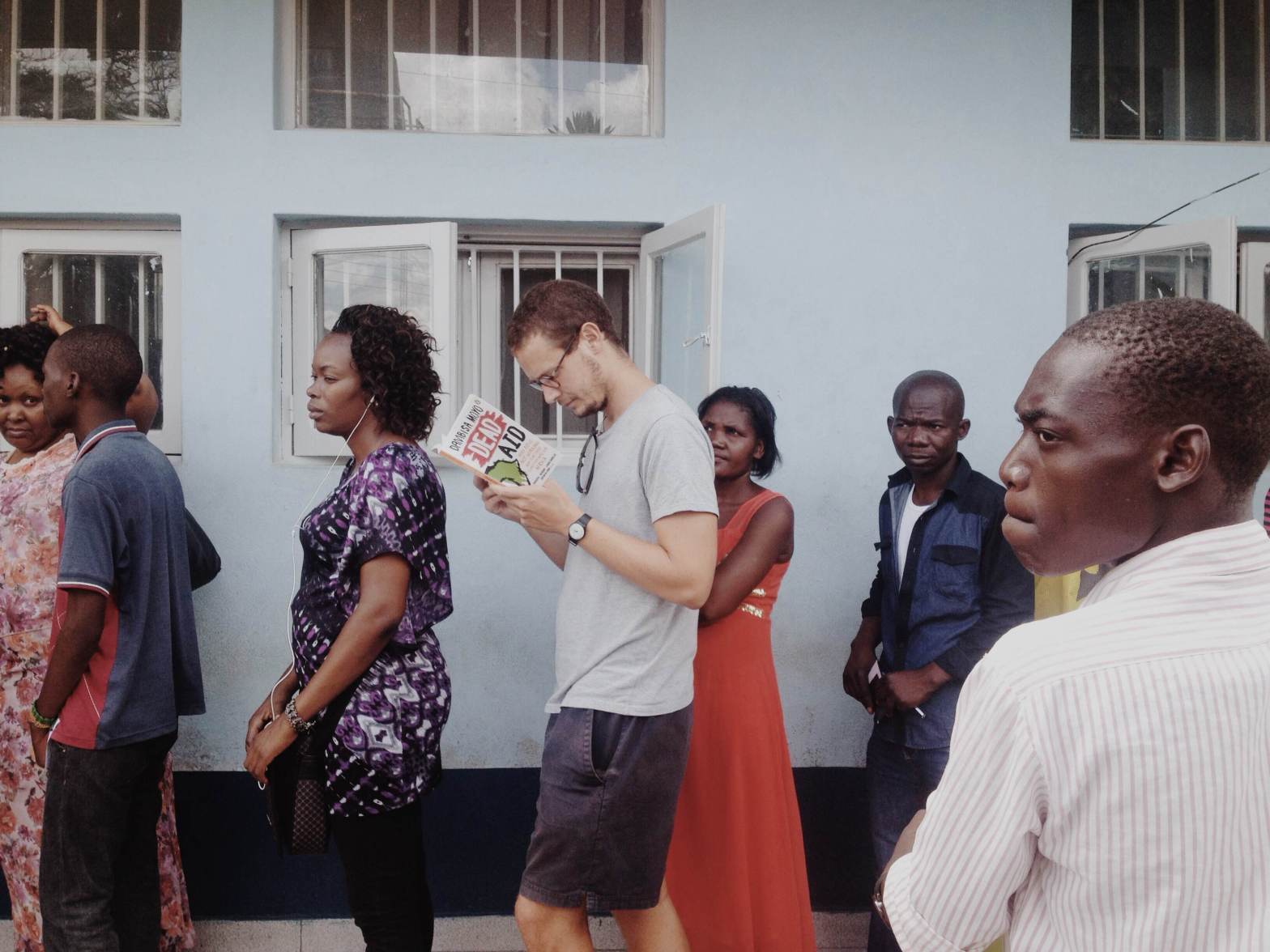
Reading in the queue at a Malawian border post in 2016, while on a 34-hour bus journey.

In 2015, I moved out of the apartment I was sharing. I’d had a lightbulb moment: I’d realised that — thanks to the internet — I didn’t actually need to be based all the time in the region where my biggest client was. My home city, Cape Town in South Africa, is a stunningly beautiful place to live, but I had the strong urge to explore elsewhere, to spend time in far-flung lands.

That wanderlust has fuelled nearly four years of nomadic life. I’ve taken hundreds of flights, been on every continent (except South America and Antarctica). To some desk-bound nine-to-fivers, it might look like living the dream.

Certainly, I’m grateful for the flexibility I have as a freelancer— for the exhilarating freedom of having so much choice when determining my “when” and “where”. There’s been plenty of upsides: the more I’ve travelled, the more there’s been to write about (in addition to copywriting, I write for magazines and newspapers — often about the places I go to). I’ve met amazing people, tasted amazing food.

But it’s not all rosy: I learnt the hard way that you can have too much of a good thing. Constant travel started sapping my creative energies — which is not ideal when you rely on them to make money! Adjusting to new places and people all the time left me drained — as did the constant, unsettling churn of movement: planes, trains and buses. I was left struggling to find the energy or motivation to write as much as I needed to. My mental health suffered — my OCD flared up, the obsessive spirals fuelled by the stress of navigating the unfamiliar. At times, I found myself struggling to appreciate where I was — the sense of wonder had faded. In coping with sensory overload, I’d become a little numbed; my outlook was a little blurry. I started to wonder — what’s the point in travelling so much, if you’re not making the most of where you are?

I knew things had to change. And so, I decided that as wonderful as the Technicolor brightness of travel might be, I needed to balance this out with “white space” — fallow periods to read, reflect and write; familiar places I felt comfortable, safe, at home in. Given that attention is finite (and precious!), I also had to be more selective about how much media I consumed.

All in all, this was about finding balance — between old and new; movement and stillness. I don’t always get it right, but since I’ve started incorporating more of this white space, I’ve found myself happier, healthier and more productive. In between time on the road (or in the air), between new places, I try to revisit old ones. I stay with friends, I revisit cafes I know. During this downtime, I try to keep use of transport to a minimum. I’ve left social media and have reduced the number of email newsletters I read each day (I try to get weekly ones instead — so that I remain informed, but less consumed by the relentless news-and-views cycle).

I’ve found that no matter where I am, there are things that can anchor and soothe me. Making coffee with my Aeropress. Writing in my journal in the early morning quiet. Going outside for a run or a walk. Doing a 40-minute body scan or breathing meditation. None of these is a silver bullet, and hell, sometimes travel still feels exhausting and overwhelming. But in combination, they’ve gone a long way to creating conditions conducive to produce meaningful creative work when I’m on the road. Given that’s how I put bread on the table, I’m grateful for that.

This piece first appeared in The Startup on Medium.

A powerful portrait of the immigrant experience: “On Earth We’re Briefly Gorgeous” reviewed

1*SLp8kUQHW1ogXapWjhiWzg

Every so often you read a novel that leaves you a little breathless. A novel so darn good that it haunts you like a bruised rib, reminding you of the power of fiction, the potential it has to move, connect, provoke, and bear witness.

On Earth We’re Briefly Gorgeous, the debut novel by Ocean Vuong is one of these. Vuong has already gained much critical acclaim with his debut poetry collection, Night Sky With Exit Wounds. His first foray into fiction will surely result in more of the same.

Styled as a letter by the protagonist, Little Dog, to his illiterate mother, the novel traces this Vietnamese boy’s journey to early adulthood in gritty Hartford, Connecticut.

As one would perhaps expect from a lauded poet, the prose is rich with poetry — the sentences sing, never hitting a false note. The phrasing is fresh and vivid: the inside of a cheek “where the flesh was softest, tasted of cinnamon gum and wet stones”; while working on a tobacco farm Little Dog observes “the coiled summer air, sputtering with heat, rise over the razed fields”; a black wren on a windowsill is a “charred pear”.

There are tonal shifts — from the lyrical personal narrative to sections of essay-like exposition (about the Vietnam War, Tiger Woods, OxyContin). Instead of these bits being clunky and out of place, their inclusion seems — to me, anyway — to form part of a daring and inventive approach, challenging and transcending expectations of what the form, register and timbre of a first-person novel should be like.

Vuong writes with acute self-awareness and empathy. He describes the physical abuse Little Dog’s mom meted out to him in harrowing, painstaking detail. But instead of this resulting in the caricature of a monster, a far more nuanced portrait emerges — a meditation on the perpetuating nature of violence; the way that those who’ve experienced it can end up inflicting it on others.

There is a justifiable anger that simmers beneath these words. But, as Vuong provides searing scrutiny, there is never a loss of exquisite poise — a calm, clear-sightedness that gives this rage all the more power. There is much to be angry about. The casual racism (and vicious misogyny) Little Dog and his mother frequently encounter in their adopted country. The foolish, jingoistic imperialism that this prejudice, in part, gave birth to. Unbridled cold-hearted capitalism — of the sort that resulted in the medical system being awash with the highly addictive painkiller OxyContin, precipitating an opioid epidemic across countless communities. This epidemic is particularly close to home, taking the lives of several of Little Dog’s friends as well as that of his first love, Trevor — a relationship Vuong captures with toe-curling precision and aching tenderness.

Vuong’s unwavering critique is never strident or ham-fisted. He never once yells at the reader — he doesn’t have to in order to make himself heard. And he insists on being heard. In spite of being immersed in a culture that has long insisted on the marginalization and even silencing of outsiders, he is resolute and defiant. As Little Dog emerges into adulthood, his self-worth appears to be almost non-existent. But, narrating this letter years later, there’s been a shift. No longer does he think his life, his story, are worth nothing. Luckily for us, he is now determined that his words take up space in the world. The world is all the richer for it.

This book is a lyrical monument to Little Dog’s struggles and resilience — but also to the struggles of those who have been obliterated. Those killed in war (or who continue to be haunted by its horrifying legacy). Those ravaged by a lifetime of menial and poorly paid work. Those killed by overdoses.

This novel is a potent reminder for us all — no matter our background — to listen harder. To remember the silenced. To never attempt to silence others. It is a clarion call for the sidelined to speak out even if they risk being shouted down. And it’s an invitation for those whose privilege and opportunities meant that their voices have always been heard to quieten down, for once. To take up a little less space. To let others take the stage for a change.

Beautiful, commanding and wise, We’re Briefly Gorgeous has the makings of an instant classic. Read it, then tell your friends to read it too.

  • On Earth We’re Briefly Gorgeous is published by Penguin Press.

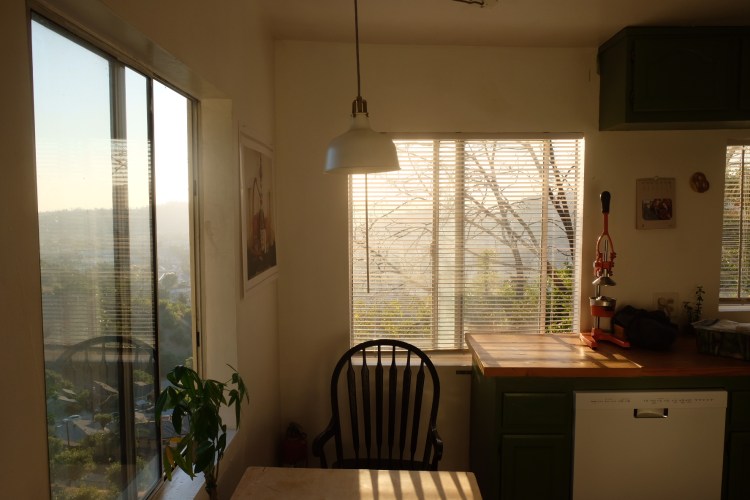
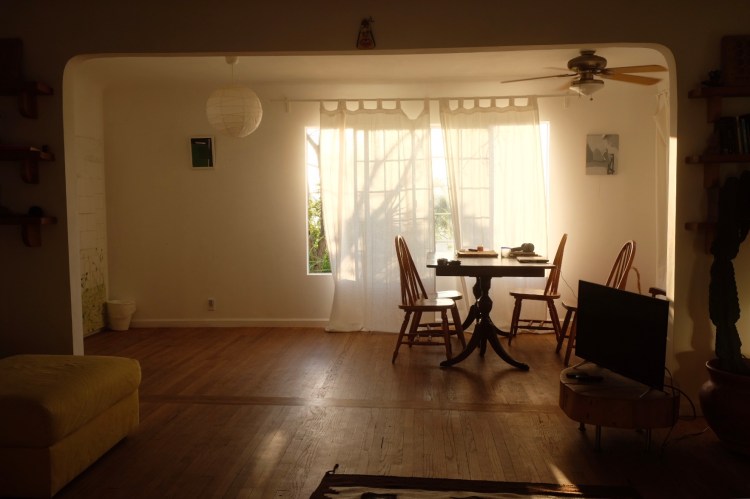
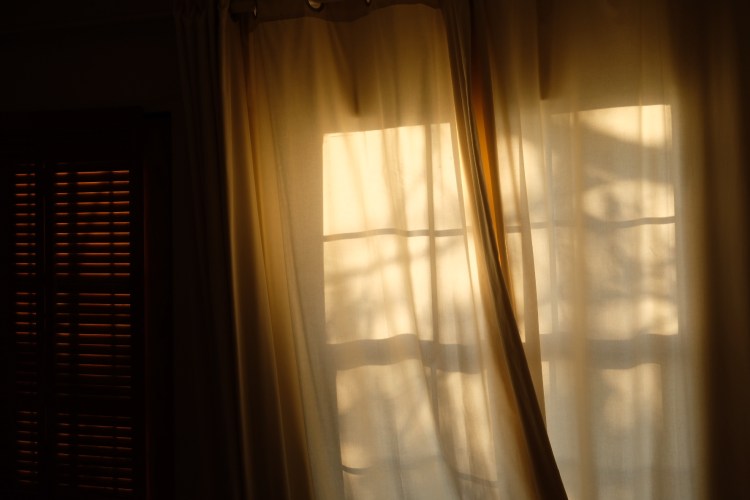
The golden light of Los Angeles​

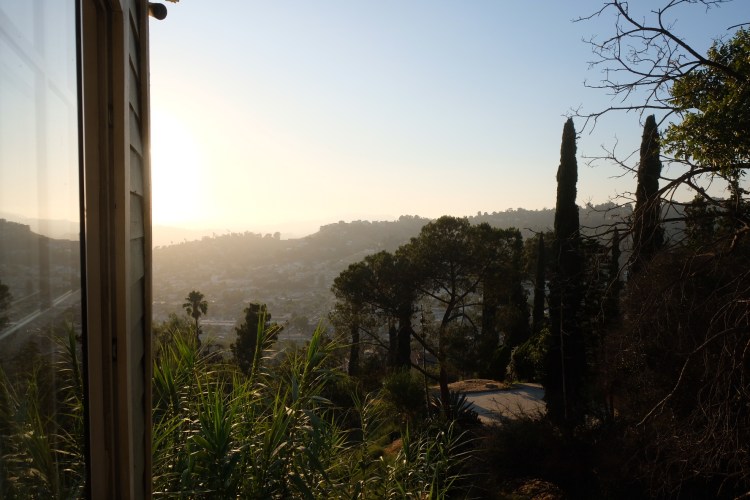
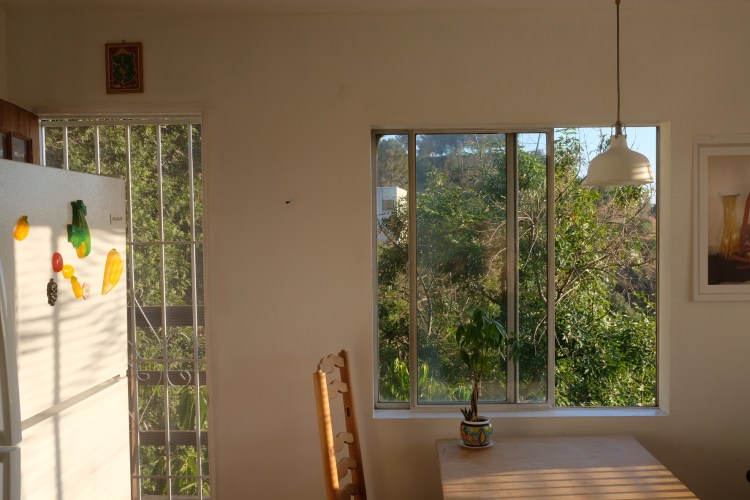
I’m obsessed with LA’s light: languorous, golden, and lingering long after sunset. (It’s no wonder that they thought it a good idea over 100 years ago to start making films here…) These snaps were taken in late August at our Airbnb in Montecito Heights, East Los Angeles.

A56E7B83-8CCC-451D-96D4-BEB40373316D-975-000000FD0ED9ADD84B904EF0-8ED5-46FD-AF3D-659ECA86AE3C-975-000000FCFD1F1C618F3EDF8E-2052-49BF-B9B8-0BA1C7B7C244-975-000000FCBBD029F2979AE6A3-2AA0-4DB2-86CC-D4C2C4B7A532-975-000000E2C9CB78F864DDC6D3-BA7E-45A4-9997-BE447C7F4B45-975-000000E28618E5AD438888C6-EB38-4C8B-B3FF-0B2AF5D0A8BD-975-000000FC86F27502CE50CEDB-788A-424F-A442-79D47C418011-975-000000E2D4983D6C40CF84DB-9B1C-43DF-8AA8-3AB8C7CF996C-975-000000E269E488E0

Transforming The Wilds: A Q&A with artist James Delaney

James Delaney The Wilds 2
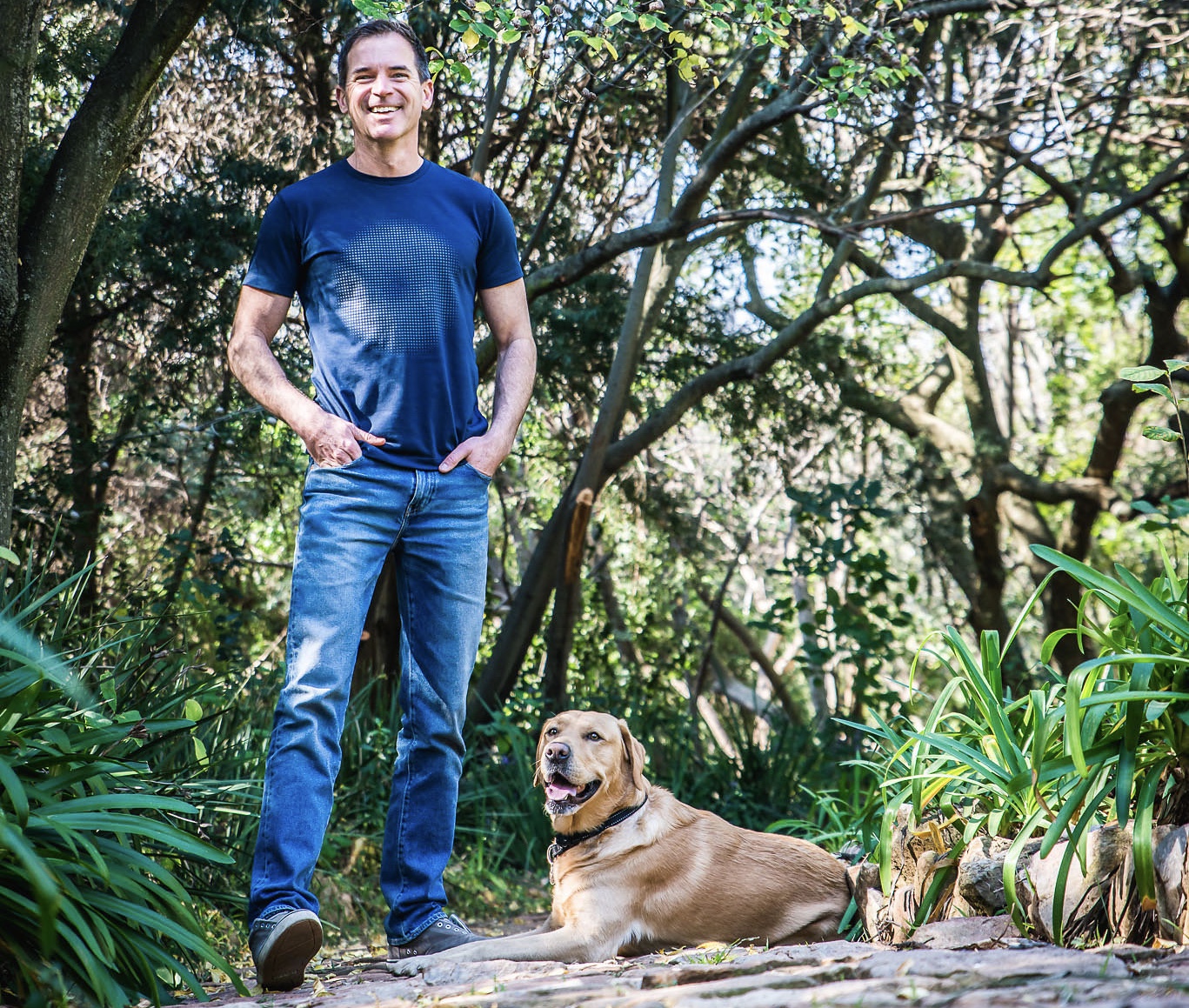
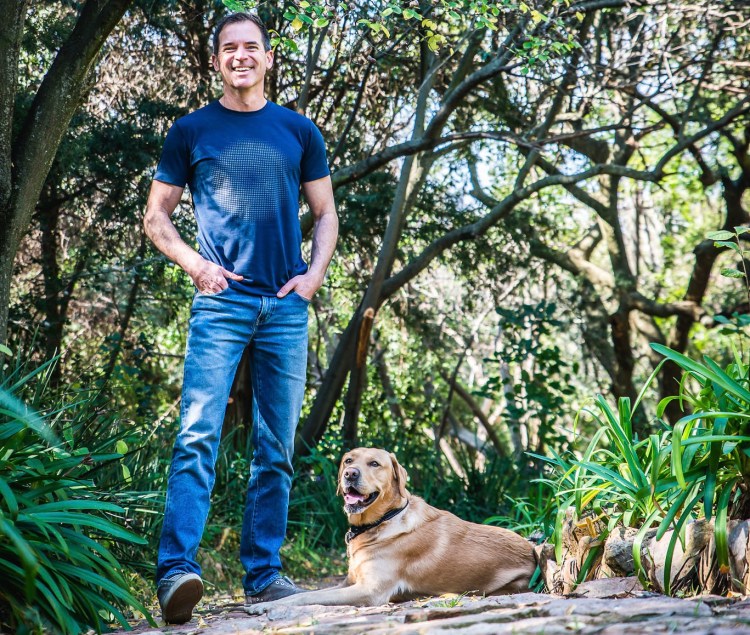
Artist James Delaney with his dog, Pablo.

Five years ago, the artist James Delaney got a dog who needed regular walks. But although his flat overlooked The Wilds, a sprawling park, there was a problem: it was an overgrown, litter-strewn no-go area, notorious for crime. And so, with a set of shears, he set about changing this. Today, thanks to his hard work — along with the help of 1000 volunteers, including children from local schools — the park has been transformed into a safe and welcoming public space. They’ve restored stone pathways and water features, built a new entrance, installed signage, removed invasive alien plants and planted indigenous ones, and repaired and painted 80 benches in bright colours. 

What inspired you to start cleaning up the park?

I like plants and trees, and I didn’t like that they weren’t being cared for. But after working for three years, not even my friends would visit — the park had a reputation for crime from many years back, a bit like the Central Park stories from the 1980s. It was great having a 40-acre back garden wonderland all to myself, but for it to be sustained and cared for in the long term it had to be relevant, and loved. I had to think — as an artist, what could I do which would capture people’s imagination sufficiently to get over their fear? And so I installed the owl sculptures on Mandela Day 2017 — 67 owls, for the 67 years Mandela gave in public service. They changed everything: 500 people arrived the day they were launched. Since then it’s been busy every weekend. The owls created a destination, and drew visitors’ eyes upwards to appreciate the beauty of the indigenous forests, planted a century ago but long forgotten. There are over 100 sculptures now, including a life-size pink giraffe, several antelope, a pangolin, monkeys, leopards and more. 

Delaney Owls FWhat has the reaction been like?

At first, it was tough: neighbours called the police on us and the council gave me a hard time. So I worked on weekends when the council couldn’t get in the way. On Monday mornings they’d arrive to great piles of dead branches, and had to deal with them. But then they started seeing the benefits — opening lines of sight so walkers felt safe, allowing light and water into the forest floor so flowering plants could flourish again. Neighbours love it now — they have a beautiful park to enjoy, and their property prices have increased. The new mayor of Johannesburg is one of our biggest fans, and sees this as a model for public spaces across the city. 

Who uses the park?

Regular users are from the surrounding suburbs and the inner city — the park lies between the two. This makes it an interesting meeting point for people from different worlds, rich and poor, black and white, old and young. We have a lot of free walks and exercise classes led by members of the local community, which encourages interaction. It’s also becoming a destination for international visitors, exploring Joburg before or after their safari. 

What’s coming next?

Priorities are restoring the dramatic mid-century greenhouses, getting the waterfalls flowing again, planting loads more indigenous aloes and trees, and securing long-term funding for future projects. 

Photo Nov 04, 10 09 24 AMAn edited version of this Q&A appeared in the July/August 2019 edition of MONOCLE.