Lisbon: an exquisite art adventure

saudade
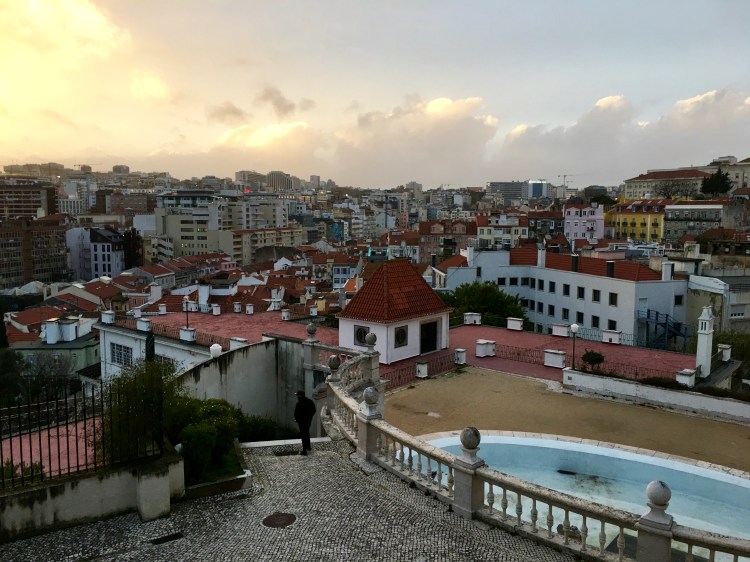
Yes. This is what I mean by saudade. My last night in Lisbon. An empty pool. Rooftops. And wistful AF clouds.

Saudade. It was on my last evening in Lisbon that I felt it like the tide that streams into the Tagus. The word the Oxford Dictionary defines (with woeful inadequacy) as “a feeling of longing, melancholy or nostalgia”. I was standing by an empty pool in the Jardim Torel, under a pink, cloud-speckled sky, alone save for one or two passersby. Lisbon’s hills rippled out beyond the balustrades: a jumble of tiles, concrete, stone and glass as close and elusive as the recent past. I spotted the Four Seasons The Ritz H0tel in the distance – where my sojourn in the city began. When it opened in 1959, it was the city’s first grand hotel – built with the lavish, enthusiastic support of Portugal’s then-dictator, António de Oliveira Salazar. Almost 60 years later, it still has no equal.

There are many reasons to love this hotel. The impeccably gracious service. The snatches of piano-playing you hear at teatime. The elegant, spacious rooms overlooking Eduardo VII Park. The rooftop running track which has sweeping city vistas that shift with each stride. The dimly lit hush of the lap pool and spa in the basement. The gobsmackingly yummy waffles and buttermilk pancakes – my two favourites from the bountiful array of breakfast options you can enjoy either in the grand, high-ceilinged restaurant or the cosy, clubby Ritz Bar.

Best of all, though, is that the hotel is an extraordinarily rich trove of mid-century Portuguese art. Myths, symbolism, and everyday moments find bold, often colourful expression in tapestries, sculpture, paintings and friezes throughout the building. A handy art guide app for iPad and iPhone means you can wander the public areas and corridors discovering who created what. Although it’s hard to miss the three Centaurus-inspired works by Almada Negreiros which dominate the lounge, it’s also worth seeking out the appositely titled Four Seasons by Sarah Afonso on the mezzanine. And you absolutely must sneak into the ballroom (if it’s not being used) to admire the delicate, glowing hues of Arnaldo de Almeida’s Bambús.

Suitably inspired, I continued my arts exploring beyond the confines of the hotel. I went to the Calouste Gulbenkian Museum first. Its Founder’s Collection features staggering 6,000-odd pieces – ranging from ancient Greek and Egyptian antiquities to eighteenth-century French decorative arts. I skipped this, opting rather to immerse myself in the Modern Collection which is housed in a distinctive, sloping gallery that draws abundant natural light through its staggered glass windows. More than 1,200 works, arranged chronologically, make this arguably the most extensive collection of Portuguese modern art in the world. Thoughtful curation offers insights into the moments and movements that have shaped Portugal from the late 19th century to the present – and how its artists have responded to and interpreted these. Afterwards, I drifted through the Gulbenkian’s tranquil Japanese-style garden and then popped into Under the Cover, a nearby magazine shop, browsing its tight but excellently edited collection of mostly independent titles.

I then headed to Belem in the west of the city. Here soars the Monument to the Discoveries: a vainglorious, slabbish stone celebration of colonial misadventures, erected in 1960 even as Portugal’s grip on its empire was inevitably weakening. A short walk away was the real purpose of my visit: the Museu Coleção Berardo, which offers an exquisitely rich crash course in the major movements of modern and contemporary art. From Dadaism and Abstract Expressionism to British Pop Art and beyond – it’s all here. Afterwards, I fortified myself with two pastel de nata from the bustling Pastéis de Belém which has been making them since 1837 using a recipe from the nearby Jerónimos Monastery where the iconic Portuguese custard tart was reputedly invented.

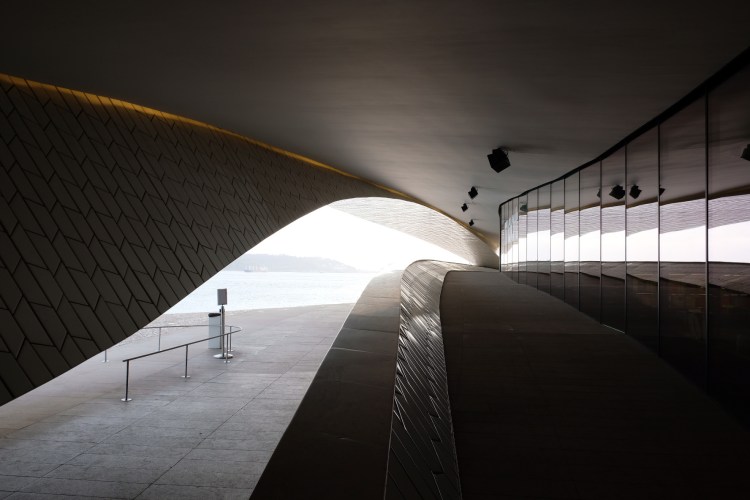
Then I visited MAAT – the Museum of Art, Architecture and Technology. Comprised of a refurbished former power station and a new, fabulously sleek, free-standing gallery, the MAAT houses an ever-changing mix of exhibitions, mostly featuring contemporary artists. Up next was the LX Factory– a self-consciously hip and slightly underwhelming precinct of restaurants, design stores and studios. Then I headed back in time at the Museu Nacional de Arte Antiga. If you like ornate gold- and silverware and very old art, you’ll love it. The constipated expressions captured on medieval canvases weren’t really my cup of tea, though I was totally transfixed by the trippy Triptych of the Temptation of St. Anthony byDutch painter Hieronymus Bosch. On its three luridly shimmering panels were more melodrama than all the seasons of Game of Thrones combined.
maat
Oh, MAAT!

Onwards, eastwards and into the future: to Chiado, a smart shopping neighbourhood that’s also home to MNAC, the National Museum of Contemporary Art. Formerly a monastery, its building has been dexterously reinvented as a warren of exhibition spaces varying in scale. Temporary shows offer curated glimpses of the museum’s extensive collection. When I visited, I was captivated by the Gender in Art exhibition, in which sexuality and identity were poignantly explored; the hauntingly homoerotic images by young painter João Gabriel were particularly wonderful.

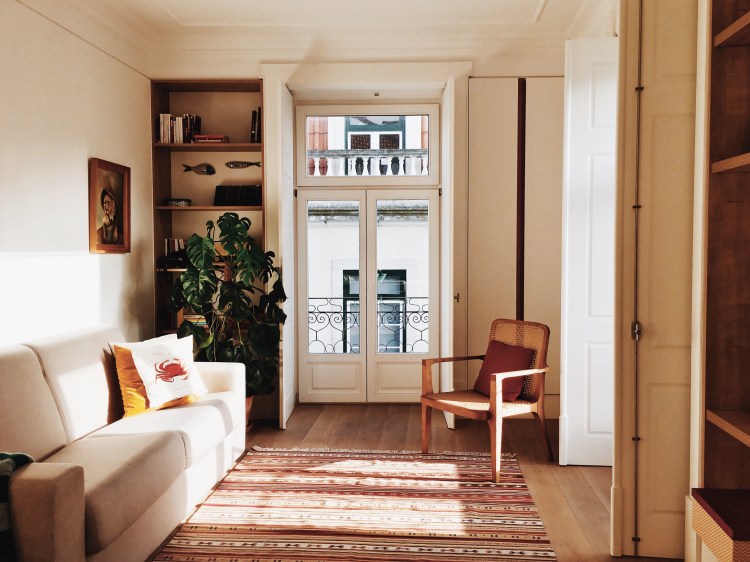
After three wonderful nights at the Four Seasons, I moved over to equally lovely, but very different, digs: The Lisboans, a set of self-catering apartments. If I hadn’t wanted to move to Lisbon before I arrived here, I certainly did by the time I’d crossed the threshold. I had entered my dream apartment: a smattering of antiques and art set against white walls; tall French windows framing views of the street; sleek mid-century inspired furniture, including a marble-topped dining table. I didn’t want to leave – but I had to; I had a lunch reservation downstairs at The Lisboans’ restaurant, Prado.
Processed with VSCO with m5 preset
Your very own Lisbon apartment courtesy of The Lisboans. So homely, and yet so quintessentially Portuguse. How do they get it so perfect? You’re not going to want leave.

Chef António Galapito and his team serve up the perfect blend between rustic authenticity and knowing sophistication. Using only the very best seasonal Portuguese ingredients, the dishes are smallish and beautifully presented. I feasted on salty, creamy cockles to start with; seared and smoky pork intercostals for mains. For dessert: mushroom ice-cream — earthy, rounded, creamy with a sweet shock of caramel.

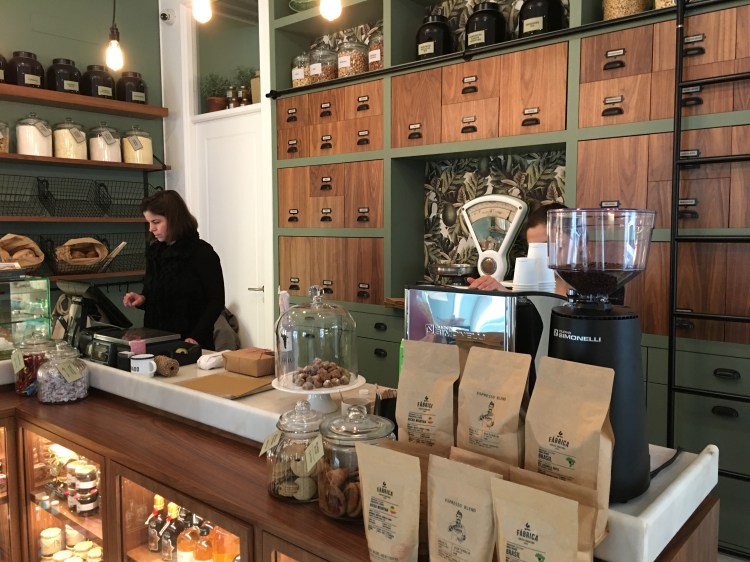
In March the Prado Mercearia, a farm-to-grocer concept, opened in the same building. As with the restaurant, the focus is on organic and natural Portuguese fare such as acorn-fed smoked ham, locally roasted coffee beans and biodynamic wine.
prado
The Prado Mercearia. Hmmm, so much yum!

The Lisboans is poised between the grand Baixa and quaint Alfama neighbourhoods an ideal base to explore both on foot. I wandered through the golden rain-slicked alleyways of the latter where mournful serenades leaked out of the open doors of Fado restaurants. I enteredTagus bar, listening to a Bossa Nova jam session followed by a Cape Verdean singer strumming his guitar – two reminders of the strong cultural links Portugal maintains with its former colonies. I drank peppermint tea at the comfy, lounge-like Pois Café and drank a solitary Super Bock beer at a humble, tiled taberna. The Lisboans left orange juice and fresh bread outside my door in the morning – a wonderful touch. Fortunately, though, I still had enough space for a heavenly almond croissant a few doors away at Fábrica bakery.
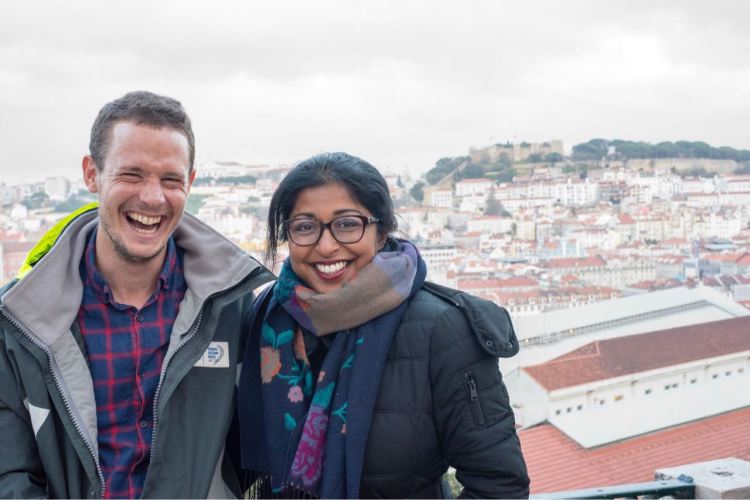
lisbonishay
This is me and the inimitable, super knowledgeable, all-round-wonderful Ishay Govender-Ypma who has written extensively about the city.

In Baixa, I fell in love with Burel’s sturdy but timelessly stylish woollen satchels, blankets and cushions (woven and manufactured in a mountainous village). For more Made in Portugal delights, A Vida Portuguesa offered everything from sardines and ceramics to stationery and candles. Near Rossio station, I found glove and hat shops that have been plying their trade for decades. I stopped at A Ginghina – a hole-in-the-wall serving cherry liqueur – swotting off offers of cocaine and hashish from a scraggly-looking punter as I sipped the pleasantly warming and surprisingly tart drink.

I spent little time in Bairro Alto – which is densely packed with bars and clubs – opting rather to stroll through the little parks and wide, elegant avenues of the neighbouring Príncipe Real. Inside the Pavilhão Chinês(Chinese Pavilion) I drank Port served by waiters in old-fashioned uniforms, surrounded by trinkets, toys and dolls stacked to the ceilings.

Dinner was at Restaurante Palácio. This beerhall-cum-dining room is the real deal: garish lighting, harried service, vast local families and steaming trays stacked with some of the city’s most delicious seafood. Ours featured percebes (a kind of eerie-looking barnacle), clams, garlic-soaked prawns and sweet and fleshy spider crab – all washed down with vinho verde (a slightly fizzy green wine). The night ended at another palace: the astonishingly opulent Palácio Chiado. I nursed an exceptionally made negroni in its gin bar (one of several quaffing and dining spaces in the building), admiring the frescoes, sculptures and soaring, vaulted ceiling above. I raised my glass. Lisbon, you’re hard to beat.

An edited version of this article appeared under the heading “Nostalgia for past art glory suffuses even Lisbon’s Ritz” in the 20 October 2018 edition of Business Day.

I was a guest of the Ritz Four Seasons and The Lisboans.
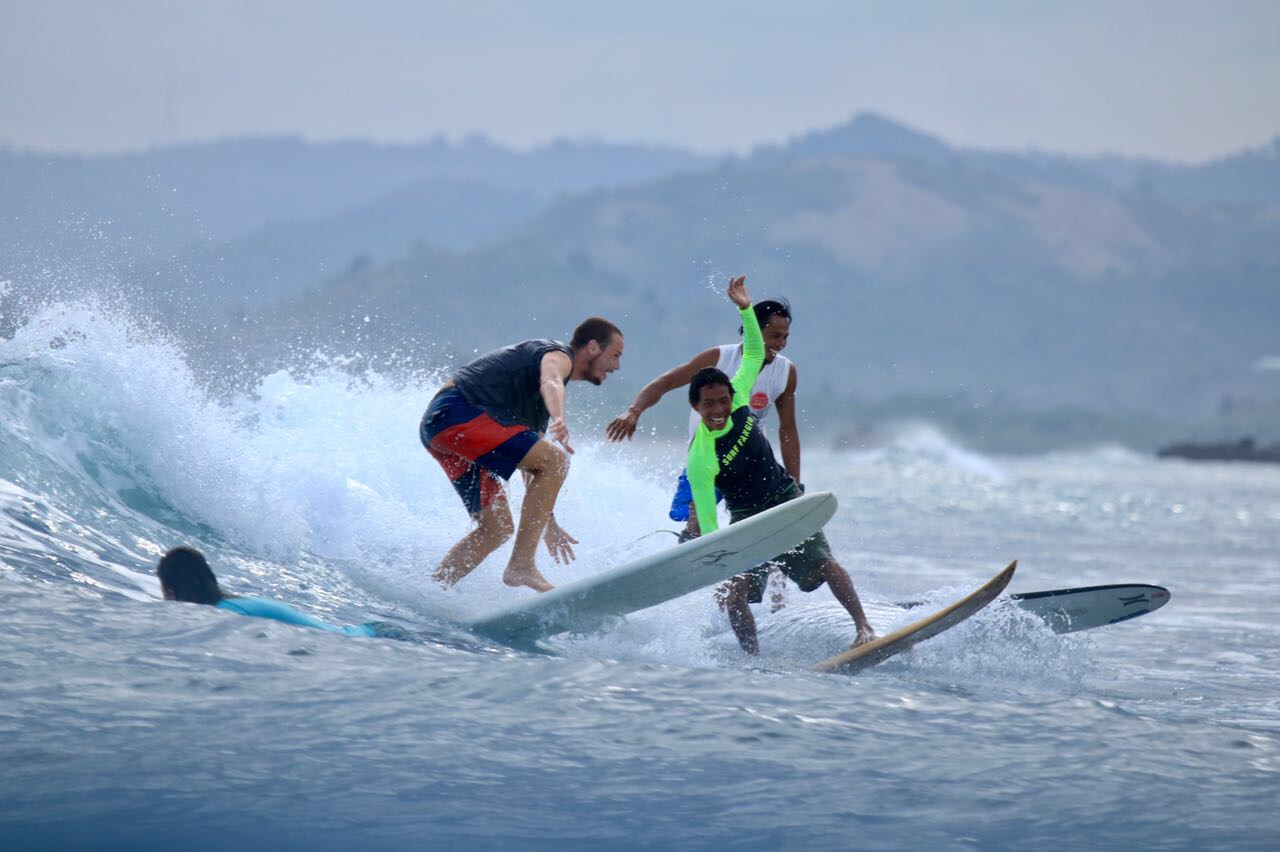
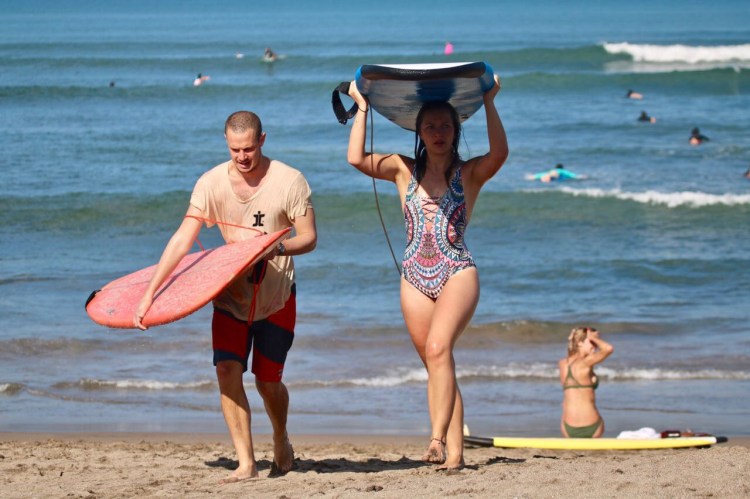
Learning to let go: discovering the zen of surfing

A few life lessons discovered while on (and falling off) a surfboard in Indonesia.

Managing to stay upAs an 11-year-old swimming the lonely waters between Robben Island and the mainland, I came to know and love the transcendent power of the ocean — its ability to save, soothe and heal. And so, 17 years later, in a bit of an emotional and mental mess, I knew I needed surfing.

I wasn’t expecting it to be the panacea, the antidote, the cure-all. But what I did hope it might become is a tool I could use, frequently, to soften life’s blows and make it easier to accept and navigate its uncertainties.

In Indonesia, I was told that Muizenberg beach in Cape Town is considered by many surfers to be the best place in the world to learn how to surf. So what was I doing here, many thousands of rands, time zones and kilometres later when I could be doing this at home?

I suppose being far away appealed to me. I’d lived near the sea for most of my life but had never rode its waves save for just a handful of lessons. I’d loved those lessons — but in spite of my enjoyment, they were scattershot and therefore ineffectual.

To make meaningful progress with something as tricky as standing on a board with the slippery surface of the sea beneath, I knew I needed to commit to a concentrated period of learning, where I could build layers of skill and muscle memory. And doing this far away suited me; abandoning routine and familiarity would heighten the experience.

Sometimes to move forward in life, it’s essential to step back. I needed a reset. Indonesia is a great place to do that. When it’s not being savaged by earthquakes, volcanoes or terror attacks, it’s paradise — just ask Elizabeth Gilbert. She found love here; I wanted to find a basic competency in surfing.

Our first fortnight is in Canggu, a town filled with cranes and hammering as new surf shops and surf schools and surf hostels are built. Blonde-haired hipsters ride scooters on sandy streets, boards strapped to the side of their vehicles, girlfriends clutching their golden waists.

A warung — a humble restaurant on the shore. Day one. The South African surf guide has taken us here for lunch. I’m wolfing down my first nasi goreng — rice flecked with egg and chicken. I’m sipping on my first crisp Bintang beer. He’s asking us what we hope from the four-week trip we’ve booked through Ticket to Ride, a British surf travel outfit.

“I love the ocean — just being in the water is enough. Everything else is a bonus,” I say breezily. Those words will come back to haunt me.

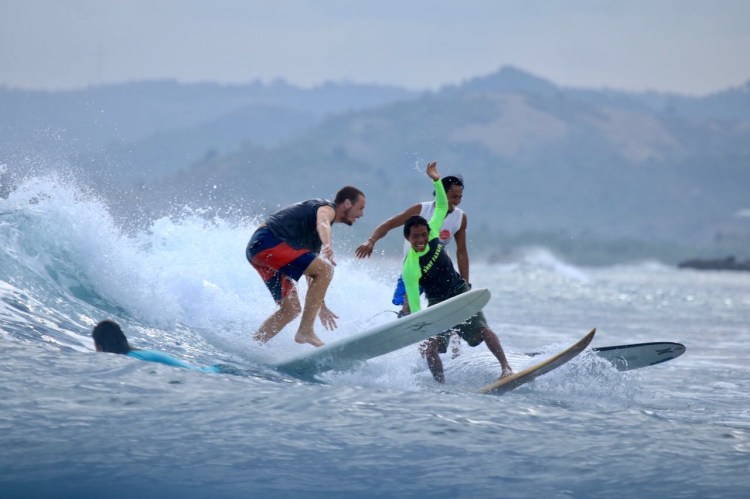
Progress initially is good and quick. I jettison the foam board absolute beginners use, and move on to a fibreglass longboard. Photos appear on Instagram of me wobbly-kneed but standing in mushy white-water.

I love being on a wave — it’s like flying. Once I take one from the backline all the way in. It is everything that matters — or perhaps it’s that nothing else matters; in those dizzying seconds, it all falls away. You glide unencumbered as freedom, happiness, elation surges. It’s a drug. As soon as it’s over, and you’re turning around to face the long paddle back out, you want more.

In Canggu
With fellow surfer Rebeca.

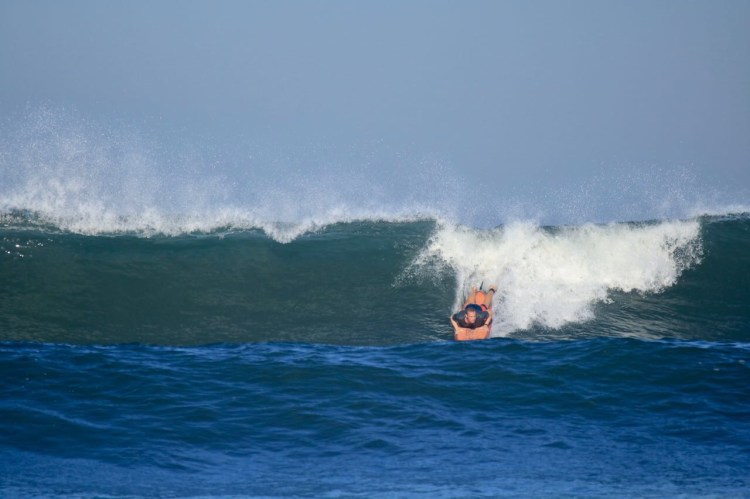
Here’s a thing about learning to surf: whatever milestone you reach, you most likely won’t stay satisfied for long. I head out into blue water — to bigger waves. A friend of the coaches is impressed — not at my ability, but at my near-suicidal willingness to take on big waves that I haven’t yet got the aptitude for. I take them, but I hesitate, and in that nervous pause I’m on the lower slope of the wave, not near its crest — resulting in wipe-out after walloping wipe-out. I even manage to break a board.

One day we go to Kedungu, a 45-minute drive away. We pass rice paddies and interminable sprawl. I sip on two little cups of sweet, muddy coffee. It’s quiet out. There’s just a handful of other surfers. A volcano, shrouded in mist, looms over the horizon. The sea is much bigger, rougher, messier than yesterday. Compounding this is the fact that we went out to a bunch of bars last night. Surfing might be good for a hangover, but a hangover is certainly not good for surfing. Scary waves are even scarier; your precarious balance is even more precarious. Terrified, I don’t catch a single wave. Worse, I don’t even try to.

Just before a wipe out
Moments from a wipe-out.

I’m reminded that like much of the universe, the ocean is monumentally indifferent to you. I feel humbled, fragile and insignificant. But on the plus side, the relentless churn of worrying that often accompanies me has begun to feel insignificant too.

From Bali, we travel by ferry to the neighbouring island of Lombok. Here there are mosques instead of Hindu temples, and the beer is more expensive. We stay in a locally-owned homestay. Before the sun has come up, we board a wooden boat with a sputtering engine. It takes us to Inside Right, a reef break far from the shore that will soon become inundated with impassive Japanese.

We wait in water that is as clear and still as glass. A wave forms suddenly; the water is still glassy, but is forming a powerful curve now, eerie and spectacular, a clean, slow, surging sweep. We’ve got to surf that.

I’m the fittest, the fastest, the strongest in the group, but I’m the one not staying on any waves. I catch them, but a second or two later I topple off. That’s because no matter how many times I get it right when I practise on land, the way I do my pop-up — the jump on to the board — is wrong when I’m in the water.

I leap up like Usain Bolt starting a race, when my feet should actually be facing the sides of the board; they shouldn’t be parallel to them. It didn’t matter when I was on a board the size of an aircraft carrier. Now that I’m on a shorter one, though, it’s easier to become imbalanced. And being imbalanced means falling off.Falling off againThere’s a ponytailed drama student in our group on a board far shorter than mine who, time after time, gets up and rides for a good 50m at least. It is infuriating. I want to be the best!
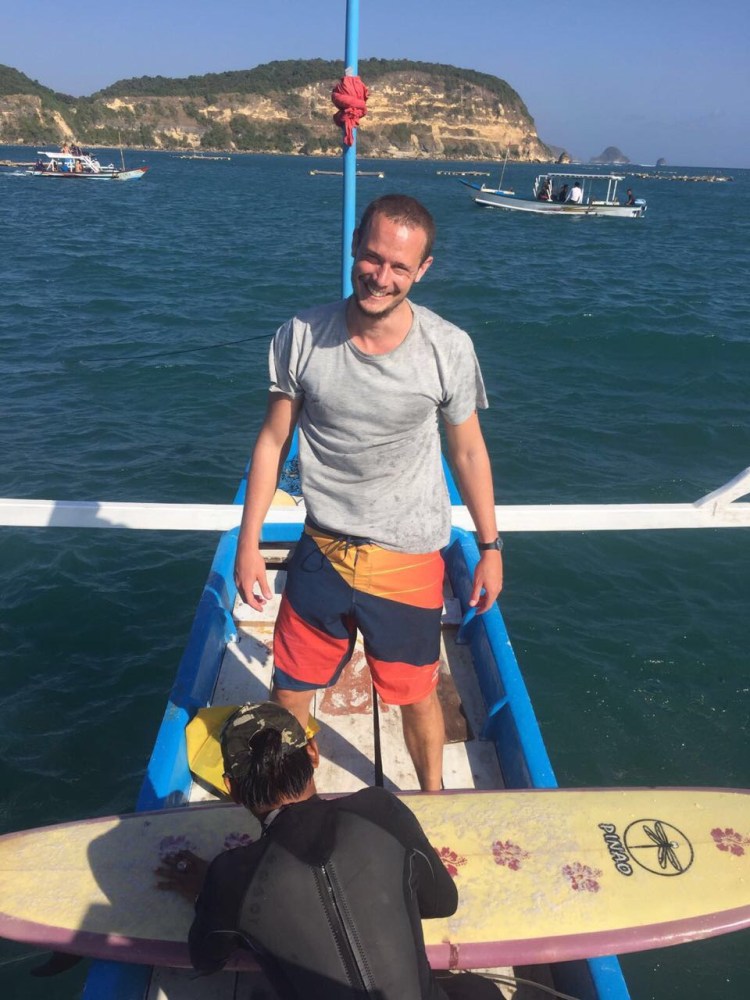
I’ve come face to face with the staggering vastness of my incompetence and it’s left me furious and disappointed.

“Good session, mate,” the trip leader says, and I want to argue — I want to yell at him that I’ve not ridden a single wave. But I don’t. Instead I nod. I remember what I said at the beginning. The ocean is enough. Just look around. At the volcanic curves of the mountains, the golden clouds reflecting on the sea. The contented, bountiful joy of just being here, in this warm water, on this exquisite day is seeping in. I realise I’ve got to appreciate where I am, not be disgruntled about how far away I am from where I’d like to be.

The afternoon session is different. I still fall over plenty of times, but I manage to stay on a few waves too. Now that I’ve let go — now that I don’t care so desperately about improving — I’m actually improving.

About to go surfing
My happy place.

In the days that follow, I have some decent sessions; others are disastrous. But I still feel more present, more positive. I’m almost moved to tears, not by frustration this time, but by the ever-changing beauty and power of the waves.

I’m enjoying myself. I take solace in the belief that if I keep on practising then, one day, I’ll master the correct way to pop up on the board. One day, there’ll be more rides than falls. I’ve realised I can’t hurry this process: I can only keep trying; I can only do my best.

On the edge of the much smaller island of Nusa Lembongan, a wave dumps me, dragging me along sharp coral. My back is bleeding, crisscrossed with burning welts that in the weeks following will become scars. I laugh it off when I’m back on land, but my confidence is shattered.

The next day, I force myself to go back out. We attempt another reef break, ominously called Lacerations. I’m cautious, timid. I can see the coral below; I can almost touch it. The following session is better. I catch and ride wave after wave. We take a boat back to shore. I’m ecstatic, exhausted. This is only the beginning.

This article first appeared in Business Day‘s 12 December 2018 edition under the headline “Learning to surf is getting to know myself“.

Unwind as time slows down at Pel’s Post in Pafuri

unnamed-13

Some places — perhaps most places — slide past you as soon as you leave them; the impressions they leave are slippery and fading. Others are more stubborn; they get stuck; they become part of you and insist you return, again and again. Pafuri is like that for me. An about 240km² triangle wedged up against Zimbabwe and Mozambique, it forms a mere 1% of Kruger National Park and yet features a whopping 75% of its biodiversity.

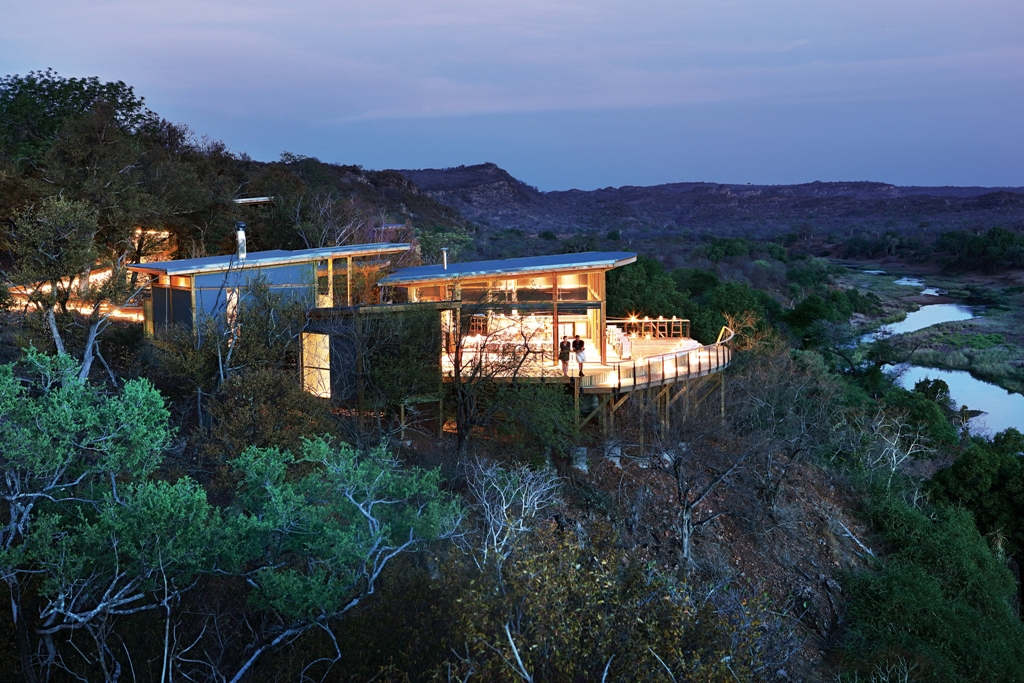
While lions are scarce and rhino non-existent, Pafuri is still a bush-lover’s paradise. It has an astonishingly diverse array of landscapes — from lala palm-studded plains to dense mopane-covered hillside — and is home to about 350 bird species, including the rare Pel’s fishing owl. This fluffy recluse has given its name to Pafuri’s newest and most exclusive lodge: Pel’s Post, which consists of four effortlessly stylish rooms perched discreetly on a ridge. When it comes to safaris, this is the very epitome of a room with a view: with the press of a button, floor-to-ceiling motorised blinds rise, putting the Luvuvhu River and rumpled bushveld beyond it on centre stage.

When we arrive, the late afternoon light is as thick and golden as syrup, flaring on distant baobabs’ yellowing leaves. We eschew a game drive, opting instead for a swim in the large, slightly bracing pool. That night, a fire in the grate keeps the autumn chill at bay.  Dinner is spinach and feta ravioli followed by a rack of lamb, and like much of the food here, both dishes are delicious. With the exception of our attentive server and the kitchen staff, we have the place to ourselves. Although Pel’s Post was designed for single-use bookings — happily the rooms are spaced far enough apart so that your mother-in-law can’t bother you during siesta — it can also be booked on a per person sharing basis too.

When we’re woken the next morning, it’s still pitch-black. Minutes after leaving the lodge in a Land Rover, we spot a large male leopard padding silently between bushes. We hear a crash: the lumbering progress of a solitary elephant chomping on mopane leaves.

Half an hour later, we’re surrounded by riverine forest: the soaring ana tree, the quirky, twisting apple-leaf, the towering nyala berry. This gives way to a forest of fever trees. We stop under the ghostly, yellow-green branches. We see the inky blotch of a buffalo meandering between faraway trunks. A giant eagle owl swoops to a branch and settles, watching a baboon troop congregate on the ground. A vervet approaches, wondering if he should join us for morning coffee, but seems to think better of it.

After a sublime eggs benedict back at the lodge, we lounge by the pool, playing Scrabble, drinking chenin blanc, keeping an eye out for crocodiles or hippo traversing the water below. Time has slowed down; it feels narcotically tranquil, and that’s not just thanks to the white wine: Pafuri has a way of making sure the stress and din of city life are wondrously faraway.

The next morning we go walking, my favourite way to experience the bush. Not only does stretching your legs help to make amends for at least some of the calories from big brunches and tasty teatime canapés; one also becomes truly immersed in the bush, in a way that’s impossible from the bumpy cocoon of a game viewer vehicle. On foot, your senses become quickly attenuated — to alarm calls, smells, movement. And you spot the little things: a column of Matabele ants on the hunt, for example; a warthog’s burrow commandeered by cheeky jackals.

As we slowly walk across the floodplain, we spot a pair of southern ground hornbills, which given their endangered status, makes them all the more special. A brown snake eagle and a white-backed vulture sit together companionably on a dead tree branch. Close to a pan, there are tracks: a hyena’s claws, a croc’s tail swished in the sand. Our guide points out the dried mud on apple leaf tree trunks; this is from elephants trying to remove ticks and other parasites from their skin.

As we enter the jackalberry-shaded Hutwini Gorge, an excitable dassie is alarm calling. Given their paranoia, it’s probably nothing; but we proceed cautiously, anyway. We admire the tenacious roots of large-leafed rock figs worming their way through the soft sandstone, causing the rock to disintegrate. Our guide picks up what looks like a hairy piece of old twine but is actually the remnants of baobab fibres that were chewed by elephants: they eat this when water is scarce (baobabs are about 45% water). Finally we reach the crest of the hill, looking beyond the river to where we can just make out the distant stone ruins of Thulamela, site of an ancient Iron Age kingdom.

We pass evidence of far more recent human habitation: the circular indentations carved in smooth, flat stone that was used for morabaraba, a game the shepherds that once minded their livestock here played. These carvings are a reminder that the history of Pafuri is a fraught and complicated one and that this pristine wilderness was also, for some people, a home.

In 1969, the Makuleke people who lived here were forcibly removed to allow for the expansion of the Kruger National Park. This is a story that promises to have a happy ending, however. After a successful land claim in the late 1990s, ownership of the land between the Luvuvhu and Limpopo rivers was returned to the community. Recognising the value of conservation, the Makuleke decided to keep this a protected area managed by SA National Parks. As of one three private concessionaires on the land, Rare Earth contributes to the community’s wellbeing through community levies and employment opportunities.

In fact, 95% of those employed by Pel’s Post and its sister lodge, The Outpost, come from this community. This includes our charming and knowledgable guide, Phanny Risimati, who was born near Crook’s Corner, a few months before the forced removals. For Risimati, guiding here is more than just a job: it’s a homecoming.

For our last afternoon drive, we go to Lanner Gorge, where cliffs crumble majestically down to swirling rapids. The veld unfolds interminably beyond us, with not a single building or person in sight. We perch on top of an outcrop, sipping gin and tonic as the shadows deepen and the sun sets the sky ablaze. On our drive back to Pel’s Post, Risimati’s torch flashes over a juvenile female leopard slinking through the undergrowth. We stop. There’s another manic dassie call, and this time the alarm is justified. We leave her to pursue her quarry. It’s the perfect ending to another day in paradise.

This article was first published in Business Day‘s 24 April 2019 edition.

I visited Pafuri as a guest of Rare Earth.


Eswatini budgets for change

Eswatini’s new finance minister is trying to put the country on a new economic path. He may meet resistance along the way.

Eswatini finance minister Neal Rijkenberg didn’t mince his words when he delivered his maiden budget late last month. “Eswatini is facing an unprecedented economic crisis,” he told a packed parliament.

Indeed, the picture isn’t pretty. Preliminary estimates indicate that the economy, which is dominated by sugar, timber and agriculture, shrank by 0.4% in 2018. There was also a net decline in foreign direct investment — a years-long trend.

Rijkenberg is arguably the best person to turn things around. The entrepreneur, appointed by King Mswati III in November, has grown Montigny – the business he founded with his brother in 1997 – into the largest privately held timber company in Southern Africa, with annual revenue above R1bn.

He hopes the 22.97-billion emalangeni (about R23bn) 2019/2020 budget will be the first step towards “wealth creation and distribution, the promotion of a free-market economy and ensuring we have the appropriate balance between government and the private sector”.

This last point is central to Rijkenberg’s planned reforms. “The competitive nature of the private sector allows it to deploy capital more efficiently, respond to market realities better and innovate in ways the state cannot,” he tells the FM. “Government cannot create jobs; it can only create posts. What this administration must focus on is creating an enabling environment for the private sector to thrive.”

The sector has, however, been throttled by tax-exempt state-owned monopolies. “The state has been too central in developing noncore infrastructure and too involved in competing with the private sector through state-owned monopolies,” says Rijkenerg. “Eswatini has [more than] 60 public entities and, while many are well run, some have led to overly restrictive regulations and monopolies, which have crowded out investment and innovation.

“We have stagnated with a model of centralised economic control and state monopolies which made sense at independence [in 1968] but which no longer serves us well.”

As a result, government will be selling its stakes in private companies, freeing up much-needed cash and opening the market to competition.

But many of Eswatini’s regulations — those related to competition and labour, for example — have also proved to be a bad fit, “better suited to highly advanced, industrialised economies”. They were driven, he says, “by development partners or regional bodies, and not by the development needs of the country”.

Rijkenberg hopes to boost the business environment, and to this end is looking to revise work permit and immigration policies, improve land and broadband access, establishing 24-hour border operations with SA and issue mining licences. With the launch of a national strategic plan in the coming weeks, he also promises to lower the corporate tax rate, currently at 27.5%, to the lowest in the region. Already, Eswatini’s two “special economic zones”, established last year, “offer zero tax for 20 years and preferential treatment for forex and imports and exports”.

While Rijkenberg stresses the importance of protecting workers and union rights, he says the country’s “current labour legislation and environment disincentivises businesses from employing people” – something that has contributed to a 23% unemployment rate. Reforms, he says, will allow businesses to better respond to market forces.

If Rijkenberg succeeds in creating an enabling environment, foreign firms may well be tempted to set up shop there. While major SA retail and fast-food brands and banks are already well-established, other sectors are ripe for investment. A competitive tendering programme for solar and biomass renewable energy is expected later this year. And while the new international airport is short on connections, it is “well placed to export ‘just in time’ produce to any destination in the world. We have a lot of underutilised land available for high-value agriculture and we are promoting a strong agriculture and agro-processing export-based sector”, he says.

Rijkenberg’s budget contains a raft of measures to swell coffers, including new sin taxes, a fuel tax hike, charging VAT on electricity, and disposing of government assets worth E400m. Given that the largely untaxed “shadow economy” makes up about 37% of GDP, it makes sense to use consumption taxes to increase revenue. He’s also introduced a higher, 36% tax bracket for the wealthy.

But the task he faces is daunting, so change is likely to be incremental – more gradual evolution than speedy revolution.

The royal family dominates the economy; the king effectively controls the sovereign wealth fund, as well as agricultural and other assets. So pushback is likely from some who are vested in an uncompetitive status quo where success is often contingent on connections.

Bankrolling an absolute monarchy also doesn’t come cheap: royal emoluments and the civil list — those receiving a stipend by royal order — come to E394m in the budget. A further pressure is Mswati’s penchant for shiny new things — convention centres, hotels, airports. These, supposedly the trappings of First World status, don’t necessarily pay their own way.

Four years after it opened, for example, King Mswati III International Airport (which reportedly cost R2.5bn) only receives scheduled flights from Joburg — even though it can accommodate wide-bodied jets.

Then there’s the budget item “Royal Swazi Airline” — allocated E323m, with a further E645m promised over the next two financial years. By the time the FM went to press, Rijkenberg had not confirmed whether the allocations were for the king’s private aircraft or to resurrect the defunct national carrier.

Eswatini has hotels aplenty – many owned by the government or the nation’s sovereign wealth fund – and they typically struggle to fill beds. But a five-star hotel under construction in the mink-and-manure Ezulwini Valley is costing this year’s budget E634m, and the adjacent convention centre has been allocated E1.23bn. With a plethora of similar venues dotted around Southern Africa, competition will be fierce. So it’s highly unlikely that the costs of the hotel and convention centre – which investigative journalism outfit amaBhungane recently reported will likely run to R4.8bn – will ever be recouped.

While the government might disagree, the growth potential for Eswatini’s tourism sector lies not in gleaming white elephants but in the kingdom’s underappreciated landscapes: it has an astonishing array of climates, topography, flora and fauna, and is well suited to a range of adventure activities. Its central location is a boon (it’s a manageable drive from Durban, Maputo and Joburg). And it’s far safer than its two neighbours.

But its many attributes remain largely unknown — no surprise, given its anaemic marketing (the tourism authority budget is less than E15m and the National Trust Commission, the custodian of several key attractions is sclerotic and underfunded).

Rijkenberg says the government is considering “working with private operators to manage and operate our protected areas to better preserve, promote and utilise them”. This is promising: if Eswatini plays to its strengths and offers high-quality adventure tourism services, it could draw a flood of visitors. Considering that 40% of its citizens are trapped in extreme poverty, this can only be a good thing.

This article was first published in the 21 March 2019 edition of Financial Mail.

Gay rights in Africa: “one step forwards, one step back”

Though there are signs of progress towards tolerance, life for sexual minority groups in many African states remains legally and socially difficult — and downright dangerous in some regions.
drew-beamer-vAij-E26haI-unsplash
Photo by Drew Beamer on Unsplash

In late 2018, Dar es Salaam’s regional commissioner, Paul Makonda, issued a chilling directive. “Give me their names,” he said of gay residents of Tanzania’s largest city. “My ad hoc team will begin to get their hands on them next Monday.”

The threat to round up members of the city’s LGBTIQ (lesbian, gay, bisexual, transsexual/transgender, intersex and queer/ questioning) community, in a country where same-sex acts between men are punishable by a life sentence, left gay Tanzanians fearing for their lives.

In South Africa — where discrimination based on sexual orientation has been banned since 1996 and same-sex marriage legal since 2006 — it was a disquieting reminder that life for gays and other sexual minorities remains legally and socially far more difficult — and often far more dangerous — in much of the rest of Africa.

There are some signs of progress. Last month, Angola decriminalised homosexual sex, erasing the “vices against nature” provision from its penal code — a hangover from Portuguese colonial rule. The updated law also bans discrimination against people on the basis of sexual orientation; those who do so could face up to two years in prison.

Angola joins other former Portuguese colonies that have removed anti-gay legislation, including Mozambique (2015), São Tomé and Príncipe (2012) and Cape Verde (2004).

In the rest of Southern Africa, however, the situation is decidedly mixed.

In Botswana, where gay sex can draw a seven-year sentence, President Mokgweetsi Masisi acknowledged in December that gay people faced persecution and discrimination in the country. “Just like other citizens, they deserve to have their rights protected,” the Midweek Sun reported him as saying.

Next month, Botswana’s high court will hear arguments challenging the constitutionality of the penal code’s anti-gay provisions, a process that could lead to their being repealed.

In Swaziland, where gay sex remains illegal — though this is typically unenforced — hundreds attended the country’s first LGBTIQ pride march, which went off without police interference in Mbabane in June.

Melusi Simelane, an activist with Rock of Hope, the NGO that organised the march, says: “The situation has absolutely improved from what it was in the past two years. First, it’s been a bit easier to discuss LGBTIQ identities with many people from various backgrounds. This is something that was hard before, because there was this idea that we’re nonexistent and/or are demons.

Caption

“We’ve come a long way, to try to deconstruct the misconceptions. What needs to happen now are deeper conversations that will lead to the decriminalisation of same-sex relations.”  The region’s only other kingdom, Lesotho, decriminalised gay sex in 2012.

In East Africa, Rwanda is a lone legal bright spot for gay rights, though Kenya is showing signs of change. In 2015, a court ruled that an LGBTIQ activist group should be recognised — a step that has often been a harbinger of decriminalisation in other countries. A court ruling last year outlawed anal examinations, an unscientific and painful attempt to assess whether anal sex has occurred. Suspected homosexuals are sometimes subjected to the practice in Kenya and several other African countries. On Friday, the country’s high court will rule on the constitutionality of the criminalisation of gay sex.

Though Kenya is seen as more progressive than many of its neighbours, harassment of sexual minorities — including intimidation, extortion and murder — remains rife.

Next door, in Tanzania, Makonda’s threats to round up gay people were met by a swift international response. The World Bank suspended its missions in the country, concerned about the safety of its staff. Following a meeting with the bank, President John Magufuli “assured the bank that Tanzania will not pursue any discriminatory actions related to harassment and/or arrest of individuals, based on their sexual orientation”.

But Human Rights Watch’s Neela Ghoshal says these reassurances are hollow, given that “discrimination against [LGBTIQ] people is persistent and pervasive”. This includes, she says, the government’s ban on HIV prevention strategies targeting men who have sex with men, as well as the breaking up of activists’ meetings at which health and human rights are discussed. In Zanzibar, 10 men still face charges for allegedly attending a gay wedding.

In Uganda, a law that included the death sentence as the harshest penalty for gay sex was ruled unconstitutional in 2014. In spite of this victory, gay sex remains a crime, and LGBTIQ activists face ongoing intimidation.

Rainbow Riots, an NGO that wants to open the country’s first centre to provide a safe space for sexual minorities, has been warned by Simon Lokodo, the minister for ethics and integrity, that doing so would break the law.

“In Uganda and Tanzania, where the silent consensus is that the presidents are disguised dictators, attacking ‘errant’ women and homosexuals is an attempt to win over an impoverished populace with the message that it is better to starve and remain unemployed than to anger God,” Patience Akumu, a Uganda-based journalist, has argued in The Guardian.

In West Africa, things are worse. As with Mauritania, some Muslim-dominated northern states of Nigeria under sharia law reportedly impose the death penalty for gay sex. Throughout the whole country, including the more moderate Christian south, public displays of affection between same-sex partners is illegal, as is gay advocacy work.

Despite this, Nigeria has a thriving and increasingly voluble underground gay scene that is finding cultural expression in blogs, short stories and poetry. Romeo Oriogun won the Brunel International African Poetry Prize for writing that the judges described as “deeply passionate, shocking, imaginative, complex and ultimately beautiful explorations of masculinity, sexuality”.

In neighbouring Cameroon, a tabloid published a list of 50 alleged homosexuals in 2006; a new list of another 82 people was reportedly circulating on social media late last year. The country’s virulent homophobia has meant gay people face arrest, assault and even murder.

At the Commonwealth heads of government meeting in London last April, UK Prime Minister Theresa May urged member states to repeal any anti-gay laws remaining on their statute books. According to LGBTIQ news site NewNowNext, about 1-billion people live in former British colonies in which gay sex is illegal — many of them in Africa.

“I am all too aware that these laws were often put in place by my own country,” May said. “They were wrong then and they are wrong now.”

Back in Africa, May’s remarks didn’t go down well. In response, the deputy speaker of Ghana’s parliament, Alban Kingsford Sumana Bagbin, declared that “homosexuality is worse than the atomic bomb … there is no way we will accept it”.

One Nigerian columnist suggested that May’s advocacy was a result of her being lesbian (she is not), while the editorial of the Lagos-based Vanguard opined: “If she respects our cultures and traditions, she and her government would not be trying to impose a culture of homosexuality on us.”

It’s a view — often repeated by politicians across Africa who declare homosexuality as “un-African” — that neglects the wealth of historical evidence suggesting that, far from being an import, homosexuality has been present (and largely accepted) on the continent for millennia.

North African countries have shown the most resistance to reform: gay sex is illegal in every single country in the region, and persecution is rampant.

A November report by Human Rights Watch on Tunisia documents the frequent incidence of anal examinations being carried out and the searching of phones to prove homosexual relations have occurred. These are often conducted with the support of judges — despite being in contravention of the privacy protections the Tunisian constitution affords. The information is used by the authorities to allege sodomy, which carries a sentence of up to three years in prison.

“In addition to violating privacy rights, these cases included allegations of mistreatment in police custody, forced confessions, and denial of access to legal counsel,” the report says. The anal examinations “are highly unreliable and constitute cruel, degrading, and inhuman treatment that can rise to the level of torture”.

Egypt is also extreme. Following a September 2017 performance by Mashrou’ Leila, a Lebanese band with an openly gay frontman, more than 60 concertgoers were arrested, according to Foreign Policy — some for simply waving a gay rainbow flag, others for suspected gay behaviour.

Though gay sex is not specifically mentioned in Egyptian law, the authorities use a 1961 ban on “debauchery” and “incitement to debauchery” to arrest and intimidate gay people, even tracking them down through social networking and dating apps. Last month, the crackdown became even more surreal, with Egyptian TV anchor Mohamed al-Gheiti sentenced to a year in prison for interviewing a gay man on his show.

Globally over the past decade there has been sometimes staggering progress towards legal and social acceptance of those who don’t conform to heterosexuality. So why is Africa different?

Brian Pellot, a Cape Town-based LGBTIQ rights expert, suggests “political scapegoating is often a factor, with sexual and gender minorities being unjustifiably blamed for all sorts of social and economic problems”.

With both evangelical Christianity and conservative Islam having staged a remarkable resurgence across Africa over the past two decades, narrow-minded religiosity is also to blame.

“We’ve also seen American and European religious leaders bring homophobic hatred to congregations across the continent,” Pellot says.

“Religion, nationalism and pseudoscience are often misused to justify discrimination against LGBTIQ people. Where things are improving, it’s often due to positive court rulings rather than significant shifts in public perception.”

In West Africa, he sees “surveys with more than 90% of respondents saying soc-iety should not accept homosexuality in their countries”. And he regularly spots fiercely homophobic and transphobic media coverage all over the continent.

“While I hope the trend is towards increased tolerance and legally enshrined rights, it seems to be more of a ‘one step forward, one step back’ situation, with advancements in some countries and setbacks in others,” he says. “Regional activists remain hopeful that the arc of the moral universe will bend towards justice.”

This article was first published in the Financial Mail‘s 21 February 2019 edition.

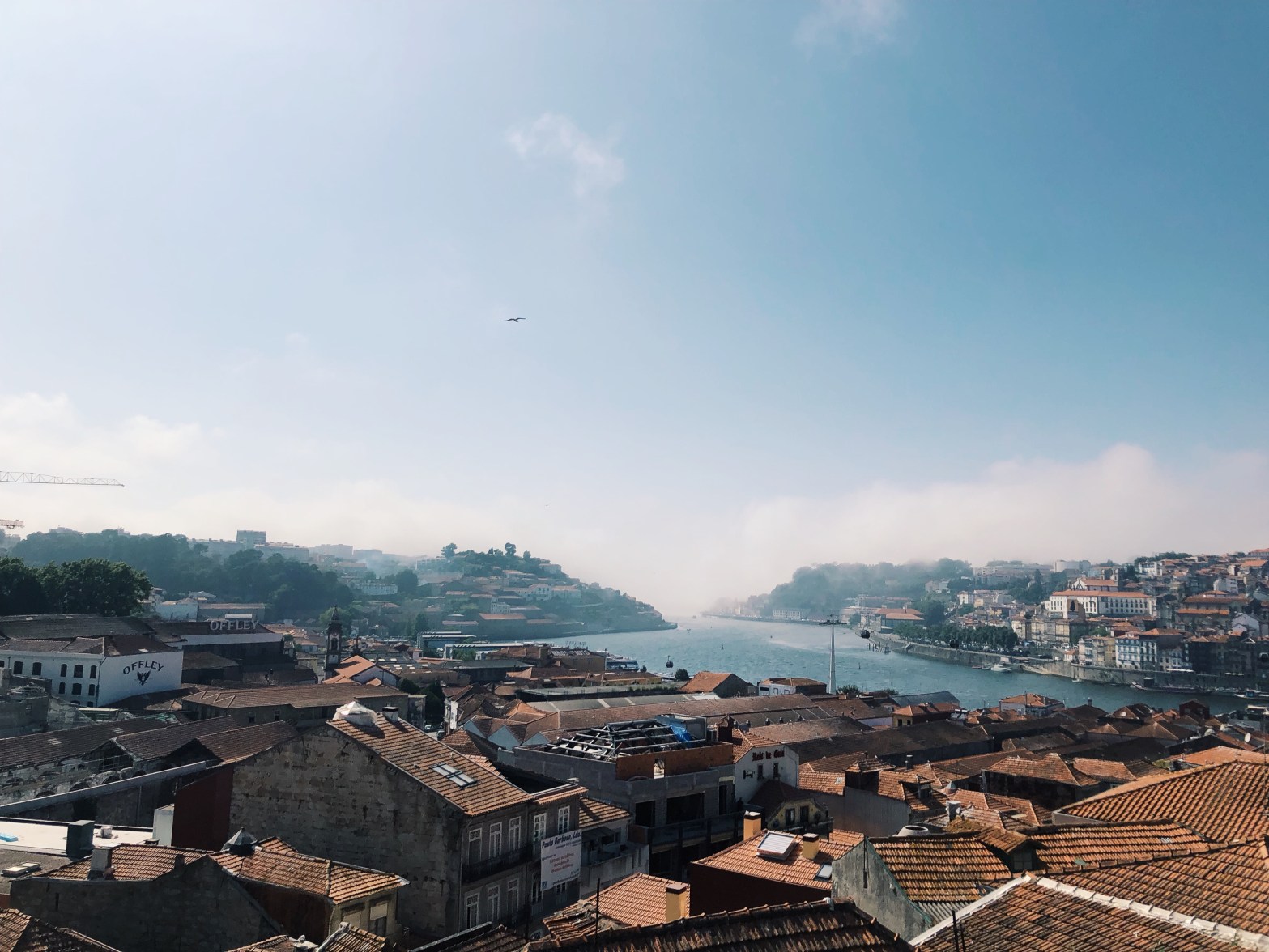
Porto — where the hordes are smaller and the delights are huge

Processed with VSCO with g3 preset

Tourist hordes are increasingly inundating Lisbon — and for good reason. It is rich in food, culture, history and selfie backdrops and is far cheaper than many of its European peers. 

But for those yearning for a saner, quieter and just-as-beautiful Portuguese city break, there’s thankfully an ideal alternative a two-hour train ride away: hello, Porto.

I first visited the city in early spring. Rain and wind lashed the seafront district of Foz where I was staying. I surfed in the churning grey Atlantic — taking some solace in the fact that the water temperature, while icy, wasn’t as searingly cold as Cape Town’s. Occasionally the storms abated and golden sunlight washed over the elegant streets. As I rode a bus, the coastline gave way to riverbank, and grand bridges loomed overhead. I hopped off in Ribeira, Porto’s compact and startlingly pretty historical centre. I strolled the steep, cobbled alleys, passing buildings brightly painted or covered in hand-painted tiles. Bells pealed over the city from the Clérigos Church tower which jutted into the moody sky like a finger. 

I found the illustrious Livraria Lello, the bookshop once frequented by Harry Potter author JK Rowling. With its ornate flourishes, it comes as no surprise that it supposedly inspired her vision of Hogwarts. The phone camera-wielding hordes were annoying but still, it features arguably the best selection of English language books in town. Nearby, I browsed Almada Em Branco, a design store featuring artisanal products made in Portugal and beyond: dapper neck-ties, Port-infused chocolate, exquisite jewellery and satchels.

Over the weekend, I got my culture fix: I headed to the Serralves Foundation, a huge contemporary art museum that showcases temporary exhibitions, featuring both Portuguese and international artists. When I visited, there was a retrospective of the Porto-born Álvaro Lapa — one of Portugal’s most important artists. I drifted from white cube to white cube, admiring the nearly 300 abstract works: vivid, gestural, playful, sombre. The exhibition has since been taken down; there are several others in its place. Joan Miró and the Death of Painting — a selection of harrowing, angry works the then-80-year-old painter made in 1973 is on display until 3 March. The Serralves’s setting is as rewarding as its art: there are sprawling, elegant gardens dotted with sculptures and a sublime art deco mansion you can visit too. 

I also visited the Casa do Música, a music and performing arts hub right in the centre of the city. Designed by Dutch architect Rem Koolhaas, the building is a triumph: boxy and angular off-white marble and glass. I sat inside the enormous warm-hued, wooden panelled concert hall and listened to Porto’s symphonic orchestra perform Shostakovich’s Fifth Symphony. In the first half, only the strings performed, lush and silky and stirring — it was so sublime I got almost teary. After interval, the entire orchestra performed the thunderously beautiful second-half. I returned to the Casa a few nights later to a smaller hall to listen to Andreia Alferes. Her singing is inspired by melancholic fado music; but instead of offering simple nostalgia, she gives the genre contemporary force and relevance with a soulful richness and power that belies her petite size. Scanning through the calendar afterwards I found myself rather envious that this pint-sized city has such an outpouring of different music styles throughout the year in this exquisite venue.

For rand earners, Portugal is arguably the most affordable country to visit in Western Europe, and nowhere is this more apparent than the food — with prices roughly on a par with back home. While Porto has more than its fair share of fine dining establishments, I enjoyed exploring the plethora of everyday options that offered some insight into the Portuguese way of life. As with many other places in southern Europe, you’ll rarely spot someone carrying a takeaway cup here. However busy they might be, the locals always find time to knock back an espresso — and if it’s on a stool alongside an acquaintance with whom they can discuss last night’s soccer, then so much the better. 

Confeitaria Tupi is a case in point: a retro canteen with brass-framed windows and a herringbone wood ceiling. Regulars squatted on shiny bar stools drinking freshly made orange juice. I rather liked Aviz Cafe too: ostensibly a tea salon, but like many of the city’s establishments, it offers all sorts of things no matter the time of day: Super Bock beer, Buondi coffee, pregos and pastries. I had a creamy pastel de nata (Portuguese custard tart) and a glass of Port for €3.50, watching the garrulous locals gesticulating as they stared at flat-screen TVs.

The best meal I had was at Venham Mais 5, which serves exceptional (and exceptionally cheap) pregos to a mostly local clientele. The decor is bizarre: a mixture of antiques, religious iconography and tat but that’s all forgotten as you bite into the tender beef steak and slowly melting cheese encased in a chewy bread roll.

Nearby, Maus Habitos, on the fourth floor of a parking garage, overlooks the old art deco cinema Coliseu. With parquet, school chairs and glowing light, there’s a hint of Wes Anderson to it. The staff are young and hip and service is erratic — but the pizzas and vegetarian options (a rarity in a city obsessed with meat) are pretty good. 

Cafe Santiago, also close by, is renowned for its francesinha (“little Frenchie”) — the city’s most famous dish. This Porto twist on the croque monsieur is far more decadent than the French original, featuring several layers of bread separated by minute steak, ham and sausage, topped with an egg and melting cheese and swimming in a tomato and beer sauce. The dish might give you a heart attack, but you’ll be sent straight to heaven if it does.

The Mercado Bom Sucesso is a breezily modern food gastronomic market round the corner of the Casa do Musica, making it ideal for a pre-concert snack. I tried the delicious, garlicky leitao (traditional suckling pig infused with garlic) from Leitao do Ze and cheese and bread with a glass of Evel, a decent, medium-bodied red from the Douro from Tapas & Des. Other stalls offer vegetarian cuisine, sushi and yet more petiscos (tapas) with wine.

For a more detailed snapshot of the local wine scene, head to Prova, which offers tastings from all of Portugal’s major wine regions. Porto hasn’t proved to immune to the global love affair with beer, either so for those preferring hops over grapes, Letraria, is one of several craft beer establishments in the city, with 20 on tap that you can enjoy in its laidback garden with snacks. 

As one would expect from a city with a strong seafaring heritage, the Matosinhos area close to Porto’s harbour has plenty of good seafood restaurants. I went to the no-nonsense Tito 2 and had one of its signature dishes, the marisco arroz — shellfish with rice, similar to a paella. It was creamy, crunchy and bountifully delicious.

When I returned to Porto in late July, it was a different city:  hot and sunny, the streets lively without being crammed. We hired bikes at the base of the stately iron Luís I Bridge and pedalled along the Douro for about 20 minutes until we reached Afurada, a humble fishing village. In the street outside Taberna do São Pedro, dead-eyed fish sizzled on braai, the smoke permeating the air. Inside, on wooden benches, we feasted on tender polpo (octopus), squid, and fleshy, salty fish — and washed this all down with glasses of vinho verde, a fresh, light and slightly fizzy white wine.

Processed with VSCO with g3 preset
Taberna do Sao Pedro serves up delicious seafood, fresh from the braai.

No Porto visit is complete without paying a pilgrimage to the Port wine lodges, where Port is aged before being exported all over the world. These are all concentrated in the Gaia district on the edge of the Douro, each within staggering distance of each other. We took a tour of Graham’s, heading down from its white-washed reception area into the dank, grape-scented cellars where 7 million litres of wine is stored. Our guide explained that all the of the grapes that go into Port wine are picked using manual labour — the terraces on the slopes of the nearby Douro valley are too narrow for machines.  He explained the difference between the two styles of Port. Ruby ages in large wooden vats for a maximum of seven years; it’s closer in style to red wine and there’s a strong emphasis on viticulture to convey its character. Tawny Port, on the other hand, ages in smaller barrels. It’s denser, dryer and more liqueur-like in style and tends to have smoky, woody characteristics. There is no maximum limit for ageing — indeed some of the bottles we walk past are more than 100 years old. The final product is a blend of different years.

As we proceed from lodge to lodge, my note-keeping became increasingly erratic. But this I know: we had an excellent 20-year-old tawny at the wondrously named Cockburn’s — which also served a very refreshing white Port and tonic in its shady courtyard. Taylor’s, I wrote, has a nice garden, shitty Port and stuffy waiters. Another gorgeous 20-year-old awaited in Burmester’s gloomy interior. Then we headed up to the vibey rooftop bar at Porto Cruz where we ordered beers, having reached our Port limit for the day.

The next day, we decided to go to the source, boarding the train in the majestic São Bento station. Drab suburbia was replaced by open fields; an hour or so later were surrounded by cliffs. The track meandered along the river which flashed in the sunlight next to us. We disembarked at Pinhão, a village in the heart of the Douro valley. In the sweltering heat, we walked uphill to Quinta da Roêda, home of Croft Port, and the oldest Port farm in the valley. We sat on the stoep, drinking in the views of the green ribbons of vines on the steep slopes as we sipped on a refreshing pink Port Tonic. It was the ideal spot to reflect on my Porto sojourns. Affordable, beautiful, charming and unpretentious, this multi-faceted jewel of a city offers visitors so much.

An edited version of this story appeared in the 28 February edition of Business Day.

Summertime in Berlin on two wheels

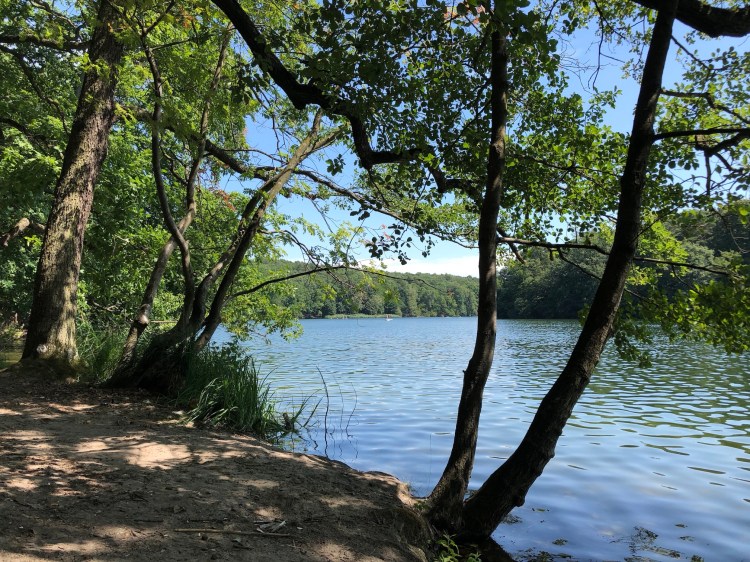
Schlachtensee
The Schlachtensee, a wonderful swimming spot.

So much has happened in Berlin. Once the epicentre of an ill-fated empire and of the reprehensible ideology that soon superseded it; then a Cold War flashpoint where two systems eyed each other warily through razor wire.

You could lose yourself in its history, in its fine museums. Instead, I pedalled past them, and past the Holocaust Memorial and the Bundestag and the prestigious Humboldt University and through the imperious Brandenburg Gate, over the line that marks where the wall that divided the city for 28 years once stood.

Perhaps I’ll come back to view that mighty Babylonian relic, the Ishtar Gate, in the Pergamon, but on this, my first visit to Berlin, I felt inclined to remain immersed in the present. It was hot and sunny, the days long. I stayed outside as much as I could, relishing the city’s abundant green public space.

My wheels spun puffs of dust under the soaring plane trees in the sprawling Tiergarten. I dangled my legs in the delicious eddies of the fake waterfall in Viktoria Park. I dozed in thick shade by the fat blue River Spree in Treptower Park. I drank a beer the colour of sunset on a rickety bench in the community gardens on vast Tempelhof, once an airport. The aircraft have long gone: its breezy runways now host joggers, bicycle polo (yes, that’s a thing) and windsurfing. Another golden sunset, another beer from the corner shop, this time by the canal in Kreuzberg — Berlin’s version of Brooklyn or Shoreditch. Barges and boats trundled past. Behind us, there was the click-click of hipsters playing boules on gravel.

Of course you can never escape the past completely. At one of the last remnants of the Wall, I stopped and dismounted. Saw the murals: two politicians kissing; hopes for world peace. The optimism of another age —remember the ’90s?

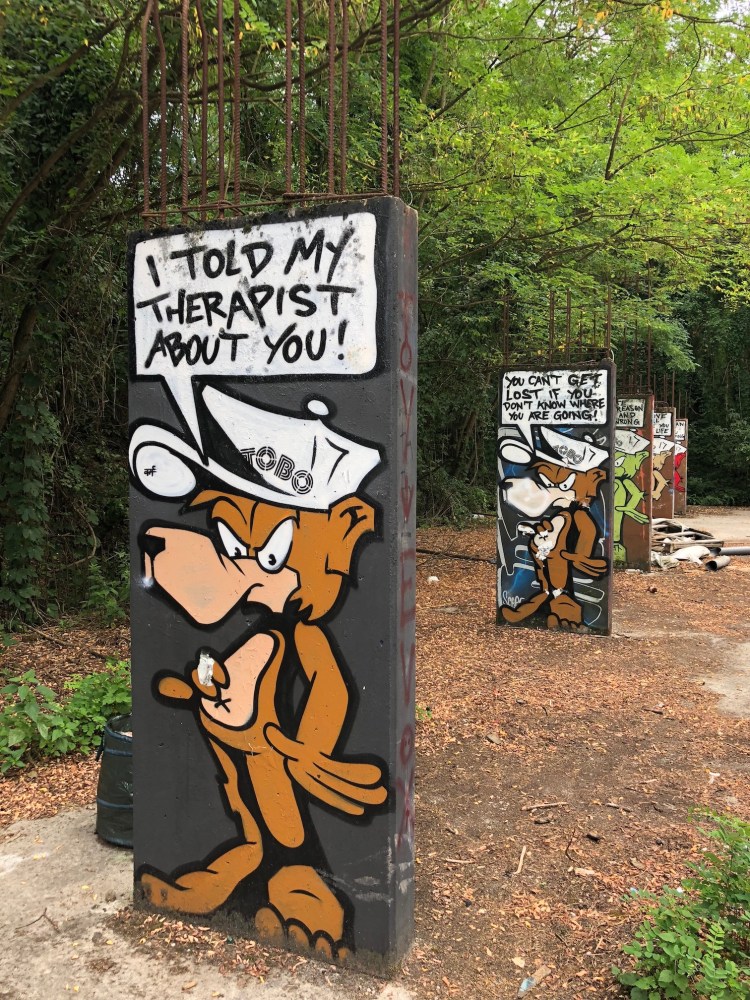
One day we cycled far out west, along wide, characterless boulevards. The city suddenly melted away as we entered the dense trees of Grunewald. We climbed, panting, to Teufelberg (Devil’s Mountain). An abandoned radar station — at once decaying and eerily modern — now a ramshackle open-air gallery and a warren of studio spaces: a canvas of concrete and metal covered by forthright, insistent spray paint. As bouncy techno assaulted my ears, I revived myself with a bottle of Club-Mate (cold, caffeinated and a little disgusting). We cycled downhill to the nearby lake. My friend and I were among the few not to enter the water naked (my Speedo seemed indecent enough).

tefelberg graffiti
Grafitti at Tefelberg.

I lost track of how many other lakes I visited. They were all surprisingly warm — but still refreshing after a sweaty cycle. Also out west, fringed by trees, was the Schlachtensee. We found a shady spot, ate nectarines, talked and lazed, then struck out into the gleaming water. Another day — the Plötzensee in the north. You have to pay to use the artificial beach, so I went to the other side, which involved a bit of a scramble and hopping over a low fence to get to the water.

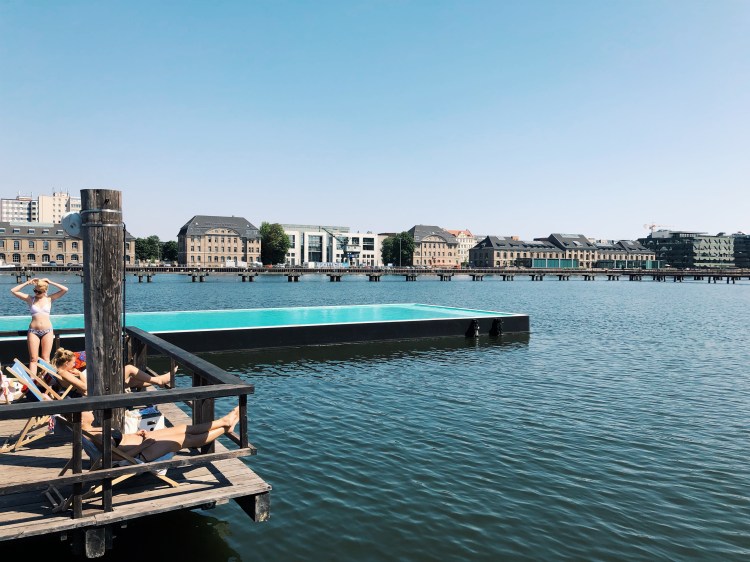
Some mornings, I’d cycle along the canal’s early hush to the Sommerbad Kreuzberg, which has three outdoor chlorinated pools. The official training one was crammed with grim-faced goggle-eyed professionals, so I swam in the huge (and almost empty) kids’ one instead. Badeschiff, a 30m pool floating over the River Spree, was more of a hangout spot than a training ground: laps amid the preening demigods lolling at its edges were impossible but the setting was worth it nonetheless.

Processed with VSCO with g3 preset
Bad-ass Badeschiff.

I was consistently impressed by Berlin’s food — it hit the spot in terms of variety, affordability and tastiness. The best pizza that I’ve ever had, I ate at W Pizza: crispy and chewy the Neapolitan way, covered in stringy stracciatella cheese and picante salami. The croissants — whether almond or plain — were simply brilliant at Croissanterie. The flat whites at the Aussie-owned Five Elephant were silky perfection; the roastery also serves a mean cheesecake.

Then there was a lively red chicken curry at Hamy, a bustling Vietnamese eatery, a juicy cheese and bacon burger at Berlin Burger International, and scrumptious Middle Eastern fare — fresh hummus and shwarmas at the unpretentious Al Andalos and a flavour-bursting shakshuka at the Israeli-inspired Cafe Mugrabi. We dined under the trees at Prinzessinnengarten, a lush food garden which serves up just one special lunch dish a day, made with ingredients grown there. For a city that can sizzle in the summer, there are tons of ice cream stores, thankfully. My favourite eismanufaktur, Vanilla & Marille had intriguing flavours such as Sicilian pistachio  and white chocolate with orange and ginger.

Although Berlin’s supermarket chains tend to be dreary and disorganised, the city has organic stores aplenty and a thriving independent retail scene — from retro fashion at Lena’s Lovely Vintage Boutique, to a gorgeous range of nature-themed books at Zabriskie. The canal-side Turkish market in Neukölln on Tuesdays and Fridays has everything from fresh fish to pretzels, spices and veg.

The possibilities when visiting Berlin are almost endless — from fetish parties and drug-fuelled dancing to avant-garde artworks and ancient treasures. I was content with skipping all that, though: sometimes nothing beats savouring life’s simpler pleasures instead. Sun, water, shade. Food and drink. And the dizzying freedom of going (almost) everywhere by bike.

This article first published in Business Day’s 20 February 2019 edition.

In spite of BuzzFeed, it’s not all doom and gloom in American media


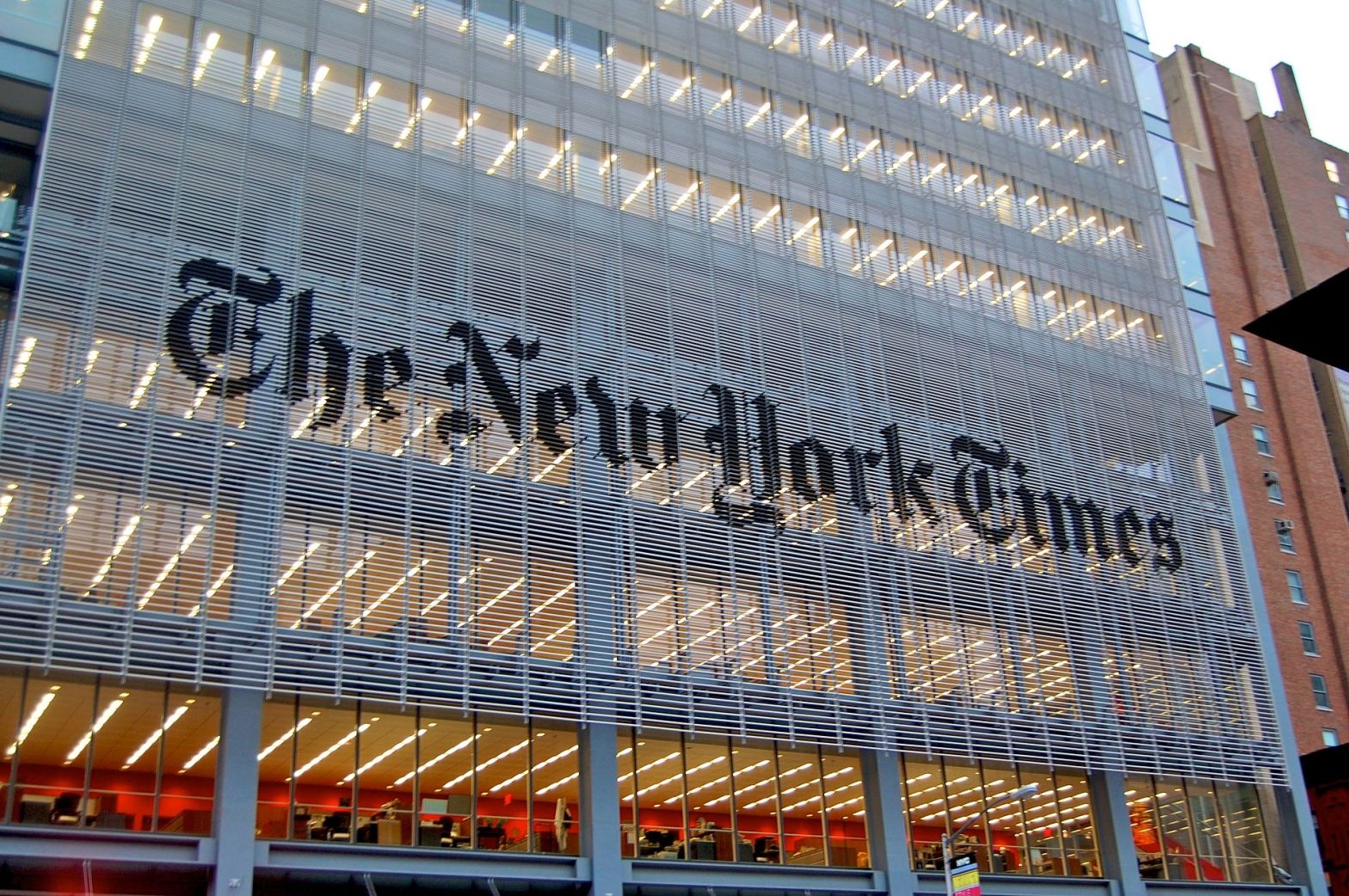
The New York Times building in New York.

In the most recent edition of his must-read Sunday newsletter, Felix Salmon counts the carnage of recent layoffs in media, including 800 at Verizon Media Group (properties include HuffPo and Yahoo), 250 at Vice and 220 at BuzzFeed (including its director of quizzes) — which, in spite of $300m, revenue is still not able to turn a profit. But Salmon rightly points out the bright spots: Vox Media is profitable (with $185m revenue) as is the New Yorker (largely thanks to a surge in subscriptions, many of them digital).

He links to a fabulous analyis by Edmund Lee at the Times who points out a few other quiet successes. One of them, the business and politics-focused site, Axios (which publishes Salmon’s newsletter), brought in $25m last year, with a loss of just $56,000; profitability is clearly within very close reach.

With a strong emphasis on newsletters, Axios has also branched out into TV, with a series for HBO; an approach not dissimilar to Vox’s, which has Explained, a popular series on Netflix that explores one topic at a time.

“The audience for high-quality content is huge and voracious and growing,” Lee quotes Axios’s CE, Jim VandeHei, as saying.

Given the success of the New York Times’s paywall (digital revenue earned the paper more than $650m last year) as well as the New Yorker’s and others, it seems like there is an increasing willingness, at least in the US, for that auidence to pay for it. And as the much-hyped ‘pivot-to-video’ strategy has largely crashed and burned, in some instances it’s the humble, unsexy email newsletter that is making a comeback. While Axios and many other publications use sponsors as a key email revenue generator, Lee cites The Information, a plucky Bay Area-based tech publication, as using a different approach: paid subscriptions. In a crowded field, it promises readers “tech news you won’t read elsewhere”; a basic subscriptions for its newsletters and other content costs $39/month. It’s subscriber base was large enough for founder Jessica Lessin to double her news staff to 26 last year.

So: what are the ingredients necessary to ensure that a publication will survive — and thrive — in this turbulent era? As a journalist battling stagnant word rates and shrinking word counts, I have a personal interest in wondering this.

My hunch is that VandeHei is right. There are indeed people that are hungry for quality; insightful reporting and analysis across a multitude of fields. In the era of Trump and fake news, there’s a yearning for publications that can help us make sense of the present moment — and where we’re headed. Even better, some people are willing to pay for this.

The key though, regardless of media, is quality, and attracting the right audience (one that is engaged, willing to pay, and is attractive to advertisers). There are various ways of reaching this audience: from ye olde print and conventional digital and email offerings to TV/streaming tie-ups and podcasts (something which those two titans of legacy/traditional media, the Washington Post and New York Times seem now to be excelling at).

Unless it’s able to attract people who are willing to donate to their news operation, BuzzFeed’s woes may continue. I suspect the vast majority of its regular, loyal readers are the quiz-takers and consumers of fluff; I suspect very few of them will be willing to put their money where their mouth is. Someone who is willing to spend money on quality news (and let me be clear: BuzzFeed News has certainly had its fair share of excellent scoops) will most likely subscribe to a serious brand like the Times or New Yorker first, and be less inclined to spend even more by contributing to BuzzFeed too. In some senses it’s ironic that the silly quizzes and clickbait that has made BuzzFeed one of the most visited websites in the world might be the very thing that prevents it from ever maturing into a sustainable, profit-making news organisation.

Having read the New Yorker interview with Jill Abramson about her new book on media, Merchants of Truth, as well as the Times and Guardian reviews, I’m sitting on the fence about reading the book myself. She comes across as supercilious, occassionally vindictive, and often highly suspicious of the talents of younger people in the profession; the controversy around her depiction of Arielle Duhaime-Ross, Vice’s science and environmental reporter, certainly didn’t help her case either. But doubtless the tome will certainly make an important contribution to the debate on how media should be navigating this fucked-up best-of-times/worst-of-times century.

Photograph above taken by Haxorjoe. Licensed under the Creative Commons Attribution-Share Alike 3.0 Unported license.

Brexit: an uncertain separation

The date of the UK’s withdrawal from the EU is drawing ever nearer. What this exactly will entail and how it will affect South Africa is yet to be seen, but the UK says that, regardless, it is pushing for closer economic ties with Africa.

unnamed-12

British Prime Minister Theresa May parroted the phrase “Brexit means Brexit” with shrill insistence in the weeks following the UK’s shock decision in 2016 to leave the EU. But with the country’s departure on March 29 looming, what that actually means still remains frighteningly unclear.

Months of painstaking negotiations between the EU and the UK have resulted in a withdrawal agreement that very few people want. In parliament, it was rejected by a record 230 votes, including those of 118 rebel MPs from May’s ruling Conservative Party.

Among supporters of both the Conservative and the opposition Labour party there is a wide spectrum of views about what Brexit should entail.

There are, on the one hand, the “remainers” who, in spite of the June 2016 referendum result, want to stay in the EU.

Among the people who want the UK to leave the bloc, those favouring a “soft Brexit” want to maintain close links — including staying a part of the EU’s customs union and single market, which allows free movement of people, money, services and goods. This arrangement, akin to the one Norway has with the EU, would allow British companies to trade seamlessly without tariffs or checks, and its citizens could continue to live and work freely in the EU’s 27 other countries. However, it would also mean adherence to many EU standards, regulations and laws; and the UK would have to allow migrants from the EU to live and work within its own borders.

This is far beyond the pale for advocates of a “hard Brexit”, whose rationale for leaving the EU is that they want to regain full control of legislation and migration and be able to make trade deals independently. None of this would be possible with a Norway-style arrangement.

May would seem to have kept the UK’s future relationship with the EU fuzzy deliberately. If the withdrawal agreement were to miraculously find the support it needs and come into effect, there would be a transitional period until December 2020, during which future relations would be figured out.

Complicating matters, though, is the issue of the border between Northern Ireland (part of the UK) and independent Ireland, which is part of the EU. After decades of bitter sectarian strife, the 1998 Good Friday Agreement made the Irish border permeable, with no checks or controls, in a bid to defuse tensions and support cross-border ties and trade.

A hard Brexit may imperil this: if the UK leaves the single market and customs union, the Irish would, in theory, be forced to conduct checks on goods and people crossing the border — which would become the border between the EU and the UK — in contravention of the Good Friday Agreement. Both countries want to avoid this at all costs, as they worry that erecting any form of barrier could reignite the violent conflict between Catholic republicans and Northern Ireland’s Protestant majority, which mostly favours union with Great Britain.

May’s attempt to prevent this so far has been the “Irish backstop”. If the transition period ends in 2020 without the UK and EU having finalised a trading agreement, then the UK would automatically remain part of the EU customs union. Checks would be done on certain goods — especially pharmaceuticals, agricultural products and some foods — coming into Northern Ireland to ensure these comply with the single market’s standards and regulations, in the event that they cross the border into Ireland.

Northern Ireland’s Democratic Unionist Party, which props up the Conservative minority government in the House of Commons, is dead set against this. The party believes anything that would result in Northern Ireland being treated differently to mainland UK would be the thin end of the wedge, presaging the gradual erosion of Northern Ireland’s membership of the UK, and putting pressure on it to be reunited with the rest of Ireland — something it vehemently opposes.

The hard Brexiteers also hate the backstop proposal because it risks keeping the UK stuck indefinitely in a customs union with the EU. Far from giving the UK the independence they crave, it would mean remaining compliant with a raft of regulations, with little prospect of disentanglement.

Even though Brexit hasn’t happened yet, its impact has already been widespread and damaging. In a climate beset by uncertainty and plunging confidence, house prices in posh UK suburbs have plunged as much as 25%; the pound has weakened against the dollar (from $1.45/£ to $1.31 at the time of writing). Businesses are moving elsewhere in droves: among them vacuum cleaner company Dyson (once trumpeted as “a great British success story” by former prime minister David Cameron) is moving its headquarters to Singapore; Sony’s Europe headquarters are moving to Amsterdam; and the ships of venerable ferry line P&O will sail under the Cypriot flag.

The Centre for European Reform calculates that by June last year, the UK’s economy was 2.5% smaller than it would have been if the referendum result had gone the other way. Brexit, it estimates, is costing the country £26bn a year — or £500m a week.

Come March 29, if an agreement with the EU hasn’t been reached, the UK’s trade with EU countries (49% of its exports and imports in 2017) would fall under standard World Trade Organisation rules. Financial transactions into the EU would no longer be immediate. Freedom of movement would end, to be replaced by mandatory passport and customs checks, and tariffs would be slapped on goods and services.

Endless queues on both sides of the English Channel are foreseen, leading to delays that would result in shortages of everything from car parts to cat food and medicine. Stockpiling has already begun, though this is only a partial solution given that the UK also imports 40% of its fresh produce from the EU.

Several UK parliamentarians are resolutely determined to prevent a no-deal Brexit. At the time of going to print, the House of Commons was debating possible amendments to the Brexit agreement with the EU — though none seemed to offer much in the way of a sure path forward.

An amendment by Yvette Cooper of Labour — the largest opposition party — would ensure that Brexit is delayed by nine months if a deal hasn’t been reached by March 29.

Conservative MP and former attorney-general Dominic Grieve proposed that MPs conduct a series of votes on the kind of Brexit they deem most palatable. If successful, it could open the door to a second Brexit referendum. However, ardent Brexiteers have howled in protest at what is essentially a bid to wrest control of the process from the government and place it in the hands of parliament.

Then, ahead of the debate, May did an about-turn, supporting Conservative MP Graham Brady’s proposal: renegotiating the withdrawal agreement with the EU to find an alternative to the backstop while avoiding a hard border.

However, both the EU and the Irish have insisted the backstop is not up for renegotiation. If May were to return to the EU to ask for changes to the deal, the UK would be “snatching defeat from the jaws of victory”, EU deputy chief negotiator Sabine Weyand has said.

What does this “mother of all messes”, as The Economist aptly describes it, mean for South Africa?

“Regardless of the outcome, the relationship [between the two countries] will remain very important — as much on the capital side as on the trade side,” says Peter Attard Montalto, head of capital markets research at Intellidex.

According to UK government figures, bilateral trade stood at £8.8bn (R157.9bn) in the year to the end of the second quarter 2018, a 9.3% increase from the preceding period. The UK remains SA’s biggest source of foreign direct investment — £9.6bn (R172.2bn) in 2017.

“Brexit is a tail risk for SA itself, but [for those] … heavily invested offshore and overweight the UK, it is important, certainly,” says Attard Montalto. He predicts “significant volatility” in the rand-sterling exchange rate — especially under a no-deal scenario.

But he offers some reassurance, saying that any outcome is likely to result in the UK keeping its strong standing in the global economy in the long run and remaining an investment destination. “It will, therefore, make little sense to have a dramatic shock withdrawal of capital in general by investors on a ‘no deal’, even if some hedging goes on, especially in the currency, which will be the main shock absorber,” he says.

Attard Montalto believes a hard Brexit might work in SA’s favour, as it would allow the UK to tailor a trade deal with the country that could usher in more frictionless trade and lower tariff barriers than are the case at present.

Meanwhile, the UK high commissioner to SA, Nigel Casey, assures the FM that his country is determined to prevent disruption in trade, regardless of whether a deal is reached by March 29.

“We have been working intensively with the SA department of trade & industry and its counterparts in the SACU [the Southern African Customs Union] and Mozambique,” he says.

The aim is to replicate the existing economic partnership agreement governing goods, trade and maritime services between the EU, the SACU and Mozambique.

“We are nearly there, but time is now short, and we need one final push to complete that process, and then to get it signed and ratified,” says Casey.

Irrespective of Brexit, the UK is pushing for closer economic ties with Africa — especially Nigeria, Kenya and SA, he says. It wants to replace the US as the continent’s largest investor by 2022. This co-operation extends beyond trade to cover collaboration in research and innovation across the board, and “investing in building links between the burgeoning tech sectors in the UK and SA”.

Angel Jones, CEO of Homecoming Revolution, a recruitment agency that helps professionals return to SA and elsewhere in Africa from advanced economies such as the UK, says anecdotal evidence presented to the company so far suggests Brexit is having little effect on South Africans’ decision to return from the UK.

The company “received a flurry of interest and inquiries from South Africans interested in hearing about opportunities back home” in the immediate aftermath of the referendum, Jones says.

“However, that hasn’t necessarily translated into actual returns.”

This article first appeared in the Financial Mail‘s 31 January 2019 edition.

Picture credit: 123RF/Marian Vejcik

When the community wins, so does nature conservation

Working with the community has been key to making the Singita Grumeti concession, next to Serengeti National Park in Tanzania, a success — both for the wildlife and local residents.


singita1
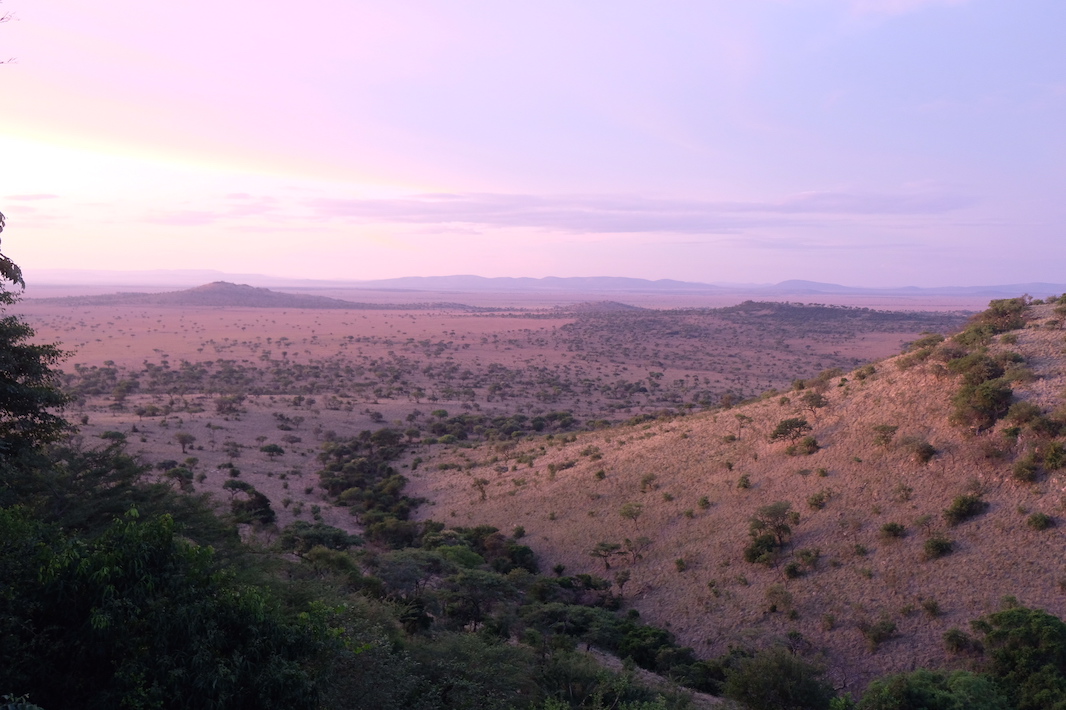
Dawn arrives over the Singita Grumeti concession.

For Mark Witney, the CEO of conservation at Singita, working with communities when conserving wildlife is a no-brainer. “If you’ve got a community working against you, it makes it extremely difficult,” he says.


The luxury game lodge and safari company started out in 1993 with just one high-end lodge, in the Sabi Sands Game Reserve on the edge of Kruger National Park. Today, it operates 12 luxury camps and lodges in three African countries, and is the custodian of more than 400,000ha of wilderness.

Part of Singita’s success lies in its community and conservation strategies, implemented by nonprofit trusts. In Tanzania, this is managed by the Grumeti Fund.

In 2002, hedge fund billionaire philanthropist Paul Tudor Jones took over stewardship of the 140,000ha Grumeti concession with the aim of creating a buffer between a growing human population and Serengeti National Park to protect the region’s wildebeest and zebra migrations. Singita came on board in 2006, launching four lodges and camps to draw much-needed tourist dollars to the reserve.

Working with the community has been key to making Grumeti a success.

Jacob Odao, community guide for the Singita Grumeti Fund, says: “To protect the Serengeti ecosystem, you need to have support from the local people, because they’re the ones who are destroying it.”

Standing in the courtyard of the fund’s Environmental Education Centre (EEC), Odao explains that, 17 years ago, the concession was under siege. With no other ways of earning an income, poor villagers at its edges were poaching wildlife for meat and cutting down trees for charcoal and firewood.

But mindsets have shifted, in part thanks to the EEC, which has taught pupils from local high schools — 288 of them in 2017 — about the importance of conservation and a sustainable ecosystem. After a five-day visit to the EEC, each group of 12 pupils forms an environmental club, using illustrations, speech-making, debating and essay writing to spread environmental awareness among their classmates.

The community’s growing realisation of conservation’s benefits is not merely theoretical; there have been plenty of tangible economic benefits too. According to Odao, about 85% of the reserve’s employees come from local villages, earning much-needed income to build houses and open shops in neighbouring areas.

Last year, the fund’s enterprise development programme trained 48 budding entrepreneurs in village workshops. Among them were Mwamba Mabeyo, a farmer who used the skills he learnt to open a restaurant, and Alex Masatu Iganja, who runs a financial services agency.

Iganja credits the programme for his business’s success, saying it helped him grow and expand the business. In less than a year, he was able to open another branch, offering jobs to five people, and increase his net profit by 30%.

Then there’s the Grumeti Horticultural & Marketing Co-op Society (Ghomacos), a farmers’ co-operative incubated by the fund in 2010 that is now fully independent. Piles of organically grown vegetables sit on concrete tables at its marketplace. Much of this fresh produce is headed to Singita’s five Grumeti lodges and camps, which receive 80% of their fresh produce from the co-operative. Last year, Ghomacos earned its 72 members $250,000.

singita3

As part of the fund’s commitment to developing employment alternatives, it offers scholarships to promising but underprivileged high school pupils and tertiary students. In 2017, for example, 114 students received funding; 64% of those who graduated subsequently found employment.

Gekuli David is the front-of-house anchor for Singita Grumeti’s Faru Faru Lodge. David grew up in a nearby village of pastoralists where, she says, “they are not supporting girls”. Many are encouraged to get married as soon as soon as they finish primary school (this earns the bride’s family cattle — a key source of wealth). David’s father, a teacher, bucked the trend and supported her continued education.

After David finished high school with excellent marks, the fund supported her studies in tourism. Upon graduating, she completed an internship at Singita Grumeti, before being appointed to a permanent role as a lodge receptionist. She has been promoted twice since then.

“When I joined Singita I was a little bit shy — a girl coming from the village; I didn’t have that confidence to speak with someone like this,” she says. Poised and assured, she is one of several Singita staff who are mentoring high school pupils, providing support, encouragement and advice about reaching their goals and aspirations. “They get motivated,” she says, “seeing you there, telling them your stories and where you came from — we inspire them.”

Since 2003, biodiversity in the Singita Grumeti concession has staged a resurgence: overall large herbivore biomass density has surged by 386%; there’s been a 422% increase in elephants, a 954% increase in buffalo and a 1,625% increase in lions. This is largely thanks to a sophisticated antipoaching operation that includes 132 highly adept game scouts, many of them former poachers.

The proliferation of wildlife in the reserve has, however, meant an escalating risk of human-wildlife conflict, especially as the population at the reserve’s unfenced edge grows. Though cattle grazing in reserve land is forbidden, the temptation is great, given that much of the villagers’ land is overgrazed. But straying into the reserve puts domestic animals at risk.

Last year, resentment at lions’ preying on domestic livestock led to villagers poisoning nine of them.

Then there are the elephants. Witney sympathises with affected communities: they are unlikely to be favourably disposed towards the animals when an entire year’s worth of hard work is destroyed by an elephant rampaging through crops. “You can’t feel very kindly towards elephants and have a positive relationship with the whole concept of a protected area if it’s threatening your very existence,” he says.

To mitigate the fallout, a human-wildlife conflict mitigation unit was formed in July 2017. When alerted to elephants approaching a village, the trained unit deploys, using vehicles, spotlights and loud noises to send the animals on their way. Within six months the unit had responded to 27 incidents, with a success rate of almost 70%.

“It’s PR. You’re trying to get the villagers to not hate the work you do,” Witney says.

Because of the long distances involved in reaching affected villages, a head start is needed. To achieve this, in 2018 30 elephants were collared with tags that monitor their location.

Though initiatives like this are pricey, increased guest involvement can help to offset the costs.

Over the past 25 years, Witney has observed a change in Singita guests’ interest in the impact of their visits on the environment and local communities. Along with this increased scrutiny, there’s been a growing desire to help.

“We can inspire some very high-end philanthropic and socially minded guests to support our projects,” Witney says. “We’ve had some great examples of guests inspired by what they see.”

For example, Singita guests have sponsored four rescue dogs from Washington, DC, which have been trained in anti-poaching and now form the canine response team at Grumeti. For these well-heeled dog lovers, Witney says, “the idea of animals protecting animals was just a dream come true”.

He adds: “One of the challenges for us is to educate guests around what is appropriate and meaningful for them to do, and what’s not.” A container of broken second-hand computers for a rural community that has no electricity or trained technicians is going to have little effect. Close liaising with Singita’s nonprofit partners ensures that any guest involvement — whether donations or organisational partnerships — is relevant and fit for purpose.

Processed with VSCO with m5 preset
View from the private pool of one of the rooms at Singita Sasakwa Lodge.

Singita has developed “safaris with a purpose” for guests who want a travel experience coupled with active philanthropy. These are customised, depending on what outcome is required. In the first of these safaris, in 2018, six paying guests participated in an elephant-collaring exercise in Grumeti. Without their contribution of $25,000 each, the operation would not have been possible.

Singita has established an expansion fund for its Community Culinary School, based at Singita Lebombo Lodge in its Kruger National Park concession.

The school, which offers a rigorous, year-long City & Guilds-accredited programme, has been a stunning success. In the 11 years since its inception, 70 of its students — all from poor communities in which unemployment is sometimes as high as 90% — have launched careers as chefs.

About 95% are currently employed — some with Singita, others in lodges and hotels across Southern Africa. With the support of guests, it’s hoped the current intake of 10 students a year will double.

High-end tourism is just one piece of the puzzle — it cannot by itself pay for conservation. A hybrid approach, bringing together a range of different stakeholders who share the common purpose of conserving wilderness, is most likely to have lasting success. “We need to work with governments, NGOs, big philanthropists and people who care about these things and find a model that is sustainable for the long term,” says Witney.

This article first appeared in the Financial Mail on the 17th January 2019 under the heading “Sustainable Safaris“. I visited Grumeti as a guest of Singita.